



Sustainable aviation fuel capacity is expanding far more slowly than airline decarbonization targets require, and the gap is increasingly shaped less by feedstock availability than by project execution risk. Against that backdrop, Samsung E&A’s newly awarded Front End Engineering Design (FEED) contract for a large-scale SAF facility in Louisiana highlights where bottlenecks are forming in the global SAF market.
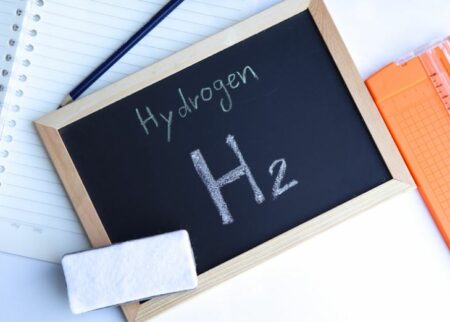
The contract, signed with U.S. developer DG Fuels, positions Samsung E&A at the core of a project designed to produce 600,000 tons of SAF per year using agricultural residues and woody biomass. While the headline is volume, the more consequential detail is scope. Samsung E&A is responsible for the clean hydrogen production package, spanning both blue hydrogen systems, air separation units, autothermal reforming, carbon capture, and green hydrogen via water electrolysis. This dual-hydrogen configuration reflects a pragmatic design choice increasingly visible across SAF projects: decarbonization pathways are being engineered around reliability and scalability, not ideological purity.
At approximately USD 15.7 million, the FEED contract itself is modest. The strategic value lies in what follows. The total project is estimated at roughly USD 3 billion, and FEED is the gatekeeper. In today’s SAF market, developers are under pressure to demonstrate bankable designs that can survive volatile policy incentives, shifting carbon accounting rules, and rising capital costs. Engineering firms capable of integrating hydrogen production, carbon capture, and biomass conversion into a coherent system are becoming decisive actors in whether projects move beyond announcement.
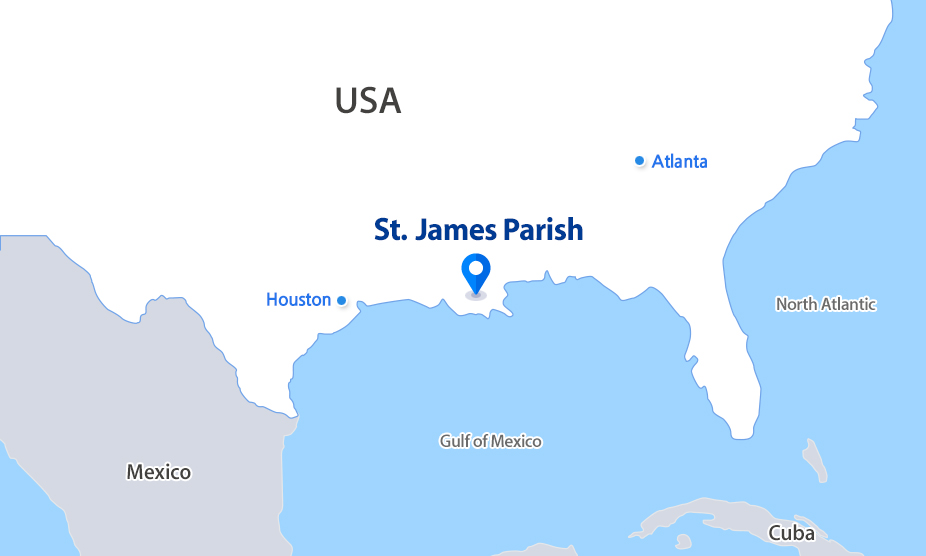
The Louisiana project also underscores a structural reality of SAF deployment: location matters as much as technology. St. James Parish offers access to biomass feedstocks, industrial infrastructure, and U.S. policy support mechanisms that, while politically contested, remain among the most commercially impactful globally. For Samsung E&A, the project strengthens its North American footprint at a time when many Asian engineering firms are seeking to de-risk regional concentration.
Samsung E&A’s growing SAF portfolio suggests a deliberate sequencing strategy rather than opportunistic expansion. The company secured a major SAF contract in Malaysia late last year and has since accumulated clean-energy design wins spanning biodegradable plastics, LNG, low-carbon ammonia, and hydrogen-related infrastructure. The common denominator is not fuel type, but complexity. These are projects where integration risk, not technology novelty, determines success.
That distinction matters as governments move from aspirational SAF blending mandates to enforcement. Aviation fuel suppliers face compliance deadlines, but compliance is only possible if projects reach the final investment decision and construction on time. Engineering delays, cost overruns, or misaligned hydrogen systems can derail economics long before airlines see a single drop of SAF.
The Louisiana design also reflects a broader recalibration within the hydrogen-SAF nexus. While green hydrogen remains the long-term target, blue hydrogen, with carbon capture, continues to function as a bridging solution where power prices, grid capacity, or electrolyzer supply constrain full electrification. Samsung E&A’s inclusion of both pathways signals that SAF scale-up, at least this decade, will rely on hybrid decarbonization architectures rather than single-technology bets.