


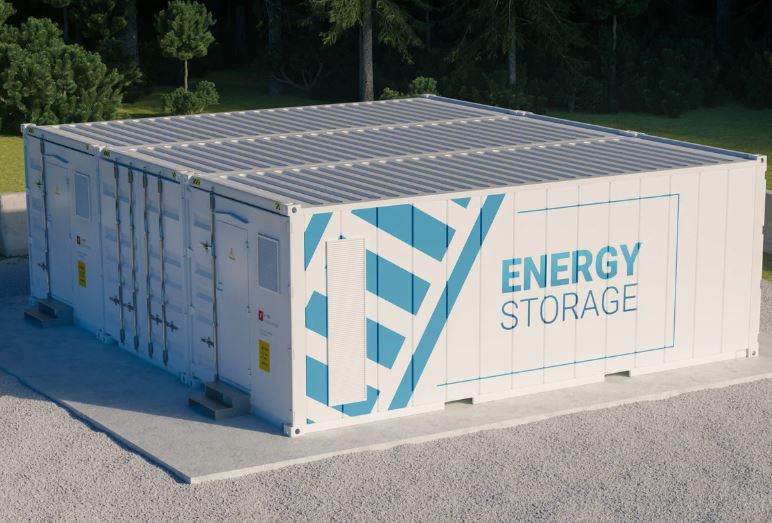

The U.S. energy storage sector installed 57.6 GWh of new capacity in 2025, marking the largest single-year deployment in history.
This represents a 30% increase over the previous record set in 2024 and quadruples the industry’s output from just three years prior. According to the U.S. Energy Storage Market Outlook Q1 2026 (ESMO) from SEIA and Benchmark Mineral Intelligence, cumulative utility-scale storage reached 137 GWh by year-end 2025, with 19 GWh in commercial and industrial applications and 9 GWh in residential storage. Projections indicate more than 600 GWh will be installed by 2030, supporting grid resilience, energy independence, and cost reduction.
Deployment in 2025 was concentrated in states that supported former President Donald Trump, which accounted for two-thirds of all utility-scale installations. Texas is set to surpass California in 2026 as the largest U.S. energy storage market. Standalone storage contributed nearly 30 GWh of new capacity, while systems paired with solar added 20 GWh. Residential storage grew 51% year-over-year, adding 3.1 GWh, driven by the expansion of virtual power plant programs in Massachusetts, Texas, Arizona, and Illinois, enabling peak demand management and improved grid reliability.
Battery manufacturing also pivoted toward stationary energy storage applications, with lithium-ion production exceeding 21 GWh in 2025—enough to power Houston from sunset to sunrise. U.S. facilities now have the capacity to produce 69.4 GWh of energy storage systems, reflecting a shift from electric vehicle-focused manufacturing to dedicated stationary storage lines. Iola Hughes, Head of Research at Benchmark Minerals, notes that storage is becoming essential to manage rising electricity demand, particularly with the growth of data centers and AI infrastructure.


