




Europe’s hydrogen economy is taking a decisive step forward as Uniper and thyssenkrupp Uhde have formalized a framework agreement to deploy large-scale ammonia cracking technology.
The deal provides Uniper with license packages for up to six commercial plants, collectively capable of processing 7,200 metric tons of ammonia per day (mtpd), a capacity designed to address growing industrial hydrogen demand that domestic production alone cannot meet.
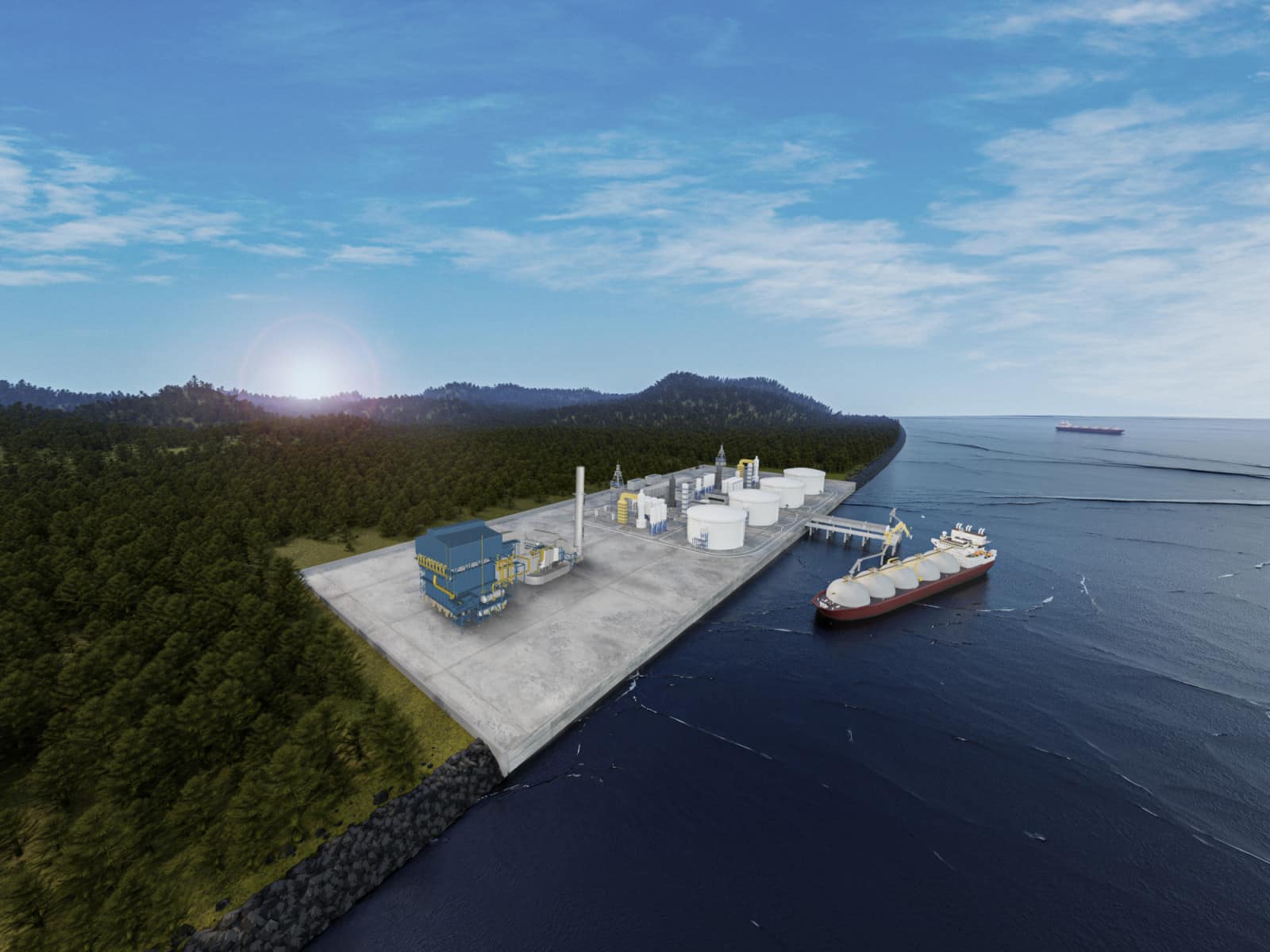
Transporting hydrogen directly over long distances presents significant technical and economic challenges, a limitation that ammonia overcomes. As a hydrogen carrier, ammonia can be liquefied efficiently and shipped in bulk, but unlocking its potential requires high-performance cracking technology to release hydrogen at industrial scale. The agreement positions Uniper to establish a scalable hydrogen import infrastructure, starting with a terminal at Wilhelmshaven.
The license package covers engineering services, main equipment supply, and catalysts, enabling Uniper to move from pre-FEED (front-end engineering and design) to FEED within a structured timeline. The pre-FEED phase aims to refine project scope, validate technoeconomic assumptions, and mitigate operational risks ahead of full-scale deployment, scheduled to begin at the end of next year.
Holger Kreetz, COO of Uniper, highlighted the strategic imperative: “Domestic production alone cannot meet future hydrogen demand – imports of hydrogen derivatives will be essential. Ammonia crackers are key to international hydrogen logistics, and together with thyssenkrupp Uhde, we are laying the foundations for the infrastructure that Europe needs for its energy future – including our planned hydrogen import terminal in Wilhelmshaven.”
The agreement builds on prior collaboration, including the spring 2025 commissioning of a demonstration ammonia-cracking plant at Uniper’s Gelsenkirchen-Scholven power site. That facility, processing 28 metric tonnes per day, validates technology performance and informs the industrial scale-up now under license. Funded by the Ministry of Economic Affairs, Industry, Climate Action and Energy of North Rhine-Westphalia, the demo plant is integral to Europe’s broader hydrogen strategy, linking decarbonization goals with energy security considerations for industrial sectors.
Nadja Håkansson, COO of thyssenkrupp Decarbon Technologies and CEO of thyssenkrupp Uhde, emphasized the role of cross-industry cooperation: “Our partnership with Uniper shows how cross-industry cooperation creates real added value. With our world-leading ammonia technology and our experience in executing complex plant projects, we are making a significant contribution to decarbonization and the development of a global hydrogen market.”
The agreement signals Europe’s intent to integrate global hydrogen supply chains into domestic energy systems. By scaling ammonia cracking for commercial applications, Uniper and thyssenkrupp Uhde aim to secure a reliable, flexible hydrogen supply for energy-intensive industries, mitigating risks associated with local production limits. With the pre-FEED and subsequent FEED phases setting the stage for operational deployment, the initiative represents a critical milestone for both industrial decarbonization and international hydrogen trade.
Stay updated on the latest in energy! Follow us on LinkedIn, Facebook, and X for real-time news and insights. Don’t miss out on exclusive interviews and webinars—subscribe to our YouTube channel today! Join our community and be part of the conversation shaping the future of energy.