


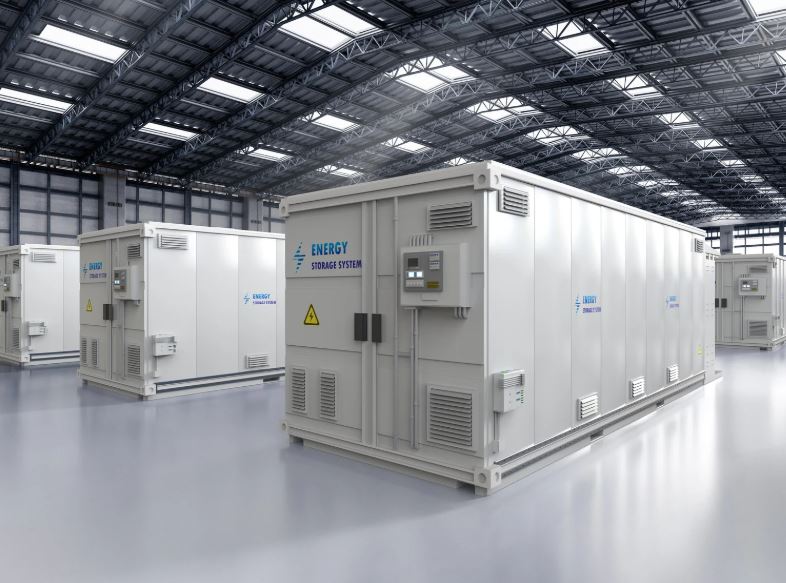

Battery energy storage capacity in the United States expanded by 13,809 MW over the past 12 months, representing 59.4% annual growth according to Energy Information Administration data. This acceleration positions storage as the second-largest source of capacity additions by absolute megawatts, trailing only utility-scale solar’s 31,620 MW, while substantially outpacing the 3,417 MW contributed by natural gas generation.
The growth trajectory shows no signs of moderating. EIA projections indicate developers will commission an additional 22,053 MW of battery capacity within the next year, a 60% increase over the current deployment rate. This expansion occurs against a backdrop of continued net decline in fossil fuel generation capacity, marking a structural shift in how the US grid absorbs new supply resources.
Geographic Concentration and Market Dynamics
California and Texas account for more than 70% of total national battery storage capacity, a concentration that reflects distinct market drivers in each state. Texas operates an energy-only wholesale market where price volatility creates arbitrage opportunities for storage assets, while California’s renewable portfolio standards and solar penetration have generated pronounced duck curve dynamics that storage helps address. Arizona registers growth but remains a tertiary market by comparison.
The clustering pattern raises questions about grid resilience and resource adequacy in regions without comparable storage deployment. States lacking robust renewable generation or market structures that adequately compensate storage face potential competitive disadvantages as the grid architecture evolves around intermittent generation paired with dispatchable battery resources.
Storage Growth Relative to Generation Additions
The 66% calendar year growth rate storage experienced throughout 2024 has persisted into 2025, according to the SUN DAY Campaign analysis of EIA data. While percentage gains from a smaller installed base explain some of this outperformance relative to mature generation technologies, the absolute megawatt comparison tells a more significant story about capital allocation in the power sector.
Nuclear capacity additions registered as negligible over the measurement period, consistent with the extended development timelines and regulatory complexity characterizing nuclear projects. Natural gas, despite maintaining operational flexibility advantages over battery storage in duration and discharge capacity, attracted only 3,417 MW of new investment. This represents approximately one-quarter of the capital deployment into storage and one-tenth of the investment in solar capacity.
The economic calculus behind these investment patterns reflects multiple factors: declining battery costs, federal tax incentives through the Inflation Reduction Act, renewable energy certificate monetization opportunities, and growing recognition of storage’s ancillary service value beyond simple energy arbitrage. State-level mandates in California, Nevada, and other jurisdictions have created guaranteed offtake for storage capacity, reducing merchant risk.
Technical Limitations and Duration Constraints
Battery storage capacity figures measure power output rather than energy duration, an important distinction that affects grid planning. Most deployed battery systems operate in the two to four-hour duration range, suitable for intraday arbitrage and frequency regulation but insufficient for multi-day renewable droughts or seasonal balancing. The 22,053 MW projected for the coming year likely follows similar duration patterns, meaning total energy capacity measured in megawatt-hours remains substantially lower than peak power output suggests.
Longer-duration storage technologies, including compressed air, pumped hydro, flow batteries, and hydrogen systems, face different economic and technical constraints. Their absence from rapid deployment figures indicates either inadequate cost competitiveness or insufficient market mechanisms to value multi-day storage capabilities. Grid operators in regions with high renewable penetration may encounter reliability constraints as solar and wind comprise larger generation shares without corresponding long-duration storage deployment.
Fossil Fuel Capacity Retirement Patterns
The net decline in fossil fuel capacity occurs through retirement rates exceeding new builds rather than an absolute prohibition on gas plant construction. Coal retirements continue accelerating as units reach end-of-life and face unfavorable economics against combined-cycle gas and renewables. Some natural gas peaker plants face similar pressure from battery storage that can provide equivalent capacity with faster response times and no fuel costs, though batteries cannot match the sustained output duration that gas turbines deliver.
This capacity transition raises adequacy questions during extreme weather events when renewable generation underperforms, and battery reserves deplete. The February 2021 Texas grid failure and subsequent summer peak demand events demonstrate scenarios where dispatchable thermal generation maintains system stability. Whether storage deployment at projected rates can fully substitute for retiring fossil capacity during stress periods remains contested among grid operators and energy economists.
Policy Framework and Investment Incentives
Federal tax credits under the Inflation Reduction Act provide investment and production incentives for storage paired with renewable generation. Standalone storage also qualifies, eliminating previous requirements for direct renewable coupling. These incentives lower the levelized cost of storage and improve project economics, accelerating deployment timelines.
State-level procurement mandates create additional pull-through demand. California’s storage requirements, established following the Aliso Canyon gas leak and subsequent reliability concerns, mandated utilities procure thousands of megawatts of storage capacity. Similar policies in Massachusetts, New York, and other states establish minimum storage targets that guarantee market demand regardless of wholesale price signals.
The interaction between federal incentives and state mandates can create market distortions where storage deployment exceeds economically optimal levels based purely on grid needs. Conversely, regions without such policy support may underinvest in storage relative to system requirements, particularly as renewable penetration increases and flexibility becomes more valuable.
Market Evolution and Competitive Positioning
Solar’s dominance in capacity additions, nearly 2.3 times storage deployment by megawatts, reflects the maturation of photovoltaic technology and continued cost declines. The pairing of solar and storage creates dispatchable renewable generation that addresses intermittency concerns, though at higher combined costs than solar alone. Developers increasingly structure projects with co-located or hybrid configurations to maximize tax benefits and streamline interconnection.
The 59.4% storage growth rate, while impressive, will necessarily moderate as the installed base expands. Sustaining absolute megawatt additions at 20,000+ MW annually requires continued cost reductions, expanded manufacturing capacity, and resolution of supply chain constraints around lithium, cobalt, and other battery materials. Chinese manufacturers dominate battery cell production, creating geopolitical dependencies that domestic content requirements in the Inflation Reduction Act attempt to address.
Whether current deployment rates represent sustainable market fundamentals or a temporary surge driven by tax incentive timing and pent-up demand will become clearer as projects commissioned in 2025 and 2026 enter operation. Grid operators must plan transmission and interconnection capacity around projected storage additions while maintaining reliability during the transition away from dispatchable fossil generation.


