





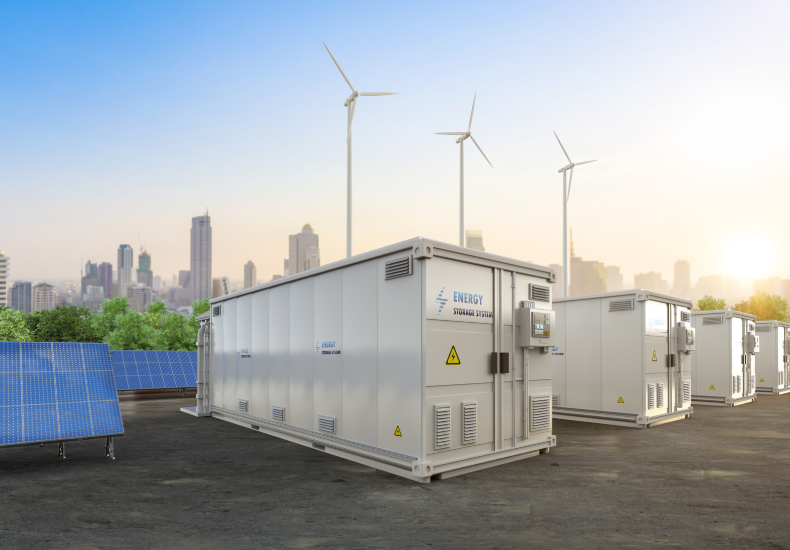
The US energy storage sector set a new benchmark in 2025, deploying 18.9 gigawatts of capacity totaling 51 gigawatt-hours across utility-scale, residential, and commercial segments, according to the latest US Energy Storage Monitor from Wood Mackenzie and the American Clean Power Association.
This figure eclipsed 2024’s 12 gigawatts and represents a near fivefold increase from 2022, highlighting a period of rapid expansion for the market.
Quarterly results mirrored this growth, with Q4 2025 alone installing 5.8 gigawatts and 14.8 gigawatt-hours of energy storage, dominated by the utility-scale segment at 4.9 gigawatts. By comparison, Q4 2024 registered 3.3 gigawatts, underscoring the acceleration in deployment over the past year. Projects have now expanded geographically, with Wood Mackenzie tracking initiatives in 13 US states, up from 11 in the previous report, while California and Texas continue to lead as traditional hubs.
Regulatory and policy factors played a complex role in 2025’s surge. The retention of the investment tax credit (ITC) for energy storage, even as it was removed for solar and wind, proved a stabilizing force amid uncertainty generated by the One, Big, Beautiful Bill Act (OBBA) and the Foreign Entity of Concern (FEOC) restrictions. These new regulations, effective January 1, 2026, disqualify ITC eligibility for projects receiving significant support from companies based in FEOC-designated countries, including China, a key supplier of battery components.
Residential installations surged to 2.7 gigawatts in 2025, a 92% increase from 2024, largely driven by the phasing out of ITC incentives for purchased systems, prompting homeowners to accelerate deployment. In contrast, commercial and industrial projects, which historically lag, grew 16% year-on-year but reached only 95.6 megawatts, with the majority deployed in Q4.
Market analysts caution that 2026 may see a moderation in growth following the record streak. Wood Mackenzie’s global head of energy storage research, Alisson Weiss, noted that delayed project signings and the rapid legislative shifts around OBBA and FEOC led to a flurry of activity in late 2025 as developers sought to secure ITC benefits. This has buffered the market against an immediate downturn, even as utility-scale battery system prices increased 23% year-on-year from 2024 to 2025.
Looking ahead, Wood Mackenzie forecasts roughly 500 gigawatt-hours of new US energy storage capacity between 2026 and 2031, representing 22.5 times the total installed from 2019 through 2025. Scenario analysis illustrates the breadth of potential outcomes: under a High scenario, which assumes minimal policy disruption and smooth FEOC guidance, annual deployments could surpass 36 gigawatts by 2031. A Base scenario, constrained by short-term FEOC restrictions and persistent US-China tariffs, projects around 28 gigawatts annually, while a Low scenario reflecting tight import controls and slower permitting could result in substantially lower installations.