


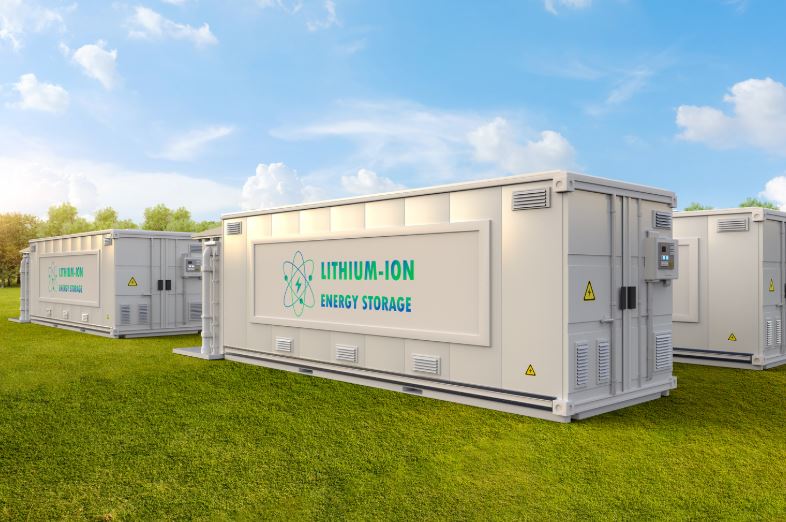

Dutch battery developer GIGA Storage has signed a tolling agreement with Swedish utility Vattenfall for 100 MW of its 300 MW/1,200 MWh Leopard project in Delfzijl, representing the largest standalone battery tolling arrangement in the Benelux region. The deal provides Vattenfall with 400 MWh of storage capacity beginning January 2028, enabling the utility to optimize operations across grid stability, portfolio balancing, and wholesale trading without capital expenditure.
Tolling Structures Address Merchant Market Volatility
The Vattenfall agreement reflects broader European market dynamics where tolling contracts provide developers with bankable revenue models in jurisdictions where pure merchant structures face profitability challenges. The Netherlands’ battery storage market operates predominantly on merchant principles, yielding approximately 5% unlevered internal rates of return against 10% weighted average cost of capital, creating a 480 basis point financing gap. Grid connection costs and unresolved double-charging regimes further suppress project economics, making long-term offtake arrangements financially essential for utility-scale assets.
Tolling agreements transfer optimization rights to counterparties at fixed rates, decoupling developer risk from volatile wholesale and balancing market revenues. Vattenfall operates similar structures across Europe, including a seven-year virtual tolling arrangement with Terralayr covering 55 MW/110 MWh across eight distributed German facilities. Traditional tolling models focus on single large-scale assets, whereas emerging virtual structures aggregate smaller systems through cloud-based dispatch platforms.
Grid Congestion Drives Storage Deployment Strategy
Project Leopard’s location adjacent to offshore wind production hubs in Groningen positions the facility to address transmission bottlenecks on TenneT’s high-voltage network. The 300 MW battery reached financial close in May 2025 with €300 million financing from eight European lenders, with commissioning scheduled for the second half of 2027. The project occupies the site of the former Aldel aluminum smelter, utilizing existing substation infrastructure for grid connection.
TenneT’s Time-Dependent Transport Rights mechanism allocates grid capacity to flexible assets during off-peak hours, with the transmission operator retaining authority to curtail connections up to 15% of annual hours during congestion events. Approximately 6 GW of the 9 GW TDTR capacity identified for allocation will serve battery projects, though over half of the applicants may receive reduced capacity allocations requiring project downsizing. GIGA Leopard is the first Netherlands facility to finalize a TDTR agreement, establishing operational precedent for developers navigating capacity constraint protocols.
Market Growth Trajectory Concentrated in the Residential Segment
The Netherlands’ battery capacity is projected to reach 2.9 GWh by end-2025, representing 115% year-over-year growth, with residential installations accounting for 860 MWh of the 1.55 GWh total additions. Utility-scale deployments contribute 360 MWh to 2025 capacity growth, significantly trailing behind-the-meter residential and commercial segments driven by net-metering phase-out incentives. By 2027, residential capacity is forecast to reach 4.5 GWh compared to 1.1 GWh for utility-scale deployment.
The concentration of growth in distributed residential systems contrasts with utility-scale project pipelines exceeding 15 GWh awaiting grid connection rights and financing. Regulatory uncertainty surrounding grid tariffs and permitting timelines constrains large-scale project advancement, while residential installations benefit from self-consumption optimization economics independent of wholesale market exposure. The Netherlands’ battery market evolution diverges from the UK and Italy, where contracted capacity mechanisms support utility-scale projects with 12-17% unlevered returns through long-term revenue certainty.


