


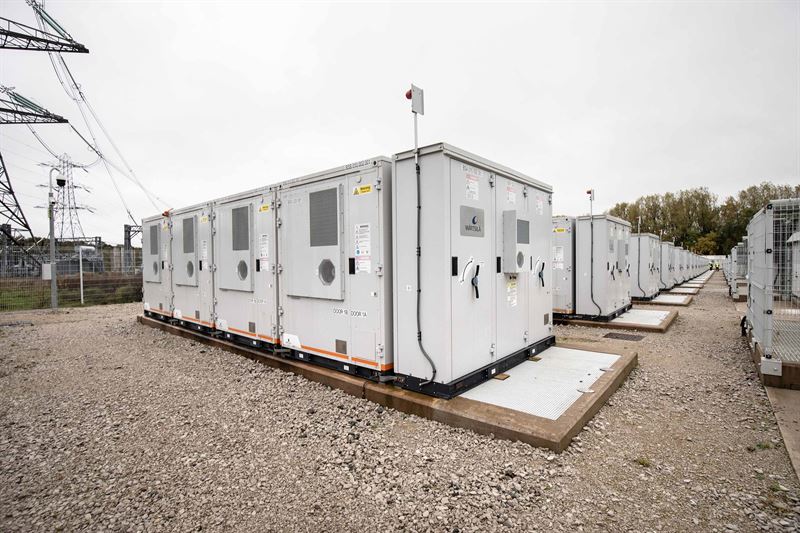

Wärtsilä has secured the fourth expansion phase of Origin Energy’s Eraring battery facility in New South Wales, adding 360 MWh to bring total capacity to 700 MW / 3,160 MWh upon completion in early 2027. The project’s scale positions it among the world’s largest battery installations, though its economic viability depends heavily on Australia’s National Electricity Market mechanisms for frequency control ancillary services, capacity payments, and energy arbitrage spreads that have demonstrated considerable volatility as renewable penetration increases and coal retirements accelerate.
The sequential expansion approach across four stages since 2023 reflects a risk-managed strategy allowing Origin to validate technical performance and revenue realization before committing additional capital. This phased deployment contrasts with single-stage gigawatt-hour projects announced elsewhere, providing operational learning and grid integration experience that informs subsequent phases. However, the approach also extends overall project timelines and may increase aggregate costs compared to integrated single-phase construction, though it reduces exposure to equipment cost fluctuations and market condition changes.
Australia’s National Electricity Market presents unique characteristics influencing large-scale storage economics. The market experienced negative pricing events totaling over 500 hours during 2024, driven by excess solar generation during midday periods when demand remains moderate. These events create charging opportunities for battery systems at minimal or negative cost, though capturing this value requires sophisticated forecasting and bidding strategies. Conversely, evening peak periods when solar generation declines generate price spikes reaching the NEM’s $16,600 per MWh price cap, though sustained high prices remain relatively infrequent.
The 700 MW power capacity paired with 3,160 MWh energy capacity yields an approximately 4.5-hour duration at full discharge rate, positioning the facility between short-duration frequency regulation assets and long-duration seasonal storage technologies. This duration range targets the shoulder periods before and after peak demand when dispatchable generation commands premium pricing, but durations remain insufficient to address multi-day renewable generation gaps that occasionally occur during extended periods of low wind and solar output across the NEM.
Frequency control ancillary services represent a significant revenue stream for Australian battery installations, with the market requiring rapid response capabilities to maintain grid stability as synchronous coal and gas generation declines. The Australian Energy Market Operator has implemented enhanced frequency control requirements, including fast frequency response markets where batteries demonstrate technical advantages over thermal generation. However, FCAS market revenues have compressed as battery capacity additions accelerate, with multiple large-scale projects commissioned during 2023-2024 increasing supply and reducing average clearing prices for these services.
The Eraring Power Station site provides strategic advantages, including existing grid connection infrastructure, transmission capacity, and substation equipment that reduce interconnection costs and timelines compared to greenfield locations. Origin’s ownership of the 2,880 MW coal-fired Eraring plant, scheduled for retirement by 2025 initially, though extended to 2027 in some units, allows the battery to utilize transmission assets as coal units progressively decommission. This repurposing of energy infrastructure sites for battery storage emerges as a pattern across multiple jurisdictions where transmission capacity exists, but generation transitions from fossil fuels to renewables.
Wärtsilä’s GEMS Digital Energy Platform handles the operational complexity of managing systems at a gigawatt-hour scale, where battery pack monitoring, thermal management, and market participation optimization require processing exponentially increasing data volumes. The platform’s market positioning reflects the energy storage industry’s evolution from hardware-centric competition toward integrated hardware-software systems where operational performance and revenue optimization increasingly differentiate offerings. However, software platform capabilities remain difficult to evaluate externally, with performance claims challenging to verify absent operational data disclosure that commercial sensitivities typically prevent.
The Quantum energy storage system’s modular architecture allows incremental capacity additions and potentially facilitates future technology upgrades or replacements as battery chemistry advances. This modularity provides flexibility but introduces integration complexity across different installation phases using equipment procured years apart. Battery technology improvements in energy density, cycle life, and cost-per-kWh continue, raising questions about technology lock-in risks when early-phase installations may compare unfavorably to later stages using more advanced equipment.
Wärtsilä’s Australian portfolio, exceeding 5.8 GWh, establishes a significant market presence in a jurisdiction experiencing rapid storage deployment. Australia installed approximately 4.5 GW of new battery capacity during 2024, driven by renewable energy targets, coal retirement schedules, and market mechanisms that reward dispatchable capacity. This installation pace creates supply chain demands for battery cells, inverters, and balance-of-system components, where procurement lead times and cost stability influence project economics. The concentration of multiple large projects among relatively few suppliers, including Wärtsilä, Tesla, and Fluence, raises questions about competitive dynamics and pricing power as the market matures.
The multi-term service agreement accompanying Stage 4 addresses operational risk and performance degradation management over battery lifecycles. Service contracts typically cover preventative maintenance, performance monitoring, and potentially capacity guarantees as battery packs degrade. These agreements transfer some operational risk to equipment suppliers but add recurring costs that project economics must accommodate. Service agreement terms, including response times, parts availability, and performance guarantees, significantly affect the total cost of ownership but remain commercially confidential in most projects.
Project completion by early 2027 extends construction timelines beyond some industry benchmarks where large-scale battery projects achieve commissioning within 12-18 months. The extended timeline may reflect equipment procurement queues, site-specific engineering complexity, or phased commissioning approaches that prioritize reliability over speed. Construction delays create carrying cost burdens and defer revenue generation, though avoiding premature commissioning that risks technical issues potentially justifies extended schedules.
The designation as “one of the largest battery energy storage facilities in the world” requires periodic recalibration as larger projects reach completion. Several installations under construction or announced exceed 3,000 MWh capacity, including facilities in California, Texas, and internationally. The competitive dynamics around scale leadership reflect marketing positioning more than operational significance, though genuine technical challenges emerge as project scale increases, including thermal management complexity, power electronics integration, and fire safety systems.
Origin Energy’s sustained investment across four expansion phases indicates confidence in project economics and strategic fit within broader portfolio decarbonization. However, Origin operates the Eraring battery within a larger generation and retail portfolio where operational flexibility and hedging value may justify investments that pure-play storage developers would find marginal on a standalone basis. Integrated utilities can optimize storage dispatch against their own generation assets and retail load obligations, potentially capturing value that merchant storage operators cannot access.
New South Wales electricity market conditions include renewable energy zones under development, transmission infrastructure upgrades, and policy mechanisms supporting coal retirement that create favorable conditions for large-scale storage. The state government’s electricity infrastructure roadmap anticipates substantial additional renewable capacity requiring firming and grid stability services that storage provides. However, policy stability over multi-decade asset lifetimes remains uncertain, with changes to market rules, capacity payment mechanisms, or transmission access potentially affecting project returns.
The project’s positioning at a retiring coal plant site symbolizes energy transition but also highlights replacement challenges. The Eraring coal plant’s 2,880 MW capacity far exceeds the 700 MW battery output, illustrating that storage alone cannot directly replace dispatchable fossil generation on a megawatt basis. The battery’s 4.5-hour duration further limits its ability to serve as a direct coal replacement, instead providing complementary services that enable higher renewable penetration while other technologies address extended duration and capacity requirements.
Battery fire safety considerations intensify at gigawatt-hour scales, where thermal runaway events could release substantial energy and toxic gases. Modern battery installations incorporate multiple safety systems, including thermal monitoring, gas detection, fire suppression, and physical separation between battery modules. These safety systems add costs and space requirements that scale non-linearly with project size, though standardized safety approaches developed across multiple installations help contain incremental costs.
The early 2027 completion timeline positions the facility to support New South Wales grid conditions as additional coal capacity retires and renewable additions continue. Whether this timing aligns optimally with market needs depends on actual retirement schedules, renewable construction timelines, and demand growth trajectories that demonstrate considerable uncertainty. Early completion relative to critical grid needs captures maximum value, while delays or accelerated alternative supply additions could compress margins.


