


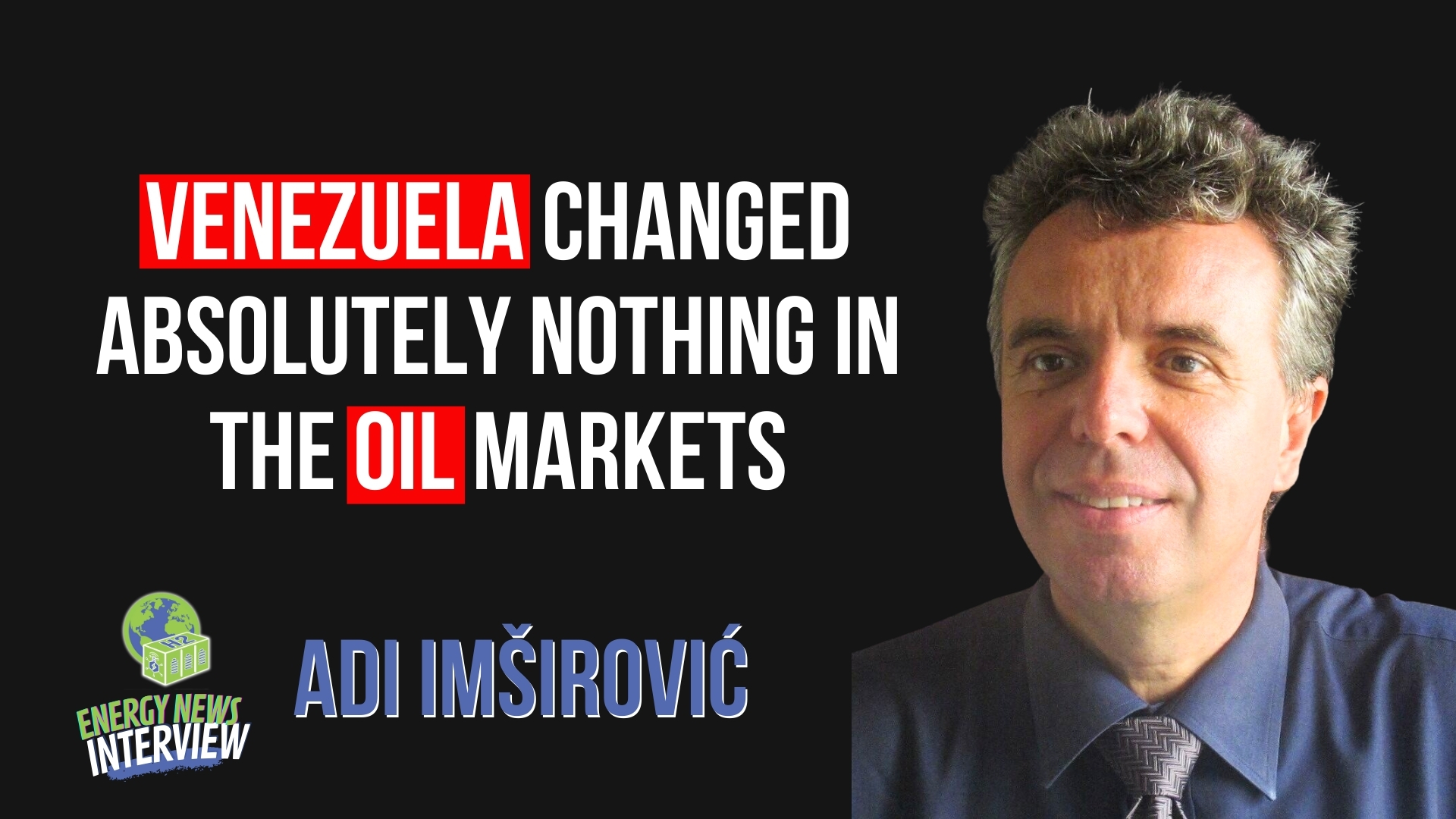

When the United States moved against Venezuela in early 2026, the geopolitical signal was loud. The oil market’s response was not. Prices did not behave as if a structural supply shock had occurred, despite Venezuela’s long-known role as a source of heavy crude tailored to U.S. Gulf Coast refineries. That disconnect is not an anomaly. It is the defining feature of oil markets in the energy transition era, claims Adi Imširović, director at Surrey Clean Energy and Lecturer on Energy Systems at Oxford University.
WATCH THE FULL INTERVIEW HERE
The immediate lesson is uncomfortable for headline-driven narratives. Military intervention did not alter physical balances in any meaningful way. Venezuelan production capacity remains constrained by degraded upstream assets, diluent shortages, fragile infrastructure, and institutional risk. None of these bottlenecks can be solved quickly, and none were solved by force. Markets priced that reality in within hours.
The second lesson is structural. Global oil markets have become extremely good at rerouting supply. Sanctions, wars, shipping disruptions, and political shocks now primarily change trade routes, discounts, and counterparties, not availability. Venezuelan crude can move to different buyers, under different flags, through different financial channels, without changing global supply tightness. The market absorbs the shock by widening spreads and reallocating flows, not by rationing fuel.
This is why the strategic framing matters more than the barrels. The intervention was less about adding oil to the system and more about controlling how that oil is sold, financed, insured, and settled. In 2026, energy security is no longer defined by ownership of reserves. It is defined by control over logistics, contracts, payment systems, and legal jurisdiction. Power sits with whoever sets the rules of access, not whoever owns the resource.
China’s role in Venezuela illustrates how easily scale is misrepresented. Venezuelan crude is commercially attractive for specific refineries that can handle very heavy, high-sulfur blends. It matters at the margin. It does not materially shift the balance of a system as large as China’s total import base. Treating it as a decisive strategic lever overstates its importance and understates how diversified modern crude supply has become.
The more relevant geopolitical impact lies elsewhere. By reshaping the terms under which Venezuelan oil can be traded, the United States signals its willingness to police energy flows in its hemisphere through regulatory and financial control rather than supply denial. That approach fits a world where outright embargoes are porous, but access to shipping, insurance, and settlement can still be weaponized.
The interview with Adi Imširović surfaces a deeper contradiction that the Venezuela episode exposes. Non-renewable resources such as oil and gas appear abundant and resilient, even amid war and sanctions. Renewable resources that should, by definition, be self-renewing are under severe stress. Clean air, clean water, fisheries, and forests are all deteriorating. The difference is not geology. It is market design.
Oil and gas operate within well-defined markets with prices that allocate supply and demand efficiently. Many renewable commons do not. Where there is no price, there is no discipline, and where there is no discipline, overuse follows. This is not a moral argument. It is an institutional one, and it has direct implications for how the energy transition is managed.
The gas market reinforces this point. A large wave of new gas supply is entering the global system over the second half of the decade, pushing prices down and easing short-term security concerns. Cheap gas can accelerate coal displacement, but it can also delay investment in renewables if policy frameworks allow gas to undercut clean power without accounting for full system emissions. Methane leakage turns what looks like a bridge into a liability when governance fails.
Electricity markets sit at the center of this tension. The transition will not succeed or fail on technology alone. It will hinge on whether power markets expose real marginal prices, reward flexibility, and allow demand to respond. Without that, systems overbuild capacity, peak demand remains stubbornly high, and consumers blame clean energy for costs driven by poor design.
As storage scales and long-duration batteries become viable, the old assumptions embedded in power markets break down. Scarcity pricing, peak premiums, and the role of gas peakers all change. Systems that allow prices to signal value will adapt quickly. Systems that suppress those signals will face rising costs and political backlash.
The throughline across oil, gas, and power is incentives. The Venezuela intervention did not move oil prices because markets already understood the physical constraints. The energy transition will not accelerate on ambition alone for the same reason. Outcomes follow rules, not rhetoric. Where polluters pay, clean options scale. Where governments replace markets with ad-hoc controls, gray economies emerge, risks rise, and capital retreats.
In 2026, energy security is not about barrels in the ground. It is about whether institutions can align prices, risk, and investment with the system they claim to want. Venezuela is not the exception to that rule. It is a case study in what happens when politics collides with markets that no longer behave the way policymakers expect.


