




At every major hydrogen conference, the spotlight usually goes to electrolyzer giants and megawatt-scale system integrators. Yet at H2 MEET 2025, one of the most technically revealing conversations happened far from the mainstage, inside a modest booth belonging to SHINSUNG C&T, a company specializing in something few people outside the engineering bubble talk about: the components inside the electrolyzer stack.
According to Sungti Imchen, a representative of SHINSUNG C&T, their PTL innovation addresses an issue that has quietly slowed global electrolyzer deployment: component durability and contact efficiency.
WATCH THE INTERVIEW HERE

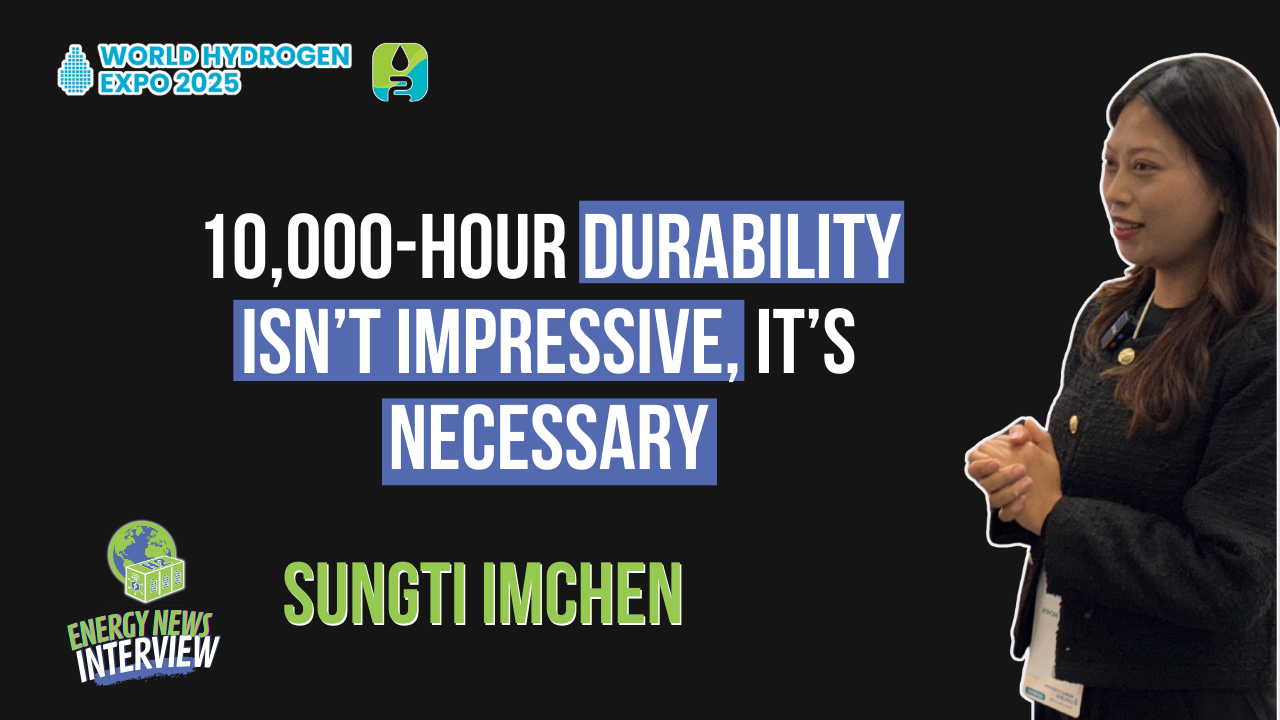
“Our contact area is 99.9%, a number that’s extremely difficult to achieve,” Imchen explained. It’s a claim that may sound like marketing at first glance, but SHINSUNG backs it with long-term durability data. Their in-house test stack has been running continuously for 6,500 hours without failure, with expectations to reach 10,000 hours.
To put this into perspective: many system integrators publicly acknowledge that stack degradation remains one of the most critical cost and performance bottlenecks in the hydrogen sector. A PTL that can extend stack life while reducing servicing requirements doesn’t merely save money; it reshapes the economics of green hydrogen.
What makes SHINSUNG C&T’s approach particularly interesting is its level of customization. While many component suppliers offer a standard product range, SHINSUNG adjusts everything from porosity and thickness to PT-coating composition based on each customer’s design and operational strategy.
This degree of flexibility is rare in a market dominated by standardized mass-production. The company’s ambition aligns with global market direction: the push toward eco-friendly technologies stretches across mobility, transport, backup power, material handling, and industrial energy systems. In these markets, electrolyzer reliability isn’t a “nice-to-have”, it’s the determining factor for whether green hydrogen scales or stalls.