


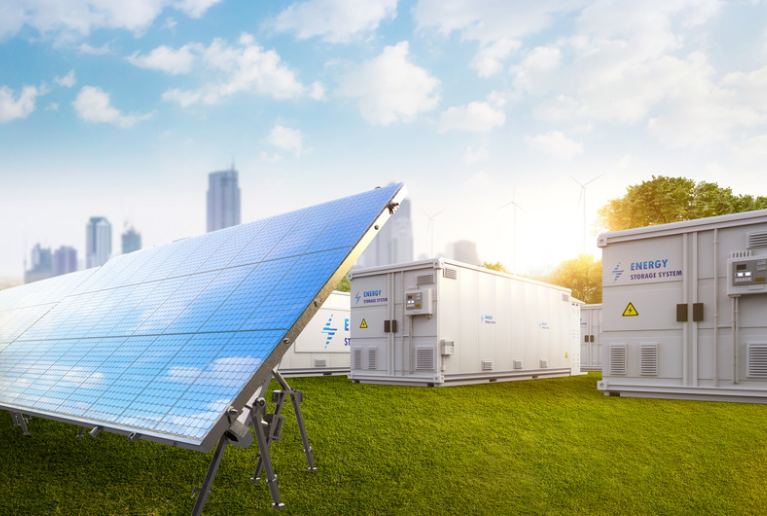


Saudi Arabia’s renewable energy and storage landscape is set to advance with the installation of AMG LIVA’s Hybrid Energy Storage System at Aramco’s Bulk Plant in Tabuk.
The system combines Lithium-Ion and Vanadium Redox Flow Batteries with artificial intelligence-driven routines and self-learning algorithms, designed to enhance efficiency, reliability, and battery lifespan. The integration will occur within an existing solar plant, demonstrating a hybrid storage solution that can operate independently from the grid while supporting the Kingdom’s decarbonization objectives under Vision 2030.
LIVA’s Hybrid ESS aims to address key challenges in renewable energy deployment: intermittency and grid dependency. By merging Lithium-Ion and vanadium flow technologies, the system balances the high energy density of Lithium-Ion with the long-duration cycling stability of VRFBs. AI management algorithms optimize charging and discharging patterns, extending operational lifetime while reducing operational risk. This approach signals a shift toward more intelligent, hybridized storage systems in large-scale solar projects, which remain critical as Saudi Arabia seeks to increase the renewable share in its energy mix.
The deployment also aligns with AMG’s broader strategy in circular materials and advanced battery production. The IK Metals Reclamation and Catalyst Manufacturing Project, branded as the IK Supercenter, is a joint venture between Shell, AMG Recycling B.V., and local partner United Company for Industry. The facility will recycle metals including vanadium from spent catalysts and gasification ashes from Aramco’s Jazan Integrated Gasification Combined Cycle Plant. This industrial recycling approach reduces carbon emissions relative to traditional mining and is expected to supply vanadium electrolyte for flow batteries domestically, fostering a fully integrated, made-in-KSA value chain.
Analysts note that Saudi Arabia’s growing investments in energy storage and local battery manufacturing are essential for achieving its 2030 renewable energy targets, which include generating 50% of electricity from renewables and increasing storage capacity to support grid stability.


