


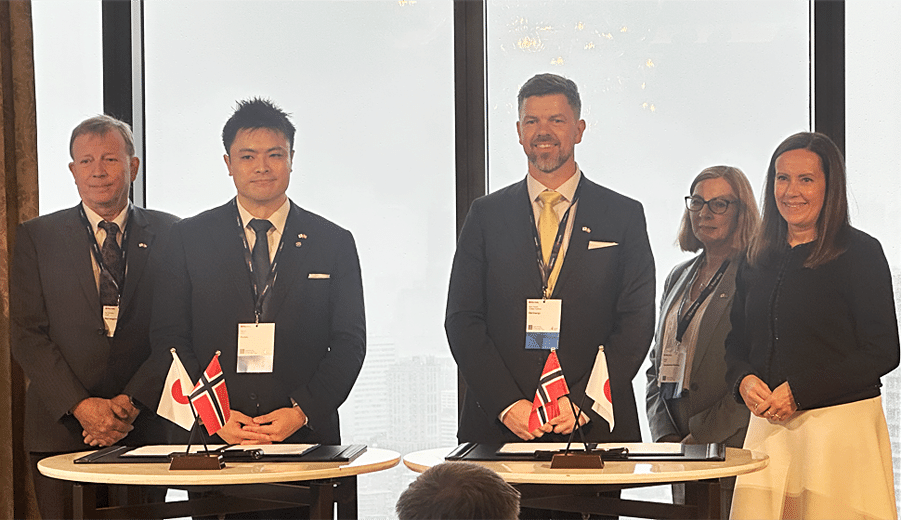


MODEC and Eld Energy have signed a memorandum of understanding to develop a 1.2 MW solid oxide fuel cell based power system integrated with carbon capture, targeting long-duration offshore deployment.
The agreement, announced in Tokyo during the official visit of Norway’s Crown Prince Haakon and in the presence of Norway’s Minister of Fisheries and Ocean Policy, builds on a multi-year collaboration that began in 2025. The partners have already tested scaled systems ranging from 40 kW to 120 kW, including integrated carbon capture pilots, positioning the new phase as a transition from experimental validation toward commercial scale demonstration.
At the core of the project is solid oxide fuel cell technology, which generates electricity through high temperature electrochemical reactions rather than conventional combustion. SOFC systems can operate on multiple fuel inputs, offering flexibility in offshore environments where fuel logistics and system reliability remain critical constraints. When combined with carbon capture, the configuration is intended to reduce direct emissions from onboard power generation without compromising operational uptime, a key requirement for FPSO operations that often run continuously for years.
The shift toward integrated carbon capture at the power generation level reflects broader pressures in offshore oil and gas operations, where decarbonization efforts increasingly focus on Scope 1 emissions reduction rather than downstream offsets. FPSOs, which function as both production facilities and processing hubs, present a particular challenge because they require constant electricity and heat supply under variable environmental conditions.
The planned 1.2 MW system, scheduled for onshore testing in 2029, represents a step change from earlier pilot deployments. Scaling SOFC systems from kilowatt level demonstrations to megawatt scale introduces technical uncertainties related to thermal management, system durability, and efficiency degradation over long operating cycles. These factors are particularly relevant in offshore contexts where maintenance access is limited and equipment reliability directly affects production continuity.
MODEC’s role in system integration and carbon capture design highlights a growing convergence between offshore engineering and emissions management technologies. Rather than treating carbon capture as a downstream addition, the architecture under development integrates it directly into the power system, potentially reducing retrofit complexity but increasing upfront engineering and capital requirements.
From an energy systems perspective, SOFC technology offers theoretical efficiency advantages compared with conventional gas turbines used on FPSOs. High operating temperatures enable internal fuel reforming and reduce conversion losses, while the ability to operate on different fuels provides operational flexibility. However, long-term performance in offshore conditions remains a key uncertainty, particularly when coupled with carbon capture systems that introduce additional energy penalties and system complexity.
The inclusion of carbon capture in offshore power generation also raises questions about lifecycle emissions accounting and infrastructure readiness. While capture systems can reduce direct emissions at the point of generation, their effectiveness depends on storage, transport, and long-term carbon management infrastructure, which remains unevenly developed across offshore regions.


