


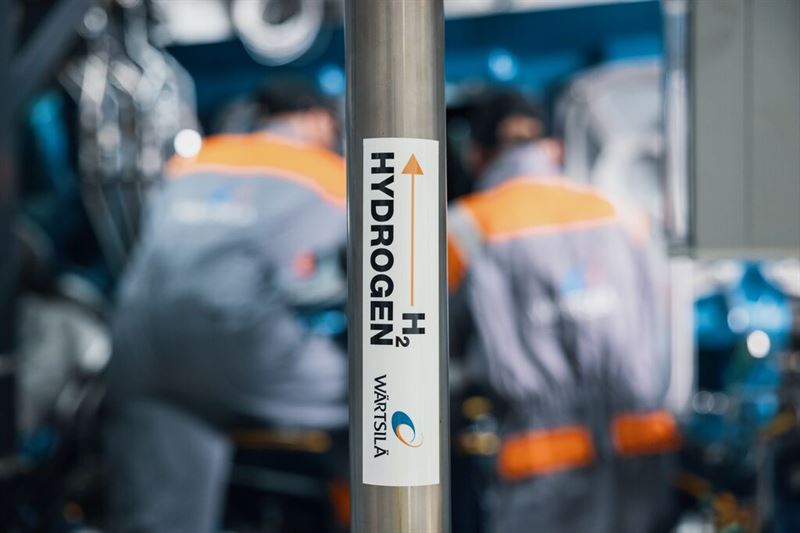


A new Finnish consortium, MatH2, has been launched to address one of the hydrogen economy’s least resolved bottlenecks. Led by the VTT Technical Research Centre of Finland Ltd and supported through a co-innovation program funded by Business Finland, the initiative brings together ten industrial and research partners spanning materials suppliers, component manufacturers, technology developers, and end users.
The participation of Wärtsilä reflects a growing recognition that hydrogen infrastructure challenges extend far beyond fuel production. While Europe continues investing in pipelines, terminals, storage facilities, and industrial applications, the integrity of metals exposed to hydrogen remains a significant commercial and engineering risk.
Hydrogen embrittlement, corrosion, and degradation at weld interfaces continue to constrain equipment lifetimes and increase capital expenditure requirements. The problem is particularly acute because hydrogen molecules, owing to their small size, can penetrate metallic structures and weaken mechanical properties over time. For large scale deployment, operators require predictable material performance under varying pressures, temperatures, and chemical conditions.
MatH2 intends to create a portfolio of hydrogen compatible materials and components designed to withstand these stresses while maintaining economic viability. The consortium includes industrial participants such as Neste, SSAB, Teknos, EOS, Nordic Tank, Bumax, and SP Stainless, alongside the University of Oulu.
The emphasis on materials science reflects an increasingly important reality for policymakers. European hydrogen targets have focused heavily on production volumes. The European Union aims to produce 10 million tonnes of renewable hydrogen domestically and import another 10 million tonnes by 2030. However, several independent assessments have questioned whether those ambitions can be achieved within current infrastructure and market constraints.
Infrastructure reliability remains central to that debate. Pipelines, storage vessels, reactors, marine engines, and fuel processing systems all depend on materials capable of long term hydrogen service without significant degradation. Failures in any of these components translate into higher insurance costs, operational downtime, and slower investment decisions.
Finland views these challenges through both an industrial and economic lens. National estimates suggest that a mature hydrogen sector could contribute up to €34 billion annually to Finnish GDP by 2035 and support more than 60,000 jobs, although such projections depend heavily on successful commercialization, export competitiveness, and infrastructure deployment. Realizing those ambitions requires converting Finland’s advantages in low carbon electricity generation and strong grid infrastructure into bankable industrial projects rather than theoretical potential.
The creation of MatH2 under the broader WISE, or Wide and Intelligent Sustainable Energy, framework signals an effort to bridge research capabilities with industrial execution. The model departs from earlier hydrogen initiatives that concentrated primarily on production technologies while assuming downstream infrastructure challenges would be solved incrementally.
That assumption is increasingly difficult to sustain. The International Energy Agency notes that low emissions hydrogen still accounts for less than 1% of global hydrogen output, despite years of policy support and investment announcements. Project delays, cancellations, and cost inflation continue to expose weaknesses across supply chains and infrastructure ecosystems.
For companies such as Wärtsilä, which recently initiated validation of a 100% hydrogen engine for grid applications in northern Spain, material reliability is not an abstract research question but a prerequisite for commercialization. Large scale engines operating entirely on hydrogen require components capable of enduring demanding thermal and chemical environments without compromising safety or maintenance schedules.
Add EnergyNews.biz as a preferred source on Google


