


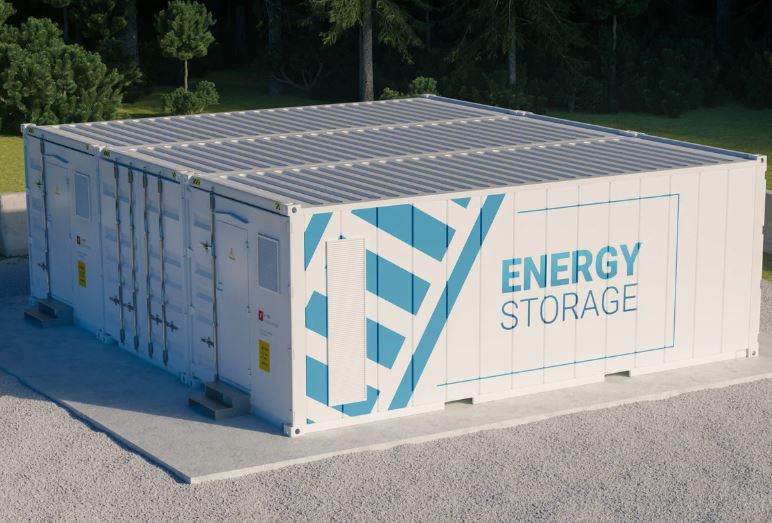


Independent power producer Grenergy has secured a 1 TWh annual nighttime power purchase agreement for its Elena battery energy storage system in northern Chile, underscoring how large scale storage is increasingly becoming a commercial instrument rather than a grid balancing experiment.
The 15 year contract, disclosed on June 30, commits the company to delivering 1 TWh of electricity annually during nighttime hours, with supply expected to begin between July and October 2026. The agreement represents the largest PPA by energy volume signed by Grenergy to date and provides an important indicator of how energy markets are beginning to monetize dispatchable renewable power beyond daylight generation.
The contract centers on the 3.5 GWh Elena battery project in Chile’s Antofagasta Region, a facility that Grenergy intends to expand to 7 GWh. Elena forms part of the broader Oasis de Atacama development, which is planned to include 2.1 GW of solar photovoltaic capacity alongside 14 GWh of battery storage.
Those figures place the project among the world’s largest integrated solar and storage platforms. By comparison, the battery component of Edwards & Sanborn Solar and Energy Storage Project in California totals 3,287 MWh, slightly below Elena’s current 3.5 GWh configuration. The Chilean installation comprises 624 battery containers and 6,240 battery units, illustrating the rapid escalation in project scale that has characterized utility storage markets over the past several years.
The significance of the agreement extends beyond size. A guaranteed nighttime delivery profile addresses one of the persistent economic challenges facing high penetration solar systems: declining daytime power prices caused by abundant photovoltaic generation. In Chile’s northern grid, where solar resources are among the strongest globally, midday oversupply has periodically forced renewable producers to curtail generation. Long duration battery assets provide an alternative revenue pathway by shifting production into evening demand periods when market values are higher.
That dynamic increasingly defines investment decisions across Latin America. Storage is no longer justified solely through ancillary services or capacity payments. Instead, developers are pursuing energy arbitrage opportunities supported by long term contractual structures that provide predictable cash flows. The Elena agreement exemplifies that transition.
Chile has emerged as a particularly important testing ground for this model. The country combines exceptional solar irradiation with ambitious decarbonization goals and a growing pipeline of utility scale storage projects. In May, independent power producer ContourGlobal began commercial operations at the Victor Jara project, integrating 231 MW of solar generation with a 200 MW and 1.3 GWh battery system. The project originated within Grenergy’s development portfolio before being acquired alongside Quillagua 1 and Quillagua 2, the initial phases of Oasis de Atacama.
Supply chain relationships also reveal the industry’s increasing dependence on Chinese battery manufacturers. Earlier this year, Grenergy ordered 2,600 MWh of storage equipment from BYD for its Central Oasis project. Such procurement decisions reflect both cost competitiveness and manufacturing scale, although they continue to raise strategic questions regarding supply concentration in global energy storage markets.
Political visibility around these investments has likewise intensified. The inauguration of Elena drew participation from Jose Antonio Kast alongside senior cabinet officials, highlighting the extent to which large storage projects are becoming embedded within national industrial and energy policy narratives. While symbolic endorsements offer political momentum, the long term viability of these assets will ultimately depend on market mechanisms that reward flexibility, reliability, and temporal shifting of renewable generation.


