


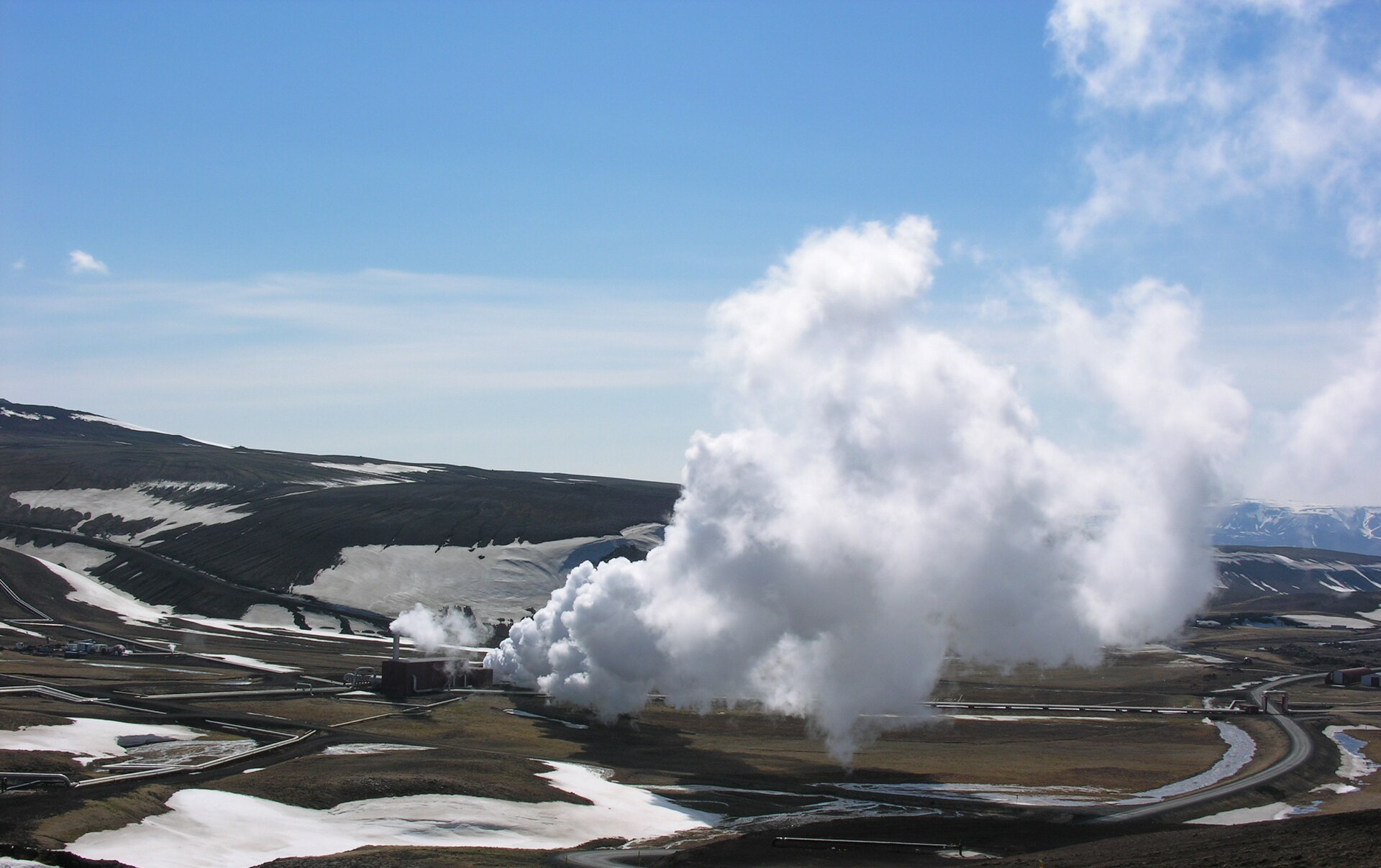


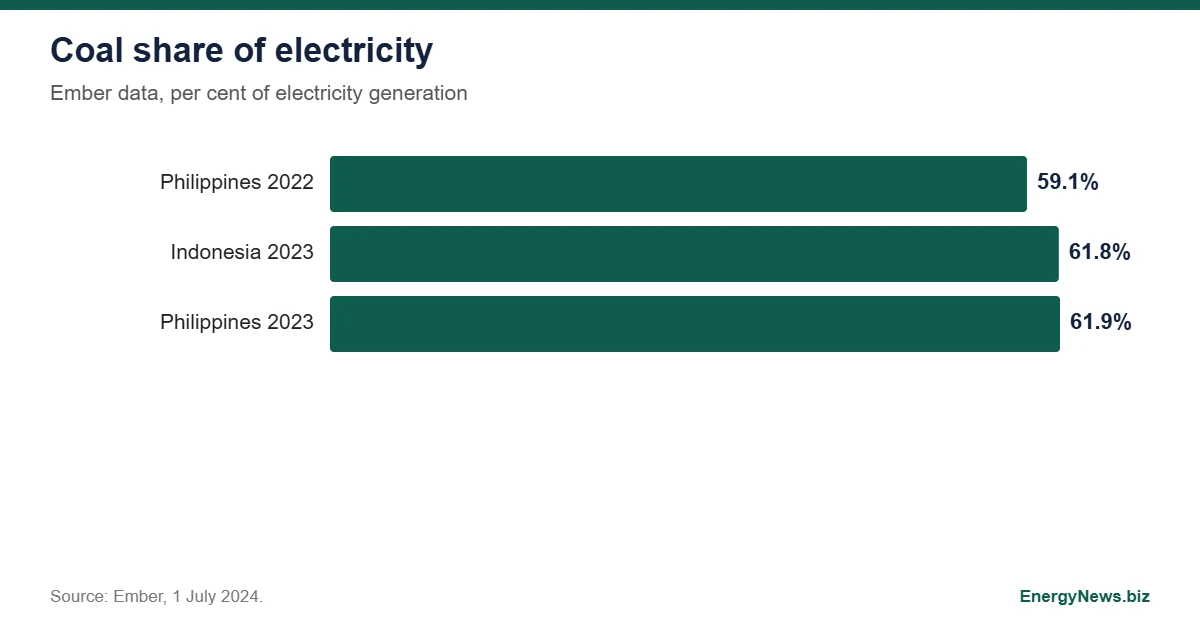
ASEAN geothermal faces a coal problem before it faces a drilling problem, according to speakers at a panel on 5 October 2026 at the Asean Energy Business Forum in Manila. Coal supplied 61.8% of electricity in Indonesia and 61.9% in the Philippines in 2023, according to Ember data, two of the bloc’s main geothermal markets. The panel’s argument, published on 22 October, is that cheap fossil generation weakens the investment case for 24/7 geothermal power.
Coal share in the two ASEAN geothermal leaders
The panel, titled “Unlocking Asean’s Geothermal Potential: A 24/7 Foundation for a Secure Future”, heard that both countries depend on coal for nearly two thirds of power, against less than half across ASEAN as a whole. The Philippine share rose from 59.1% in 2022 to 61.9% in 2023, a gain of 2.8 percentage points in one year (ENB calculation from the Ember series).
Yudiandra Yuwono, lead modeller at the ASEAN Centre for Energy, argued that a coal heavy system undermines the case for geothermal and that the advantages of fossil generation should be removed. Without a policy that changes the economics of coal, he said, developers are gambling on how much demand will grow in a given area.
Where the geothermal is and where the demand is
Siting is the second constraint for ASEAN geothermal. About two thirds of Indonesia’s geothermal resources lie on Sumatra and Java, while new industrial demand is emerging elsewhere. Sulawesi was the example raised: industrial users there can build a coal plant beside their operations, whereas a geothermal plant must be built where the heat is.
That mismatch matters for an ASEAN geothermal build out because heat cannot be moved. A resource on one island does not supply a smelter on another without transmission, and the panel did not put a cost or timeline on such links.
De-risking exploration, and who pays
The panel returned to early stage exploration risk, which the World Bank has identified as a major obstacle to private financing. The Philippines is backing a US$170 million de-risking facility supported by an Asian Development Bank sovereign loan and implemented through the Department of Energy and the state owned LandBank, to cover early stage exploration. Speakers noted that the Philippine government absorbed large exploration costs in the 1970s and 1980s, and that Indonesia developed resources through public private partnerships and still shares exploration risk through government led drilling.
Jerome Cainglet, president and chief operating officer of Energy Development Corporation (First Gen Group), argued that the cost comparison with intermittent renewables should include the backup capacity those sources need. Joeffrey Caranto of PT Daya Mas Bumi Sentosa stressed state support for exploration risk. Rexor Amancio of the Global Renewables Alliance called for stronger regional cooperation and more private sector involvement. These are the speakers’ positions, not agreed policy.
What to watch for ASEAN geothermal
The ASEAN geothermal figures to track are the 2024 and 2025 coal shares for both countries when Ember publishes them, the drawdown of the Philippine exploration facility, and whether Indonesia pairs government led drilling with any change to coal pricing. For a comparison of exploration funding elsewhere, see the US DOE geothermal exploration selections. Coal share data: Ember, July 2024.
Add EnergyNews.biz as a preferred source on Google


