


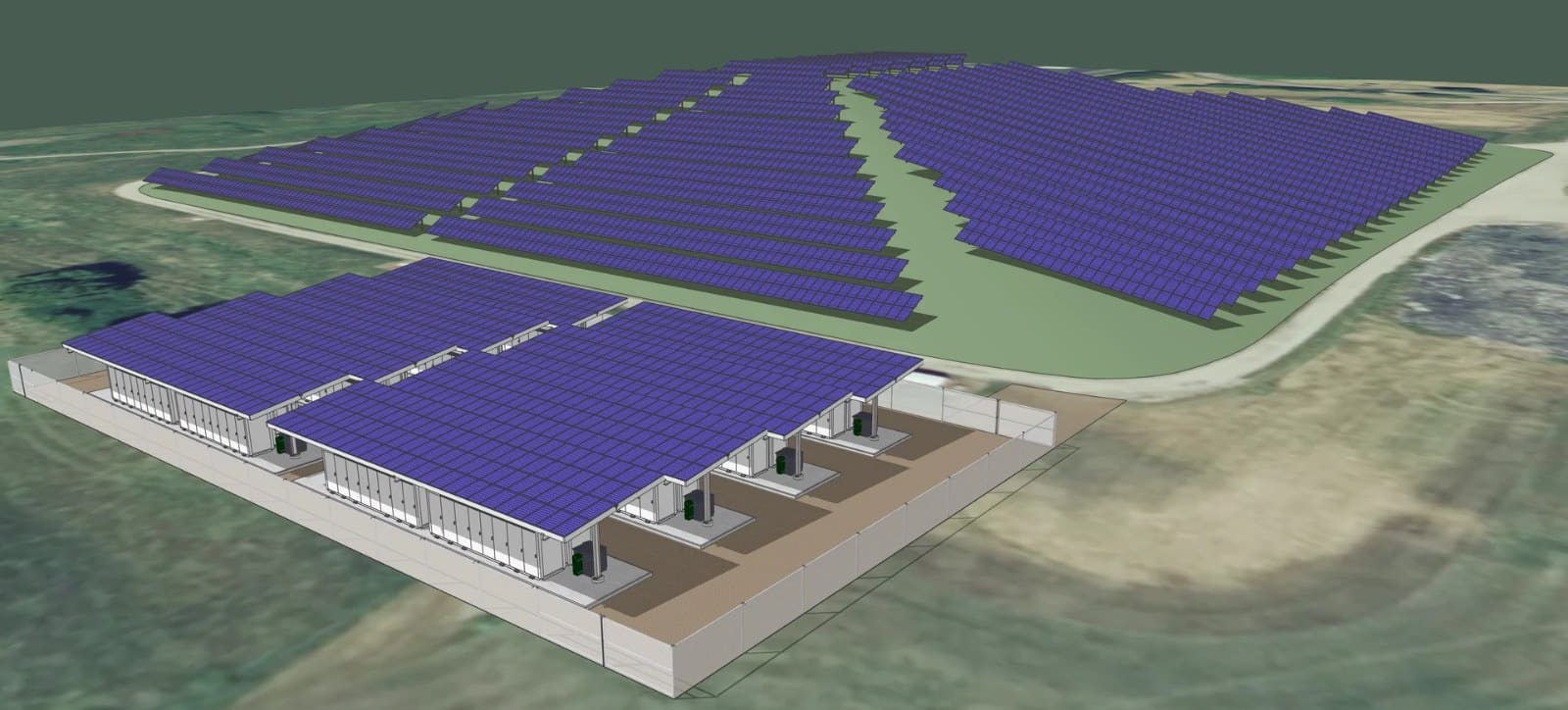


CATL TENER+ is a 9 MWh battery energy storage system that CATL unveiled on 29 October 2026 at All Energy Australia in Melbourne, alongside a sodium-ion system called TENER Sodium and three memorandums of understanding with Hitachi Energy, EPEC Group and UNSW Sydney. The release gives capacity, size and durability claims. It gives no price, no delivery date and no named order for the new system.
AEMO data sets the market for CATL TENER+
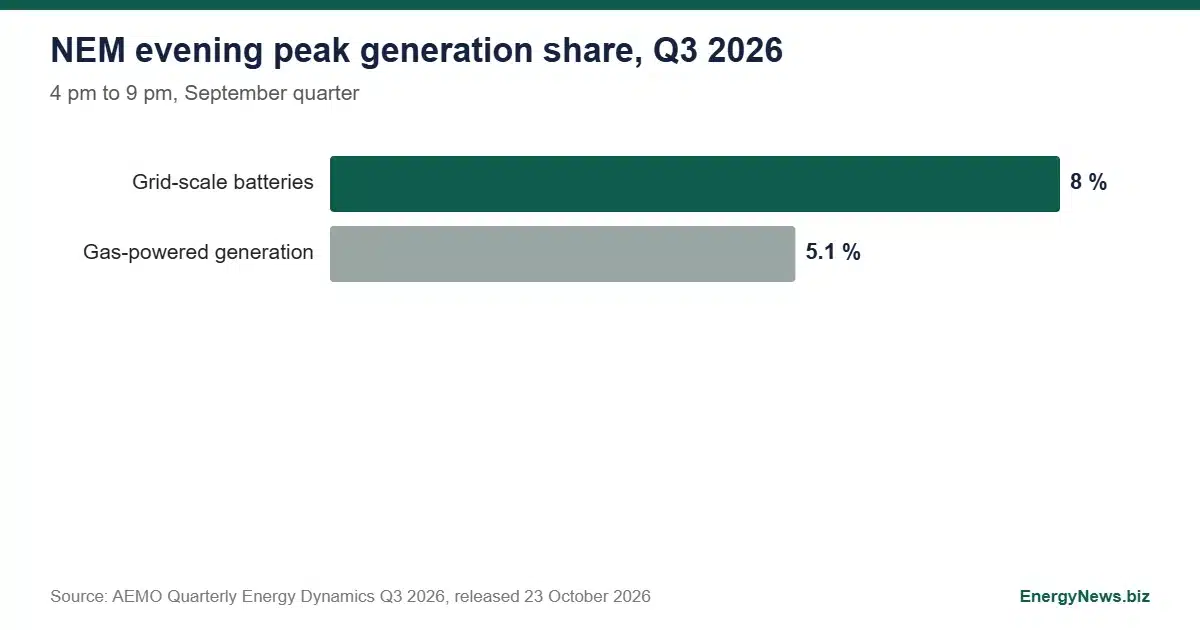
The Australian Energy Market Operator reported on 23 October 2026 that grid-scale batteries supplied 8% of National Electricity Market (NEM) generation between 4 pm and 9 pm in the September quarter, ahead of gas-powered generation at 5.1%, the first time in any quarter. Renewables supplied a Q3 record 44.3% of NEM generation, and the energy shifted by grid-scale batteries more than tripled year on year. Batteries set the price in almost half of dispatch intervals, up from 18% a year earlier, and the average NEM wholesale price fell 27% to $63 per MWh.
CATL quotes the same figures. They describe the market that CATL TENER+ is entering. They say nothing about the performance of any CATL product.
CATL TENER+ claims: 9 MWh, 40% fewer containers
CATL says CATL TENER+ is a 9 MWh system that cuts the number of containers needed by up to 40% and the project footprint by 12%. The release does not name the baseline for either percentage. The gap between 40% and 12% shows that containers are only part of the footprint: power conversion equipment, spacing and access make up the rest.
Other stated attributes are a 25-year design life, liquid cooling, protection for humid and coastal sites, noise below 65 dBA at 1 metre and a top-exhaust layout that vents hot air upward, away from neighbouring power conversion units. For round trip efficiency the release says only that thermal management "supports a higher" value. No number is given for CATL TENER+.
TENER Sodium: 95% efficiency and 10,000 cycles at 45 °C
TENER Sodium is described by CATL as the world’s first mass-produced, field-validated sodium-ion energy storage system. The stated figures are more than 30 MWh through a modular cabinet architecture, operation up to 55 °C, more than 10,000 cycles at 45 °C, 95% round trip efficiency and a life above 20 years. These are CATL claims. The release gives no test report, no depth of discharge and no measurement point for the efficiency. A DC figure and a grid-connected AC figure differ by the losses of power conversion and auxiliary loads.
The cycle claim can be tested against the life claim. Over 20 years, 10,000 cycles is 500 a year, or about 1.4 a day. A system that cycles twice a day would use 10,000 cycles in about 13.7 years, before 20 years pass. Cost and supply for sodium-ion also depend on cell materials, as research on hard carbon anodes for sodium-ion cells shows, and on the supply chain questions covered in an analysis of battery supply chain reliance on China.
Baranduda: 1,860 MWh is 207 units of CATL TENER+
The release points to the Baranduda Electrical Energy Reserve near Wodonga in Victoria, a 400 MW and 1,860 MWh project for which Birdwood Energy has chosen CATL as technology partner. The release does not say that CATL TENER+ will be used there. If it were, 1,860 MWh divided by 9 MWh is 206.7, so 207 units, and the project would run for 4.65 hours at full power (1,860 MWh divided by 400 MW).
CATL also claims more than 17 GWh of installed energy storage in Australia and more than 3,000 storage projects worldwide, and a 30.4% share of 2025 energy storage battery shipments, all according to CATL. For comparison, the launch of the dual battery heavy truck pack came with 13,000 units signed, a stated order that the TENER+ release does not match.
What the CATL TENER+ release does not disclose
The three memorandums of understanding carry no values and no dates. Hitachi Energy and CATL describe a proposed integrated offering that pairs CATL DC batteries with Hitachi Energy power conversion. CATL and EPEC Group, with the Xiamen Energy Storage Validation Research Institute, aim to strengthen system validation and grid compliance. CATL and UNSW Sydney plan a training and innovation centre in Western Sydney. None of these is a purchase order.
The test for the CATL TENER+ claims is a measured round trip efficiency at the grid connection point and a named Australian project that has ordered the system.
Add EnergyNews.biz as a preferred source on Google


