


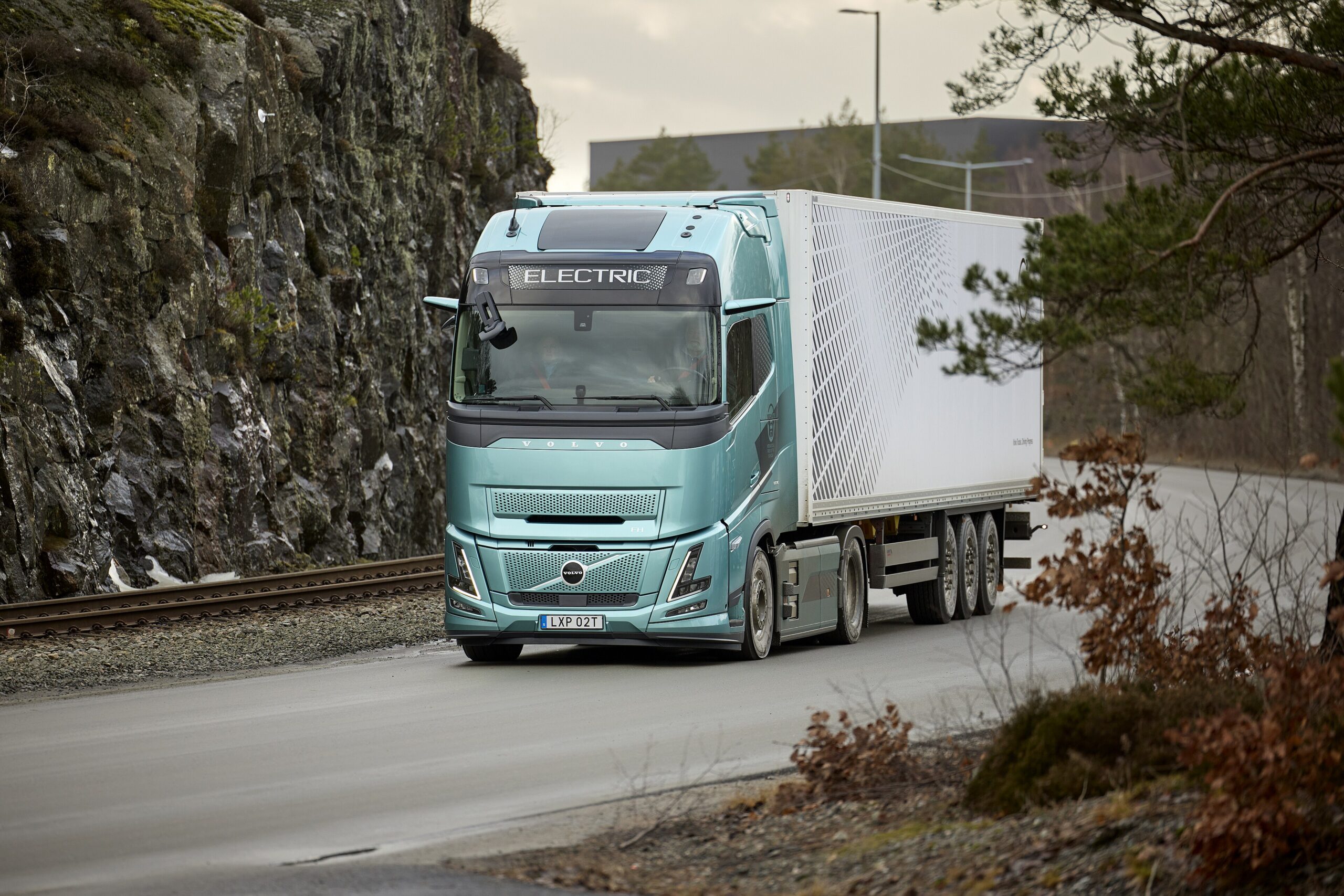


The CATL dual electric range extension battery was announced on 20 October 2026 for heavy-duty trucks, paired with the latest version of the battery swapping system of its QIJI business. CATL says agreements for 13,000 units were signed at the event. All figures below are CATL’s own claims.
How the CATL dual electric system works
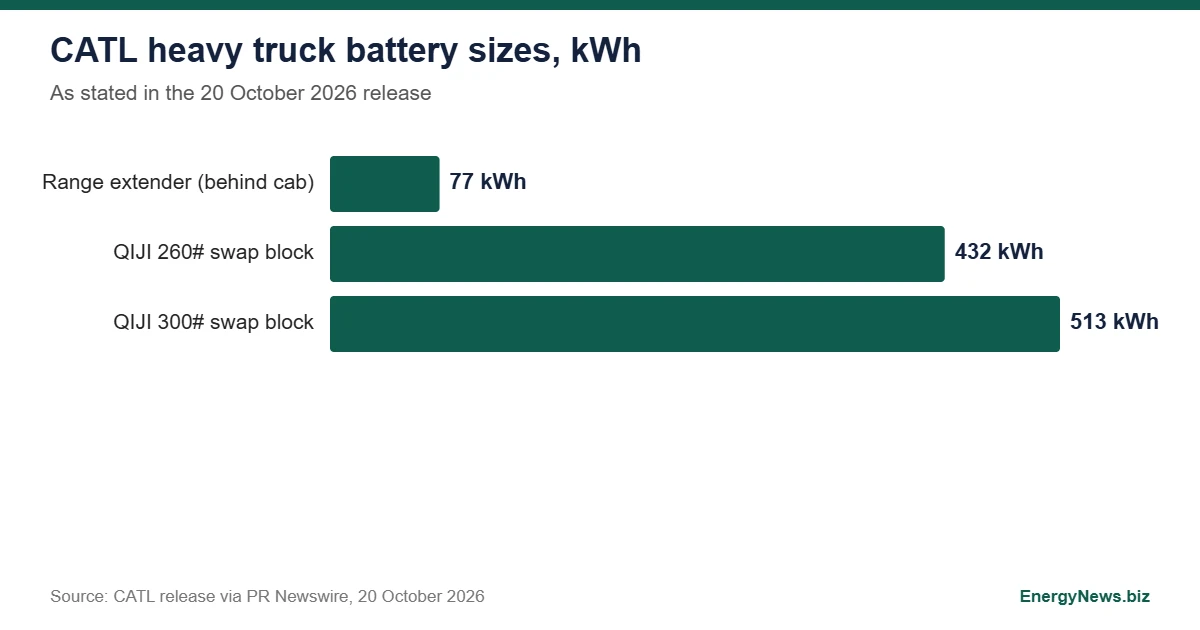
The main battery is a standardized chassis-mounted swappable block. A second, behind-the-cab battery, currently 77 kWh and capable of 3C charging, provides backup power. CATL says the range extender raises the main battery’s depth of discharge from about 70% to over 95%, so a block can be returned at under 5% state of charge, with power transferred to the extender within milliseconds. The extender stays with the vehicle, and the main battery can be leased by season.
CATL dual electric arithmetic on the claim
On the 432 kWh block, lifting usable depth of discharge from 70% to 95% adds about 108 kWh per swap cycle, more than the 77 kWh extender holds (ENB calculation from CATL’s figures). The release does not say how the extender and main battery share range, so the gain cannot be split between the two.
CATL dual electric network and commercial terms
QIJI adds 260# (432 kWh) and 300# (513 kWh) blocks to the existing 75# block, with swaps in five minutes and a stated 99.99% first-time success rate. Its battery-as-a-service plan bills net energy charged rather than discharged, and CATL says that cuts per-kWh rental by up to 20% for users on basic plans. CATL plans 900 swapping stations by the end of 2026, 2,000 in 2027 and, long term, 10,000 with partners.
The release does not give the current station count. Reaching 2,000 in 2027 from 900 means about 1,100 added stations in a year, roughly 92 a month (ENB calculation). Related trucking economics: electric truck cost of ownership against diesel in six of nine EU markets.
What to watch
Dated checks: the station count at the end of 2026 against the 900 target, and how many of the 13,000 agreed units convert to deliveries; the release does not say whether they are orders, and gives no customer names.
Add EnergyNews.biz as a preferred source on Google


