


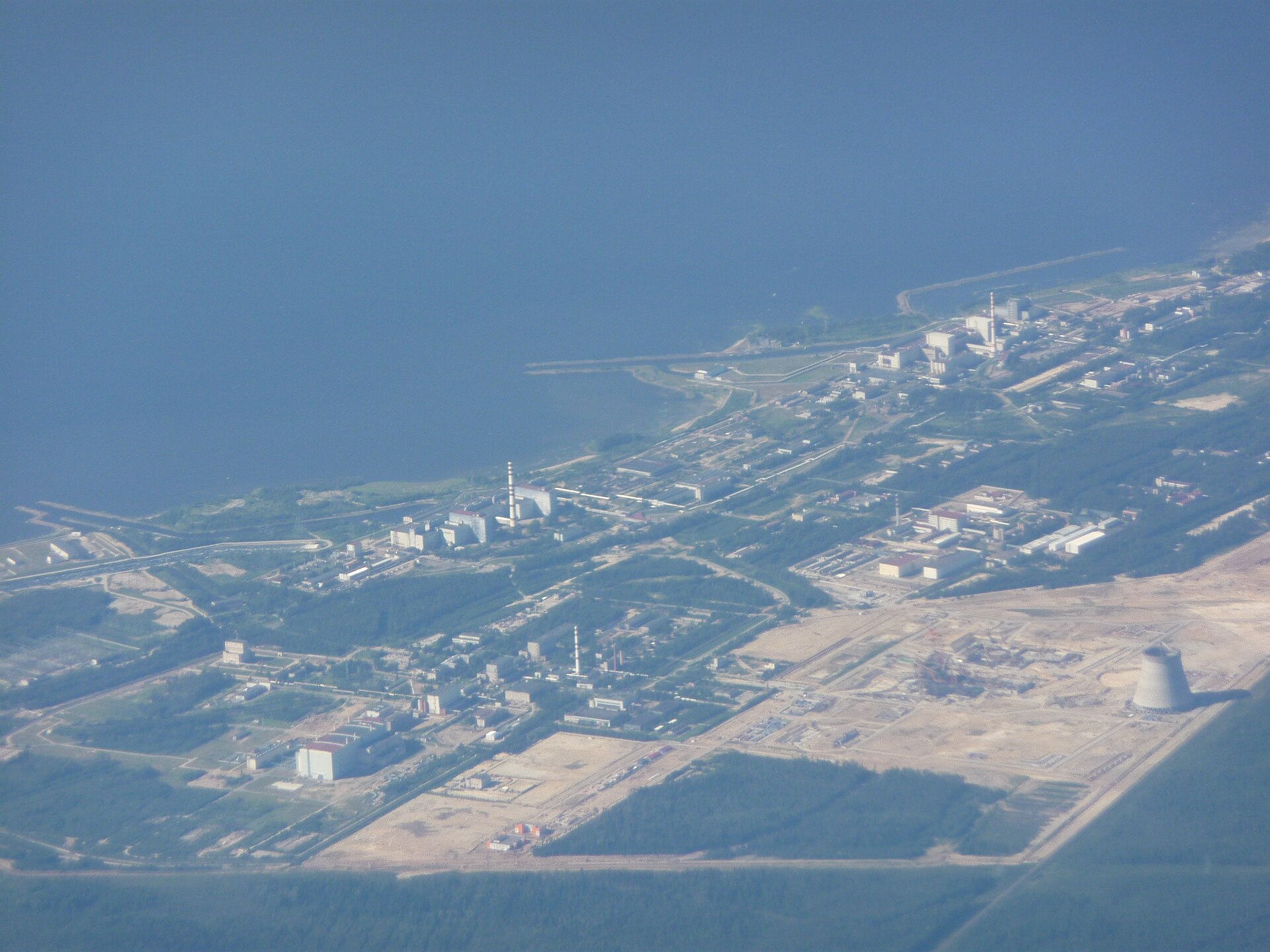


Leningrad II has taken delivery of four steam generators for its third new unit, the seventh reactor at the Leningrad nuclear site, Rosatom announced on 25 November. In a separate milestone, the second steam generator for the MBIR fast research reactor has been shipped to its construction site in Dimitrovgrad, according to World Nuclear News.
Both projects are central to Russia’s nuclear programme: Leningrad II replaces Soviet-era RBMK reactors near St Petersburg, and MBIR is meant to become the world’s most powerful research reactor.
Leningrad II unit 3: what arrived
Each steam generator is a cylinder 13 metres long with a diameter of 4.2 metres. Together the four weigh more than 1,300 tonnes. They have been shipped to the plant area for inspection and will be installed in their design positions in 2027.
Inside each unit are nearly 11,000 heat exchange tubes with a diameter of 16 mm, giving a heating surface of 6,000 square metres. Together, the four steam generators will produce nearly 6,500 tonnes of saturated steam per hour. The turbine rotor and blades weigh 675 tonnes in total and turn at 1,500 rpm.
Before installation, eight supports, two per steam generator, are being built inside the reactor building. They need 85 tonnes of steel reinforcement and 370 cubic metres of special concrete and should be ready by spring. Konstantin Khudyakov, director of the Leningrad NPP facilities programme at the contractor Titan-2, described the supports as substantial, given the weight of the equipment and the volume of water and steam it holds.
A replacement programme for the RBMK units
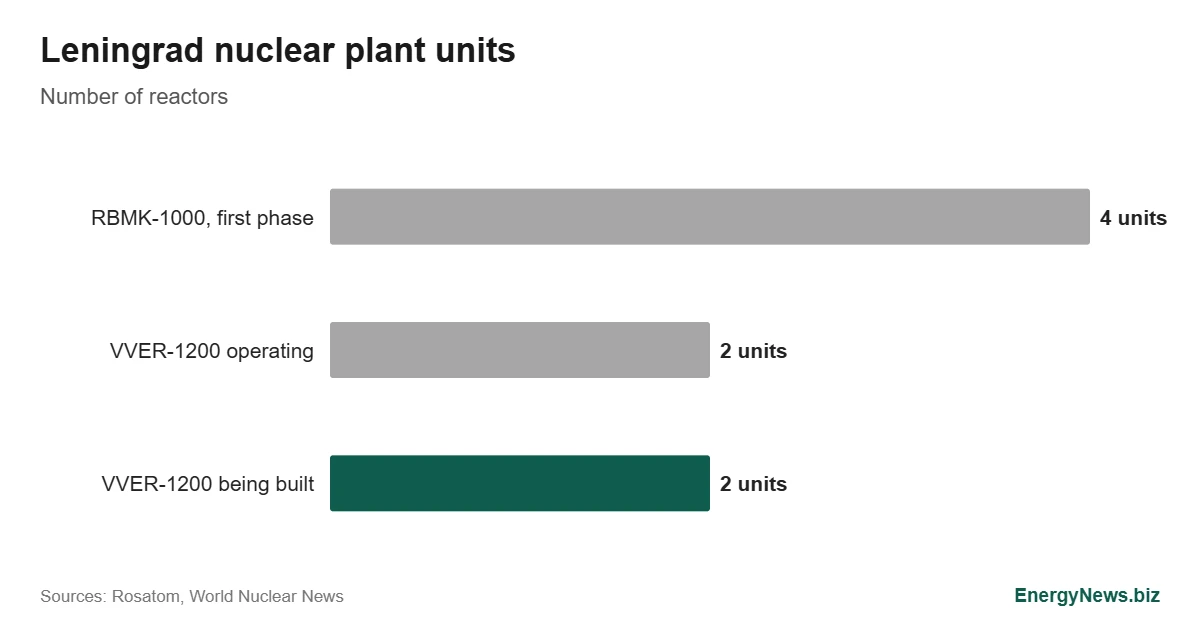
Leningrad II has two VVER-1200 units in operation, commissioned in 2018 and 2021. Units 3 and 4 are under construction. First concrete for unit 3 was poured in March 2024. The new units will replace the four RBMK-1000 reactors built in the 1970s, the same design family as the Chernobyl reactors. The design life of the VVER-1200 units is 60 years, with a possible extension of 20 years.
Other work planned for 2027 includes installing the reactor vessel in the third quarter and continuing construction of the double containment. With the steam generators on site a year ahead of installation, Rosatom keeps a buffer for inspection and any repairs.
A quick check on the steam figure: 6,500 tonnes of saturated steam an hour is in line with a pressurised water reactor of about 1,200 MW electric, which is the rating of the VVER-1200 design. Alexey Mochalov, deputy chief engineer of Leningrad NPP-2, said the steam volume is sufficient to drive and rotate the turbine.
MBIR: a 150 MWt fast research reactor
MBIR, the multipurpose fast research reactor, is under construction at the Research Institute of Atomic Reactors (RIAR) in Dimitrovgrad, Ulyanovsk region. Rated at 150 MW thermal, it is described as the most powerful research reactor in the world. It is a multi-loop design able to test lead, lead-bismuth and gas coolants, using MOX fuel.
Its two steam generators are reverse steam generators, each built from three modules, which saves space. In this design, sodium coolant flows inside the tubes, while feedwater enters and superheated steam leaves through the annular space. The approach is similar to the steam generators of BOR-60, which has operated since 1969. Svyatoslav Novikov, deputy head of technology and chief engineer at RIAR, cited positive BOR-60 experience as a key reason for the choice.
The manufacturer is ZiO-Podolsk. Its head, Anton Lebedev, called the reverse steam generators a significant step for MBIR. Operation is scheduled to begin in 2027, when MBIR will replace BOR-60. It has a 50-year design life. RIAR plans on-site closed fuel cycle facilities using pyrochemical reprocessing, developed at pilot scale.
Why it matters
For Russia, Leningrad II and MBIR represent two sides of the same strategy: large VVER-1200 units to replace old capacity and support exports, and fast reactor research to close the fuel cycle. VVER-1200 units are being built or planned in several countries, and component deliveries in Russia show how the supply chain is performing. India’s programme offers another view of how countries are expanding fleets, as reported in this update on Rajasthan and Kaiga.
What to watch
Watch for the reactor vessel installation at Leningrad II unit 3 in the third quarter of 2027, and for MBIR first criticality. If MBIR starts on time in 2027, it will become the main test bed for fuels and materials for Russian fast reactors and for foreign partners willing to work with Rosatom.
Add EnergyNews.biz as a preferred source on Google


