


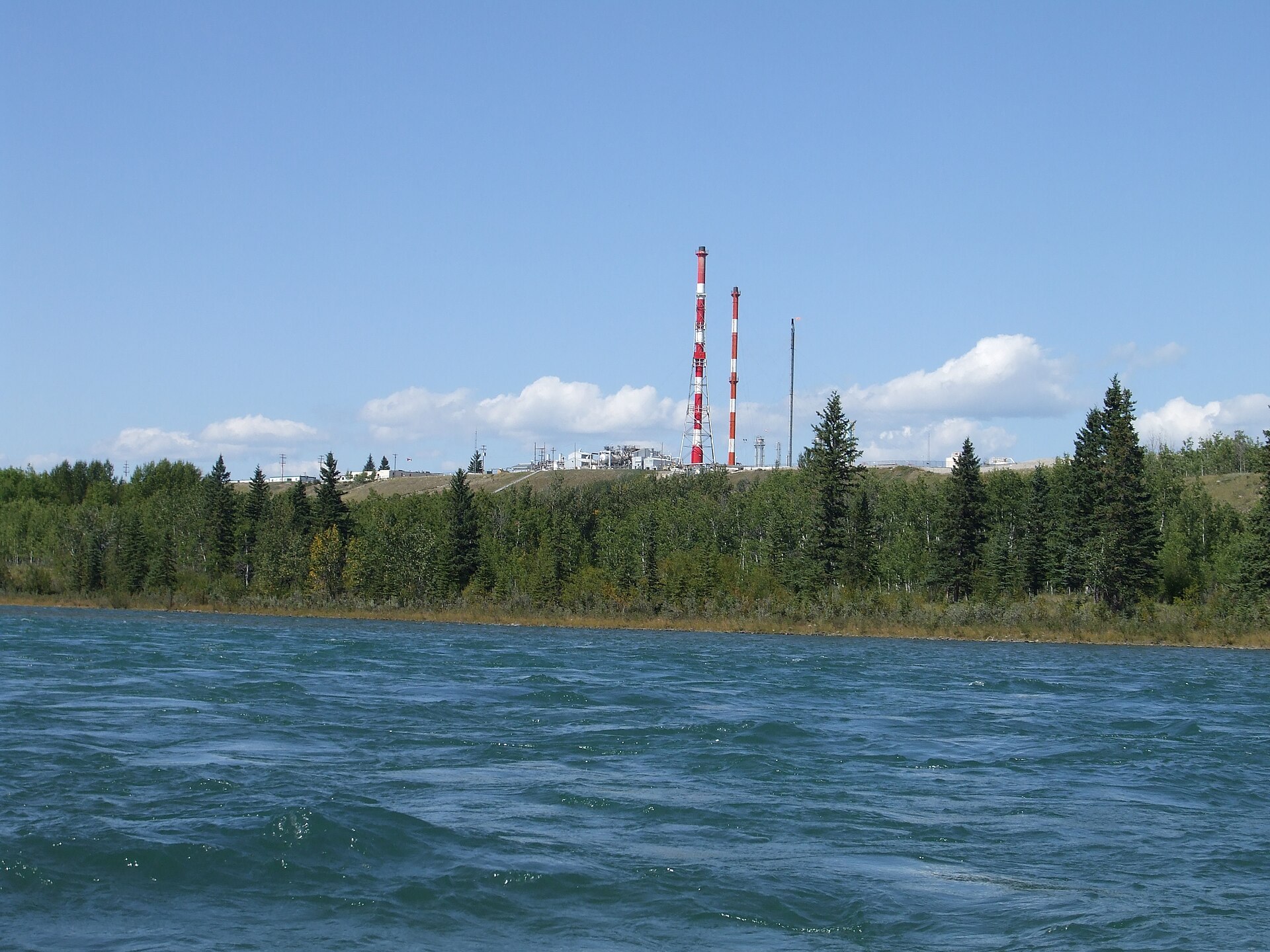


An Alberta gas pipeline bill introduced this week would let the provincial government use public money to build natural gas pipelines if private investment is too slow to keep up with demand. The proposed Natural Gas Infrastructure Act creates a framework for planning and supporting strategic gas infrastructure on top of the existing regulatory system, according to Enerdata, citing an Alberta government release of 23 November.
The Alberta gas pipeline bill gives no dollar figure and names no specific project. The trigger is that private-sector investment is deemed too slow to keep pace with growing gas demand.
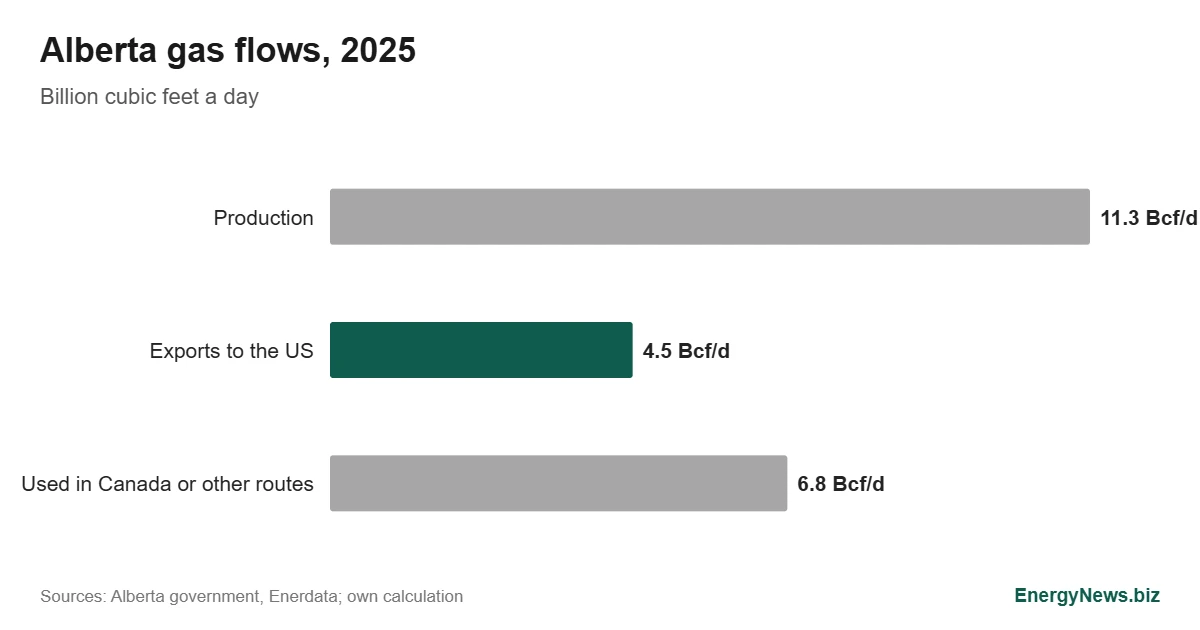
The Alberta gas pipeline problem in numbers
Existing pipeline capacity out of Alberta is full through 2029, with uncertainty beyond 2030, according to the government. Reuters, cited by Enerdata, reported that the province is concerned about a prolonged supply glut if pipeline expansion falls short.
- Production in 2025: about 11.3 billion cubic feet a day (Bcf/d), or 117 bcm a year, roughly 60% of Canada’s output.
- Exports to the United States: about 4.5 Bcf/d, or 46.5 bcm a year.
- Proven and probable reserves: about 144 trillion cubic feet (Tcf), or 4,075 bcm.
Two ratios follow. Exports to the US take about 40% of Alberta’s production. At 2025 output of about 4.1 Tcf a year, reserves would last about 35 years. Neither number is new, but together they explain the policy: the resource is large, and without new outlets producers face low local prices.
Why public money, and why now
Alberta’s gas price at the AECO hub has often traded at a deep discount to US benchmarks when pipelines are full, because producers have nowhere else to send gas. Every new outlet, whether a pipeline to the US, a line to the British Columbia coast for LNG, or new domestic demand from power plants and data centres, supports local prices.
LNG Canada’s first phase on the British Columbia coast, with 14 million tonnes a year of capacity, already draws roughly 2 Bcf/d of feed gas, much of it from Western Canada. Further LNG phases, new gas power for data centres in Alberta and growing US demand all compete for the same limited takeaway capacity. Midstream companies have been cautious about building ahead of contracts, partly because of the regulatory delays that hit oil pipelines in the past decade.
The bill is designed to close that gap: if the private sector will not commit, the province can step in. Similar public backing has been used for oil, notably the federal purchase of the Trans Mountain pipeline in 2018. That project’s cost overruns are a reminder of the risk.
Who gains from an Alberta gas pipeline push
Producers gain most directly. More takeaway capacity narrows the discount on Alberta gas and supports drilling. Gas-fired power developers in Alberta, many of them pitching to data centres, also benefit from a planned system rather than a race for scarce capacity. Consumers in the province could see the opposite effect: higher local prices once gas can leave more easily. The Alberta gas pipeline debate is therefore also a debate about who captures the value of the resource.
What the bill leaves open
- How the government will judge that private investment is too slow.
- Whether public funds would build pipelines outright, guarantee debt or take equity.
- How costs would be recovered from shippers, and what happens if volumes fall short.
- Coordination with federal regulators for lines that cross provincial borders.
For gas exporters in other regions, the move signals that Canadian supply could grow faster than expected after 2030 if takeaway capacity follows. That matters for LNG pricing on the Pacific coast, where Canadian projects compete with US Gulf Coast cargoes and Qatar. A similar question about who pays for gas infrastructure is playing out in Africa, as in the Mombasa LNG power plan.
What to watch
Watch whether the first project under the Alberta gas pipeline act is an export line or a domestic system serving power and data centres. A line built with public funds and filled mainly by new gas power demand would show that Alberta is betting on its own electricity growth as much as on exports.
Add EnergyNews.biz as a preferred source on Google


