


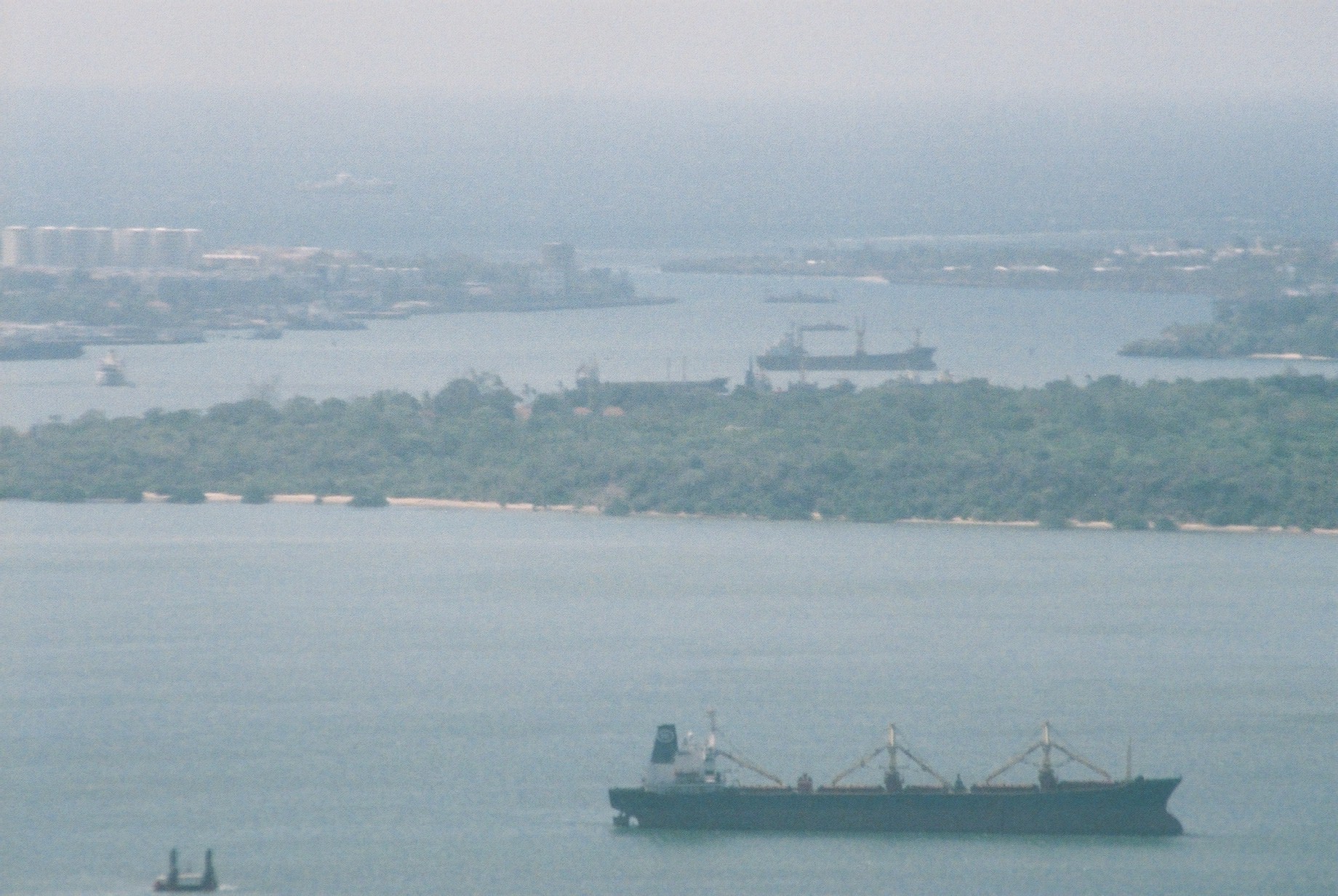


Greek company AMACO Energy and ARISE Integrated Industrial Platforms (ARISE IIP) Kenya have signed an agreement to develop a Mombasa LNG power project known as HERCULES. The plan is a floating power barge running on liquefied natural gas, together with cooling and digital infrastructure, to supply the 500-acre Coast Integrated Industrial Park at Dongo Kundu near the Port of Mombasa. The project is valued at KSh90 billion, about $692 million.
The partners signed a memorandum of understanding on 6 November. Detailed engineering, regulatory approvals, financing and commercial agreements are still to be completed.
The Mombasa LNG power plan
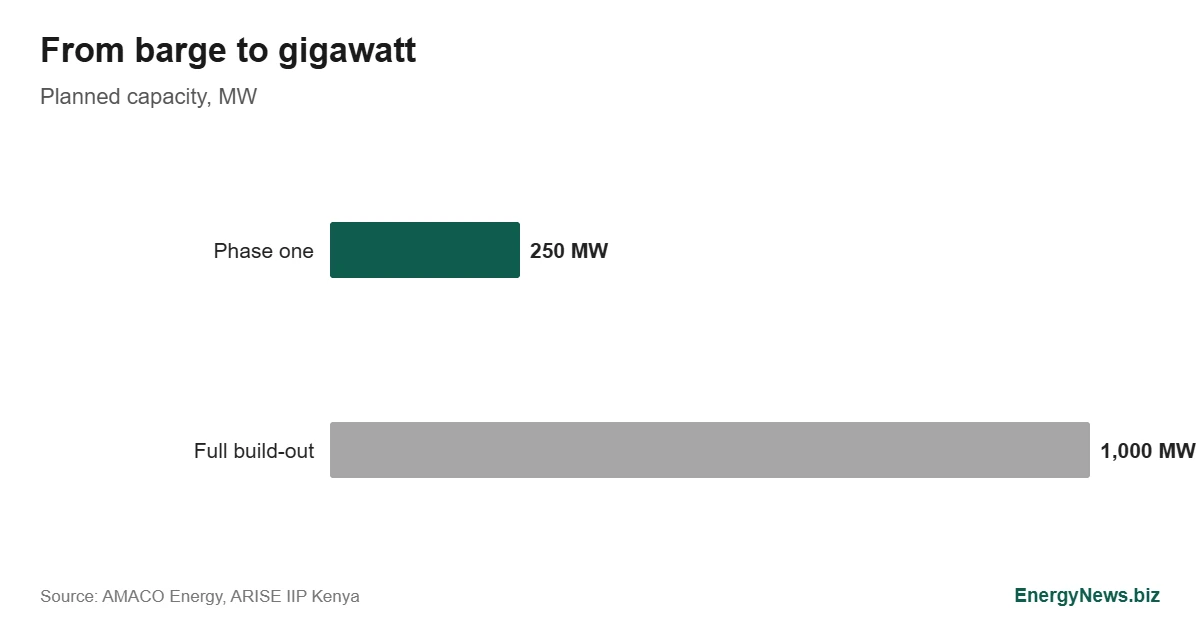
The first phase would generate 250 MW using gas turbines on the barge, with capacity able to grow to 1 GW as more companies move into the park. AMACO has signed a cooperation agreement with GE Vernova to integrate its gas turbines into the barge. The design is meant to allow a later switch toward hydrogen and renewable energy as technology and commercial conditions change.
The industrial park sits inside the Dongo Kundu Special Economic Zone, which the government has set aside for industry and logistics. ARISE IIP is developing the park under a country programme with Afreximbank, the African trade bank. Target customers include energy-intensive manufacturers, port operations and AI data centres attracted by Mombasa’s subsea cable landings.
Dividing the headline value by the first phase gives about $2.8 million per MW, but that figure includes cooling and digital infrastructure, not only power generation, so it is not directly comparable with the cost of a conventional gas plant.
The Mombasa LNG power proposal builds on earlier plans by AMACO for a larger smart power system valued at $1.5 billion, which the company presented in 2026 as a combined data centre and LNG generation platform. The current agreement narrows the first phase to 250 MW and ties it to a specific industrial park and developer, which makes the project easier to assess for lenders and regulators.
Why a barge
Power barges can be built in shipyards and towed to site, which can be faster than building a plant on land. They also avoid some land acquisition issues and can be moved if needs change. The approach has been used in West Africa, Asia and Latin America to add capacity quickly.
Kenya’s grid relies mainly on geothermal and hydropower and has suffered several nationwide blackouts in recent years. A dedicated supply for the industrial park would protect investors from those outages and avoid putting new load on the national grid.
AMACO chief executive Theodore Theodoropoulos said the project would link power generation to the data centres and industries that will use it. “Mombasa brings together a port, international connectivity and an expanding industrial base,” he said.
Open questions for Mombasa LNG power
Kenya does not produce natural gas, so the barge would depend on imported LNG. That requires an import and storage solution at the port, long-term supply contracts and a price that industrial customers can accept. Fuel cost will decide whether power from the barge competes with grid electricity, which in Kenya is largely renewable. Global LNG prices have been volatile this year.
Data centre power is a global theme, from microreactors in the United States to on-site gas generation in emerging markets. The Mombasa LNG power plan is one of the first in East Africa to tie generation directly to a data centre campus.
Neither partner has given a target date for first power. The next milestone to watch is a binding engineering contract and the first LNG supply agreement. More information on the zone is available from the Special Economic Zones Authority.
Add EnergyNews.biz as a preferred source on Google


