


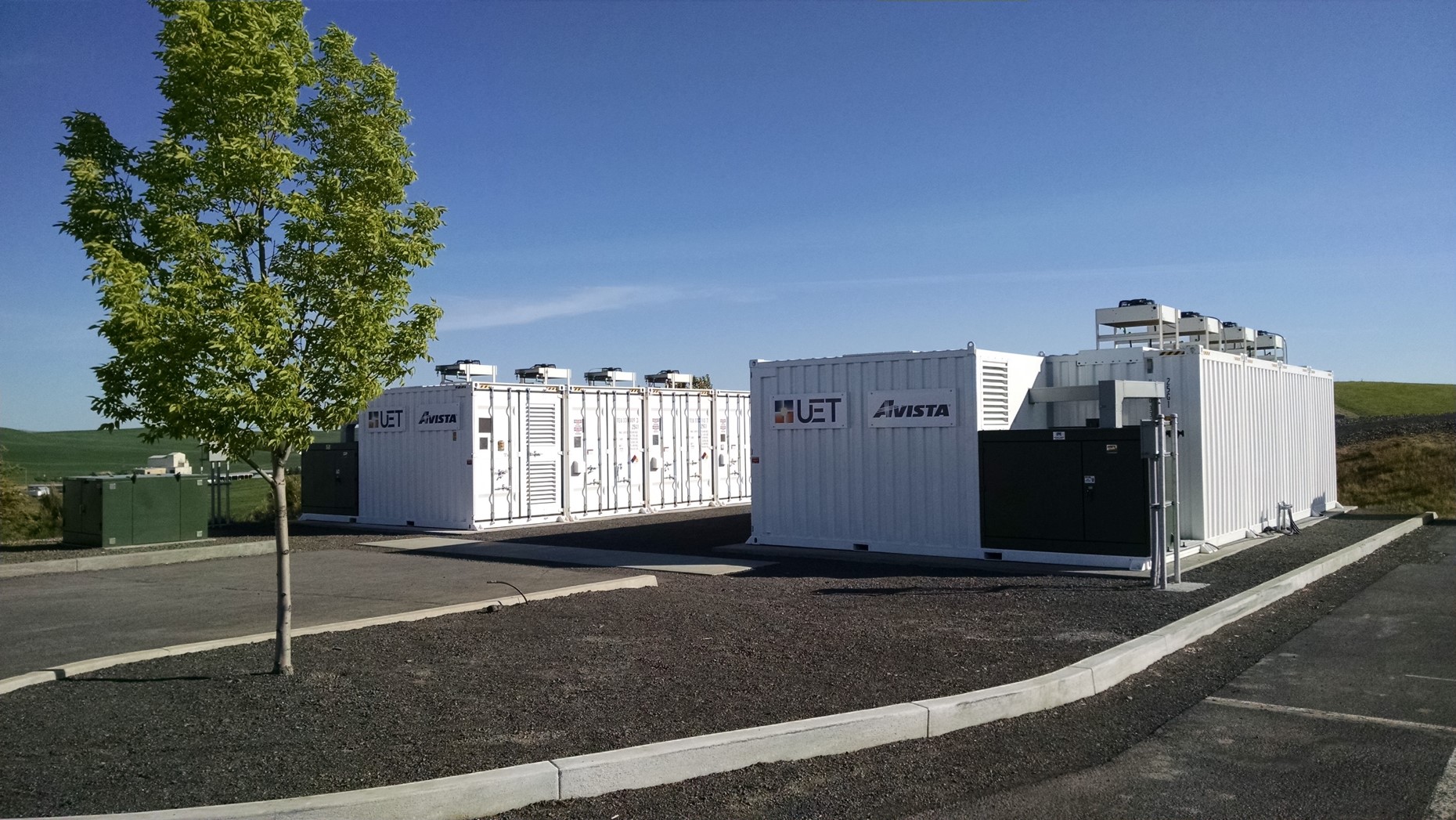


Peak Energy, a US developer of sodium-ion battery storage systems, has expanded its Series B round to $157 million, made up of $132 million of equity and a $25 million debt facility from HSBC, according to a company release summarised by SustainabilityOnline. The money will scale manufacturing at its 4 GWh facility in Sacramento, California, with commercial deliveries planned from 2027.
Peak Energy now cites more than $2.5 billion of customer agreements, including contracts with Jupiter Power, RWE and Energy Vault.
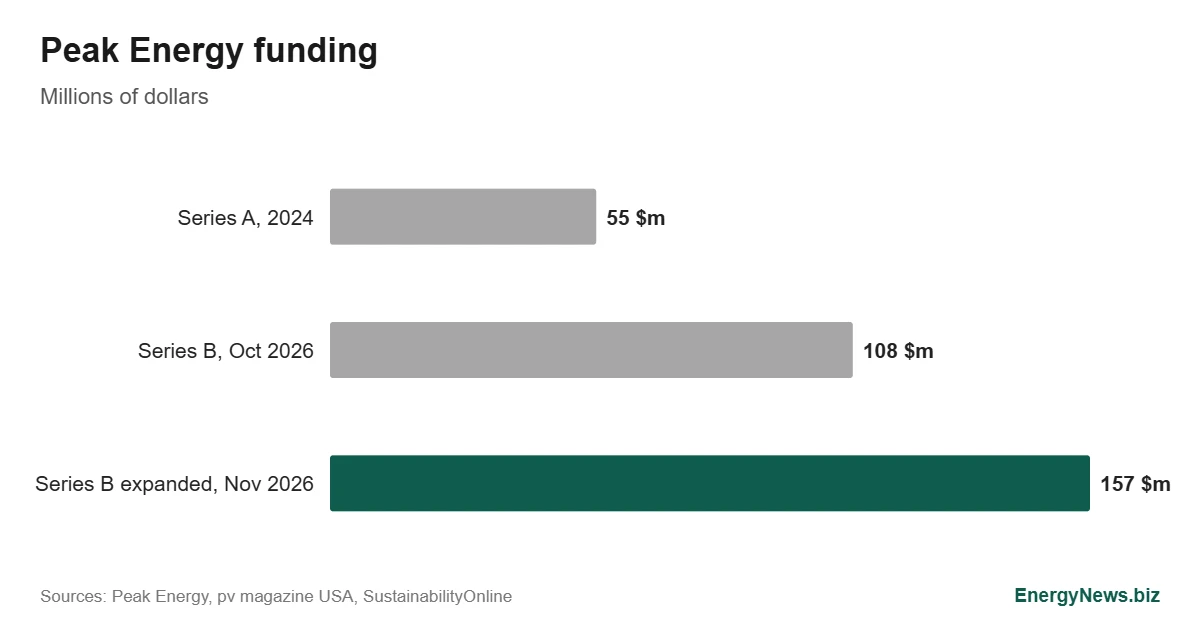
From $108 million to $157 million in a month
In October, Peak Energy closed a $108 million Series B led by GM Ventures, with Maverick Silicon, Infinite Capital, Eclipse, Xora Innovation and LG Technology Ventures, as reported by pv magazine USA. At the time it cited more than $1 billion of customer orders. The expanded round adds $24 million of equity and the HSBC debt, while the claimed order book has more than doubled.
The company has not broken down the $2.5 billion figure, and these are company figures. The ratio of claimed customer agreements to money raised in the Series B is about 16 to 1. That is high for a hardware start-up at this stage and explains why a bank was willing to add debt: contracted demand reduces the risk that the factory will sit idle.
What Peak Energy sells
Peak Energy builds passively cooled sodium-ion storage systems for the grid and for data centres. Removing pumps, fans and chillers cuts auxiliary power use and maintenance. The company says its system can lower the cost of energy by up to 20% compared with conventional storage and needs no planned maintenance. It currently sources cells from manufacturers in China built to its specifications and assembles them into containers in California. It has also partnered with General Motors to develop next-generation sodium-ion cells.
Its largest disclosed deal is with Jupiter Power for up to 4.75 GWh between 2027 and 2030, starting with about 720 MWh in 2027. Energy Vault signed a supply agreement for 1.5 GWh earlier this year.
Landon Mossburg, co-founder and chief executive, said: “Customers are telling us they need a lot more energy storage, and they need better options.”
How Peak Energy fits the sodium-ion race
Chinese battery makers, led by CATL and BYD, have launched sodium-ion cells for cars and storage, and several Chinese grid projects already use the chemistry. In the United States and Europe, start-ups are trying to build local supply chains before Chinese products dominate this segment as they dominate lithium iron phosphate. Peak Energy has chosen to start with system design and assembly, buying cells to its specification, and to develop cells with GM over time. The HSBC facility suggests lenders are comfortable with that model as long as contracted demand stays ahead of production.
Why it matters
Sodium-ion is the main alternative chemistry to lithium iron phosphate for stationary storage. Sodium is abundant and cheap, the cells tolerate cold and heat better, and supply chains can avoid lithium. Energy density is lower, which matters less for grid batteries than for cars. US buyers also face tariffs and supply chain rules on Chinese lithium products, which gives a domestic assembler an opening even if cells are imported for now.
The risk is execution. A 4 GWh factory starting in 2027 has to deliver on time and at the promised cost, while lithium-ion prices keep falling. European buyers face similar choices, as shown by new projects such as BW ESS and Wattmen in France.
What to watch
Watch for the first 720 MWh delivery to Jupiter Power in 2027 and its performance data. If Peak Energy systems run as claimed in Texas heat without active cooling, sodium-ion moves from pilot to a real option for utility buyers.
Add EnergyNews.biz as a preferred source on Google


