



Korea offshore wind has a second tender this year, and the headline is size: about 2.2 GW offered on Friday 30 October by the Ministry of Climate, Energy and Environment. The detail worth reading is the price. Ceilings fell in the second round, even though the country is asking developers to deliver more capacity than in the first.
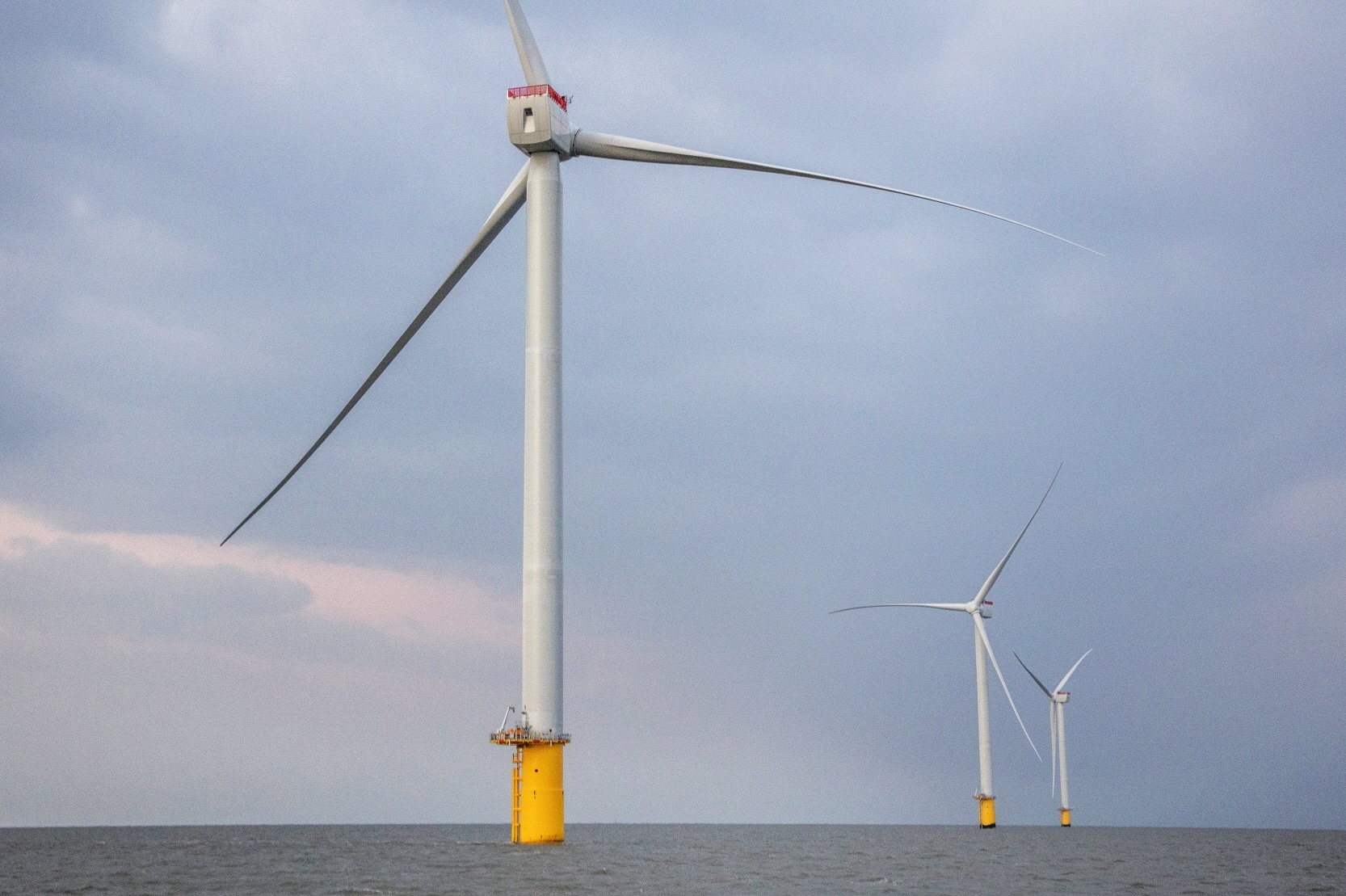
What the Korea offshore wind round offers
The 2.2 GW is split into about 1,700 MW of fixed bottom capacity and about 500 MW of floating capacity. The fixed bottom share includes about 1,400 MW in general tenders and about 300 MW in public led tenders, where public institutions must hold a certain stake or more. The first round of the year offered about 1.8 GW, so the 2026 total reaches 4 GW, a level the ministry compares with leading offshore wind nations.
The round is the first since the ministry announced its Mid to Long Term Offshore Wind Bidding Roadmap. Volumes rest on a preliminary demand survey by the Korea Wind Industry Association and the Korea Energy Agency, which gives Korea offshore wind a clearer pipeline than most markets in the region.
Price ceilings fall again
The ceiling for fixed bottom projects is 168,937 won per MWh, about 113.2 euros, which is 1.34 percent below the first round. For floating projects it is 174,003 won per MWh, about 116.6 euros, down 0.63 percent. The ministry says the ceilings reflect levelised cost forecasts, exchange rates and the level of competition in bidding.
The cuts are small, and the direction matters more than the size. A ceiling is the most a bidder can ask for. Lowering it while offering more capacity squeezes margins, and developers will watch closely whether bids clear at all, and at what share of the ceiling. That will decide if Korea offshore wind reaches the 4 GW that the 2026 programme promises.
Why floating wind keeps its own lane
Floating capacity of about 500 MW is announced separately, and the ministry says bidding continues in the second half to secure supply chains. Floating wind costs more, which shows in the ceiling: 174,003 won against 168,937 won for fixed bottom, a gap of about 3 percent. That is a small premium for a technology that opens deeper water.
Public led tenders add a second policy lever. By requiring a public stake and encouraging domestic supply chains for key equipment, the ministry is trying to build local industry at the same time as capacity. That can speed up a home grown supply chain, but it also limits who can bid and on what terms.
For developers the maths is straightforward. Revenue is capped by the ceiling, while costs depend on turbines, foundations, cables and vessels, and on how quickly grid connection and permits arrive. A lower ceiling leaves less room for error on all of them. The ministry has chosen to publish both ceilings up front, which at least lets bidders price the risk before they commit.
What Korea offshore wind has not yet published
Several details that decide bankability are missing from the announcement as reported: bid submission dates, eligibility criteria and the length of the contract. One report says the government is considering extending contracts from 20 to 25 years, but that has not been confirmed at a primary source. A longer contract would help financing more than a small cut in the ceiling would hurt it. The ministry publishes notices on its official site.
For context on the wider energy bets, the country’s nuclear ambitions face a different problem, as the analysis of South Korea SMR plans and the reactor it does not have at home shows. Offshore wind, by contrast, has a clear tender calendar and a price signal. The test is whether developers bid.
In short, Korea offshore wind is moving from announcement to auction discipline: more volume, lower caps and a state that wants local content. The next data point is the bid result, not the ceiling.
Add EnergyNews.biz as a preferred source on Google


