




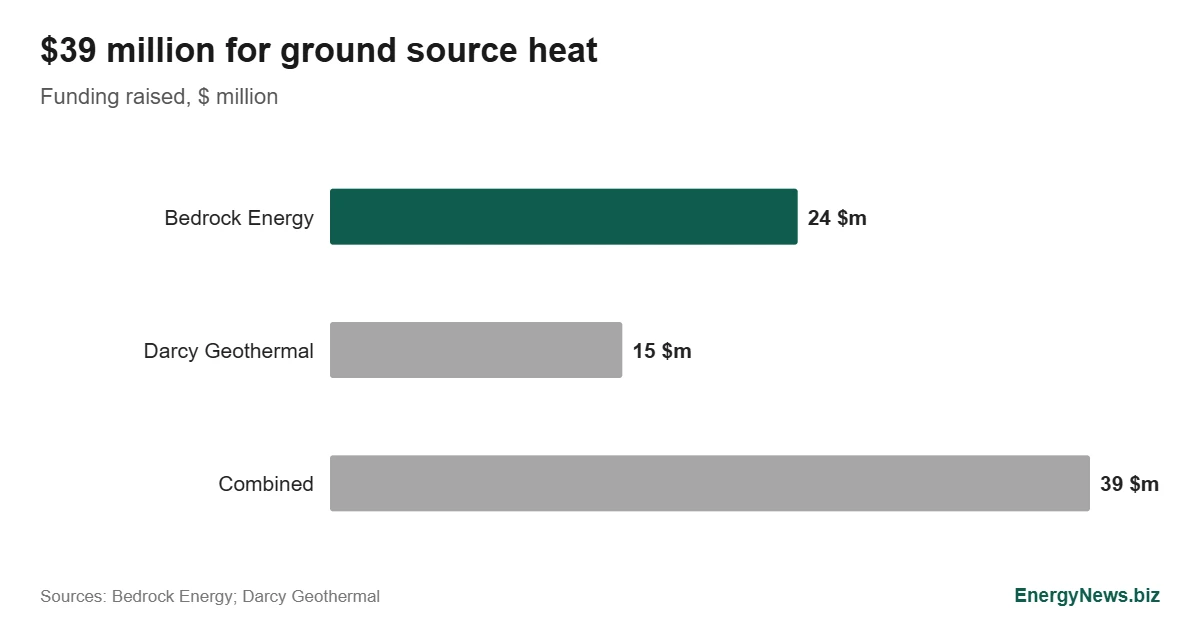
Geothermal heat pumps have drawn fresh venture money. Bedrock Energy has raised $24 million in a round led by Clean Energy Ventures and Clearvision Ventures, and Darcy Geothermal has raised $15 million from Aligned Climate Capital and Büetigen. Together the two startups have raised $39 million to tackle the main cost of ground source heating and cooling: drilling.
Geothermal heat pumps use the stable temperature a few hundred feet underground to heat buildings in winter and cool them in summer. They are among the most efficient heating systems available, but the boreholes needed for a large building can cost more than the equipment above ground.
How the two startups attack drilling costs
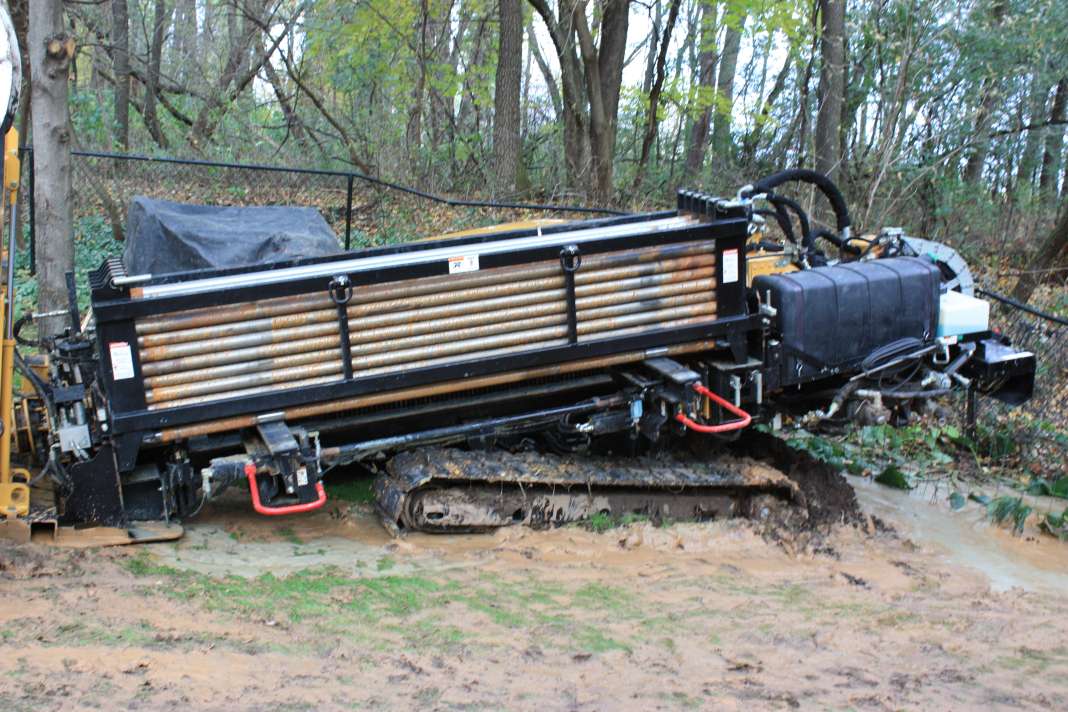
Bedrock Energy uses automated drilling rigs guided by AI and sensors. The company says this can cut drilling time by up to 80% compared with conventional methods, while collecting data on the rock to design each borefield more precisely.
Darcy Geothermal takes a different route. Its dipole wells move groundwater between paired wells, which allows a smaller number of boreholes to deliver the same heat exchange. Darcy says it has more than 80 projects and has drilled over 235 dipole wells.
The barrier has been the upfront cost and the time needed to drill. A large campus may need dozens or hundreds of boreholes, and drilling crews are scarce. Both startups say faster, data-driven drilling can bring project costs closer to conventional systems. Neither company has published detailed plans for the new money, but both are betting that demand from commercial and institutional buildings will grow faster than drilling capacity, which is the gap their technology is meant to close.
Where geothermal heat pumps fit
A few hundred feet below the surface, the ground stays at a steady temperature all year. Geothermal heat pumps use that stability to move heat into a building in winter and out of it in summer, typically delivering three to five units of heat for each unit of electricity. Air source heat pumps lose efficiency on the coldest and hottest days, when the outside air is furthest from the indoor target.
That difference matters for utilities. Peak demand on the coldest winter mornings is one of the main reasons distribution grids need upgrades as buildings electrify. Shifting large buildings to geothermal heat pumps lowers those peaks, which can reduce the cost of grid expansion for everyone.
Ground source systems also last longer than most building equipment. The underground loop can serve for decades, while heat pumps above ground are replaced on normal equipment cycles. For building owners with long horizons, such as universities, hospitals and public agencies, that durability makes geothermal heat pumps easier to justify despite the higher upfront cost.
Why geothermal heat pumps are getting attention
Commercial buildings and campuses face electrification rules and rising peak demand charges. Geothermal heat pumps cut peak electricity use in winter and summer compared with air source heat pumps, which reduces strain on the local grid. US federal tax credits for ground source systems have also supported demand.
The same drilling expertise links shallow geothermal to the deep geothermal power sector. Companies such as Mazama Energy are pushing drilling into hotter rock for power generation, and the Global Geothermal Ambition 2050 targets a twelvefold increase in geothermal use. Cheaper, faster drilling helps both ends of the market. The two raises are small next to investment in deep geothermal power, but they target a much larger market: every building with a heating and cooling system is a potential customer, while geothermal power plants depend on specific geology.
Background on how ground source systems work is available from the US Department of Energy.
Add EnergyNews.biz as a preferred source on Google


