


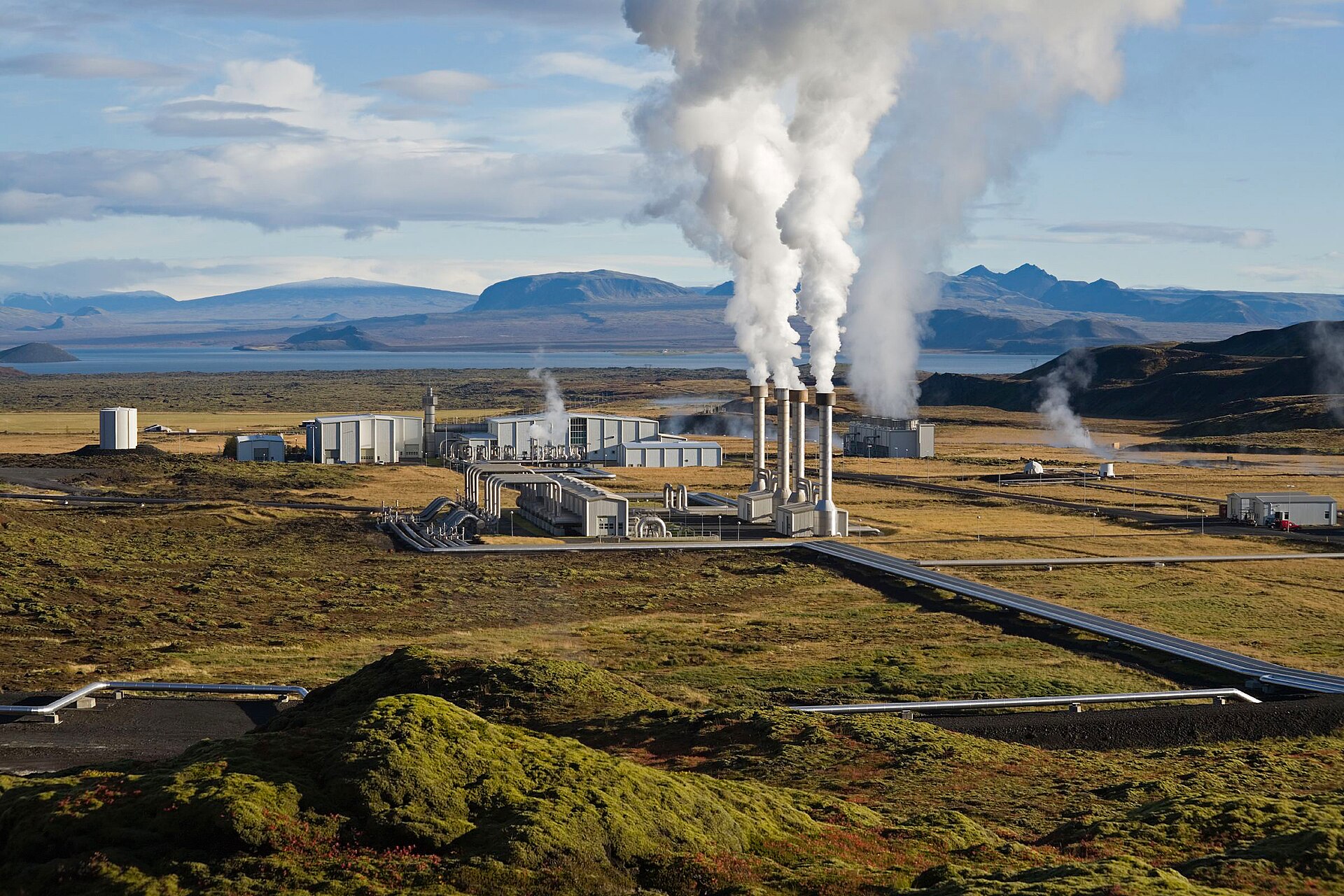


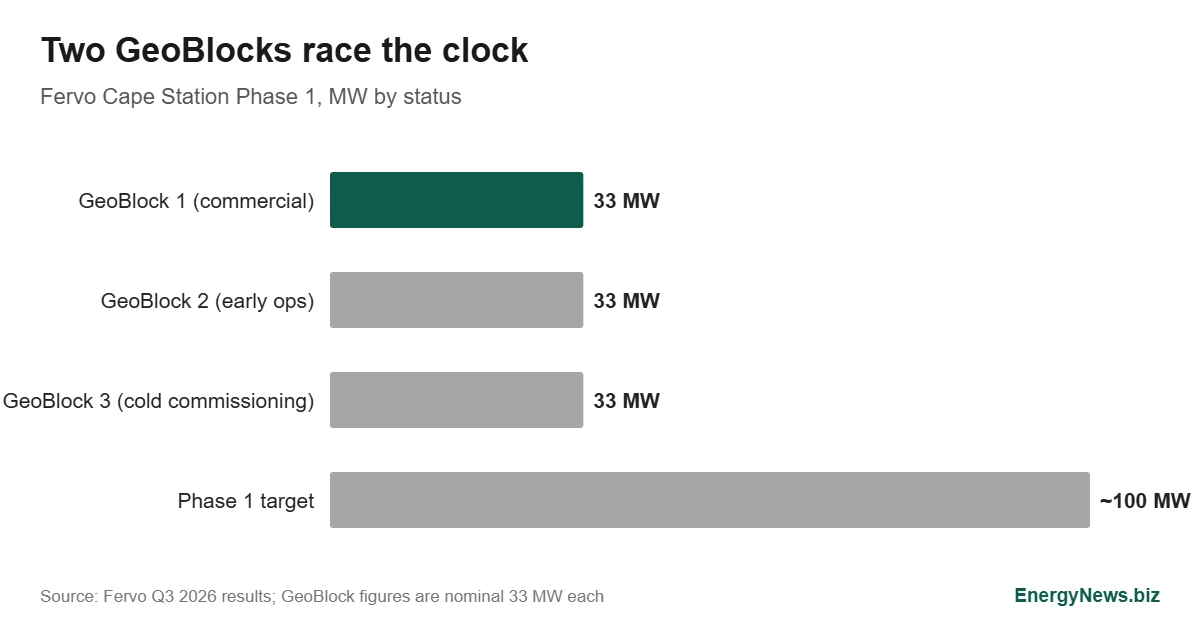
Fervo Cape Phase 1 is down to its final weeks. One of the three GeoBlocks that make up the first phase of the Cape Station geothermal project in Beaver County, Utah, has been in commercial operation since 30 September 2026. The other two are in commissioning, with a contractual deadline of 1 January 2027. That leaves about 66 MW of the roughly 100 MW phase still to prove in six weeks.
The gap between what is running and what is contracted is the whole story at Cape Station. Fervo has signed more than 1 GW of binding power purchase agreements across its portfolio, including a 396 MW agreement with Google, while 33 MW is actually operating. The next milestone that closes part of that gap is the completion of Phase 1.
What the Fervo Cape Phase 1 blocks have to clear
Each GeoBlock is a nominal 33 MW net unit, and Phase 1 is given by the company as about 100 MW across three of them. GeoBlock 1 reached commercial operation on 30 September, one day before its contractual date. GeoBlock 2 has achieved grid synchronisation and is in early operations. GeoBlock 3 is mechanically complete and in cold commissioning.
Commercial operation is a defined contractual event, not the same as first power or grid synchronisation. A block has to run at its contracted output under the terms of the power purchase agreement before it counts. On that measure, two of the three blocks, about 66 MW, are not yet across the line.
Why the Fervo Cape Phase 1 deadline matters
Hitting 1 January 2027 would confirm the repeatability that Fervo has built its case on. The company has said each GeoBlock it brings online makes the next one faster and more predictable, and that this repeatability is the foundation of how it scales and brings down cost. A clean, on-time completion of all three Phase 1 blocks is the first real test of that claim at a multi-unit level.
A slip would not sink the project, but it would matter. Phase II is a further 400 MW across eight 50 MW GeoBlocks, targeted for 2028 and backed by the Google agreement. The credibility of that 2028 date rests partly on whether the smaller Phase 1 blocks land on schedule now. The same question hangs over the wider geothermal ambition to grow the sector twelvefold by 2050.
A number worth watching
The single figure to follow is simple: how many of the three Phase 1 GeoBlocks are in commercial operation on 1 January 2027. Three means Phase 1 is complete and the repeatability case holds. Two means a block has slipped, and the reasons will matter for Phase II. Fervo confirms commercial operation through company releases and securities filings, which is where the answer will appear.
Readers can record their own prediction below. The forecast is saved only in the reader’s browser, and the question resolves when Fervo confirms the status of the blocks.
The Fervo Cape Phase 1 schedule also feeds the company’s reported move toward a public listing, where a clean completion record strengthens the story. Each GeoBlock that reaches commercial operation on time turns the Fervo Cape Phase 1 claim of repeatability from a promise into a track record, and that record is what public markets price.
The company’s project updates are published by Fervo Energy.
Add EnergyNews.biz as a preferred source on Google


