


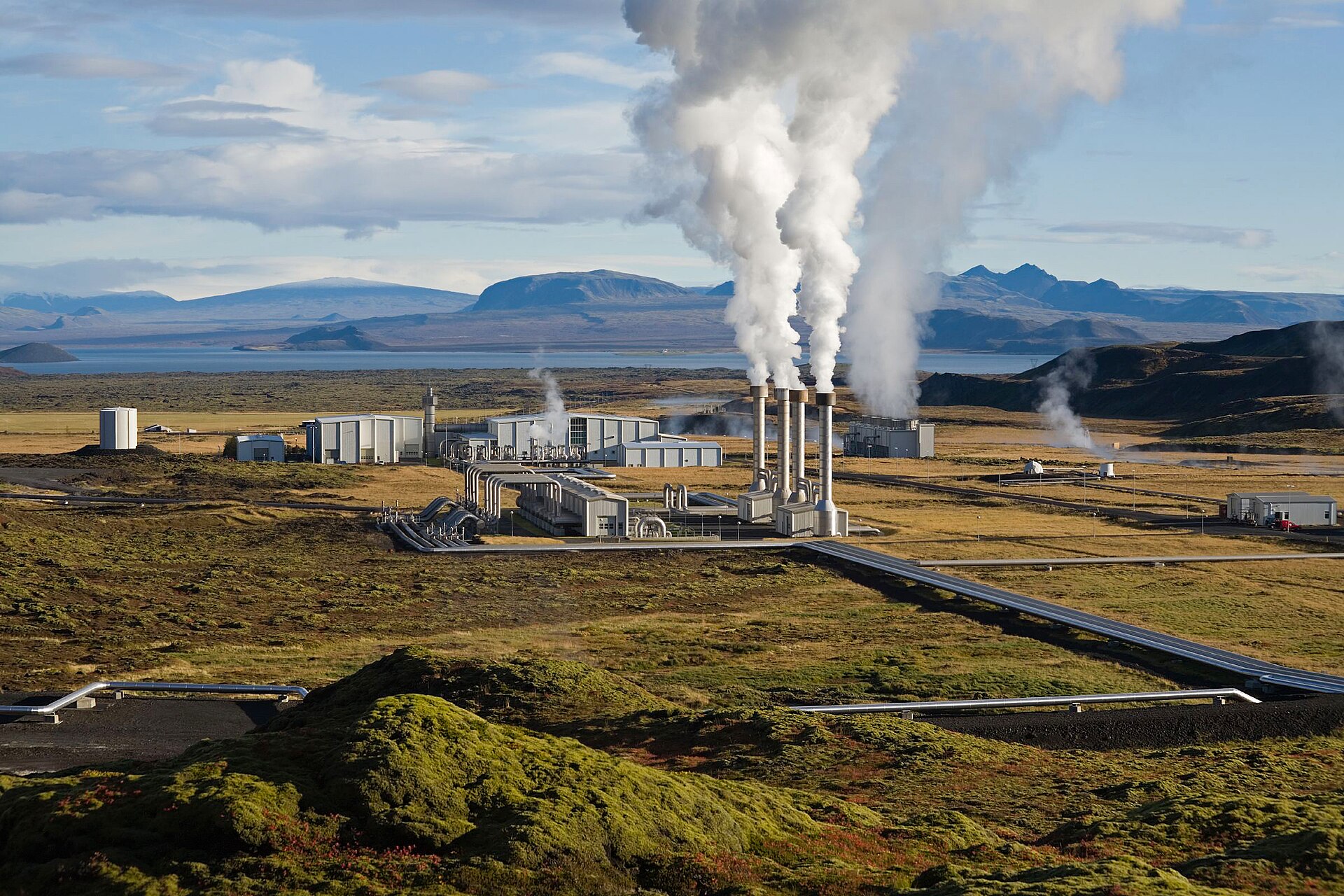


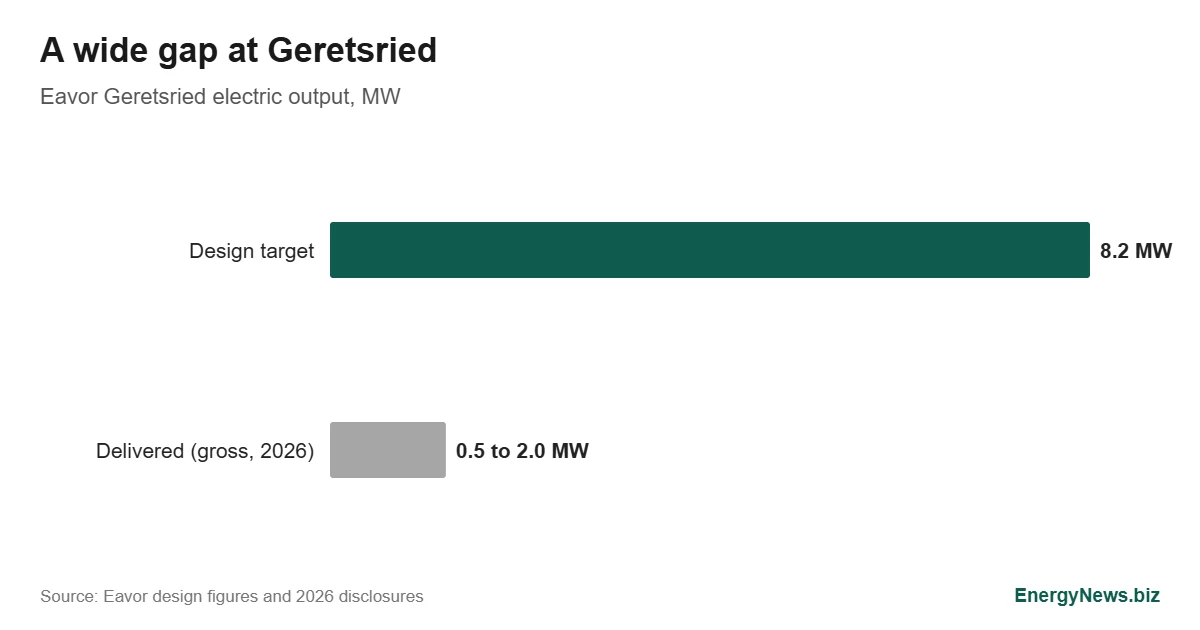
Eavor Geretsried was meant to be the proof. The Bavarian plant, built by Canada’s Eavor Technologies, is the world’s first commercial closed-loop geothermal system, designed to deliver 8.2 MW of electricity and 64 MW of heat from wells drilled about five kilometres deep. It began sending power to the German grid late in 2025. In 2026 the company disclosed that the site had reached only about 0.5 to 2.0 MW of gross generation, with little delivered to the grid, and it withdrew its drilling rigs from the site in mid-year.
The gap between 8.2 MW planned and under 2 MW delivered is the number that matters for the whole closed-loop approach. Eavor says Geretsried remains a priority and that the data validates its technology. The output figure says the economics are not there yet for power.
Why Eavor Geretsried fell short on power
Closed-loop systems circulate fluid through sealed boreholes instead of pumping hot water from a natural reservoir. That is their advantage: they can work in places without a hydrothermal resource, and in countries such as Germany that restrict fracking. The drawback is heat transfer. A sealed loop collects heat across the pipe wall, which limits how much energy reaches the surface compared with a well that produces hot brine directly.
That physics shows up in the output. The design assumed a flow and temperature that would support 8.2 MW. The delivered range of 0.5 to 2.0 MW suggests the loop is moving far less usable heat than modelled, at least in its current configuration. Heat is the easier product, and the 64 MW thermal target is more defensible than the power target, because district heating can use lower-grade heat that is uneconomic to turn into electricity.
What it means next to the alternatives
The contrast with enhanced geothermal is sharp. Enhanced systems, which fracture hot rock and circulate water through it, have reached commercial power at utility scale, as Fervo’s Cape Station and the drilling work at Mazama Energy show. They need the right geology and they raise induced-seismicity questions, but they move more heat. Closed-loop trades that heat transfer away for the ability to work anywhere.
For the data-center buyers now chasing firm clean power, the distinction is practical. A technology that works anywhere but delivers a quarter of its rated power is not yet a product they can size a load against. One that delivers full power but only in specific geology is bankable where the geology exists.
The figure to follow
Eavor is not giving up on Geretsried. The company plans to complete the remaining loops and has said the site stays a priority, while it also eyes the United States data-center market, where buyers want firm clean power and are willing to pay for it. The appeal of a technology that works without a special geological resource is real, which is why the approach keeps drawing interest despite the early output.
The cost question sits underneath the power question. Closed-loop systems drill long, complex wells, and if each loop delivers only a fraction of its rated power, the cost per delivered megawatt-hour climbs steeply. Enhanced systems carry their own drilling cost and seismicity risk, but they have shown they can produce full power where the rock is hot enough. Until closed-loop output rises, the two technologies are not competing for the same job: one sells heat almost anywhere, the other sells power where the geology allows.
Eavor Geretsried will remain the reference the whole closed-loop industry is judged by, because it is the first of its kind. If Eavor Geretsried climbs toward its rated output as the remaining loops come online, the early shortfall reads as commissioning; if it does not, investors will mark closed-loop as a heat technology for years to come.
The number that will decide Eavor’s case is simple: delivered megawatts at Geretsried as the remaining loops are completed. If output climbs toward the 8.2 MW target, the approach is validated and the early shortfall was commissioning. If it stays near 2 MW, closed-loop geothermal is a heat technology first and a power technology much later. Eavor’s project updates are published by Eavor.
Add EnergyNews.biz as a preferred source on Google


