


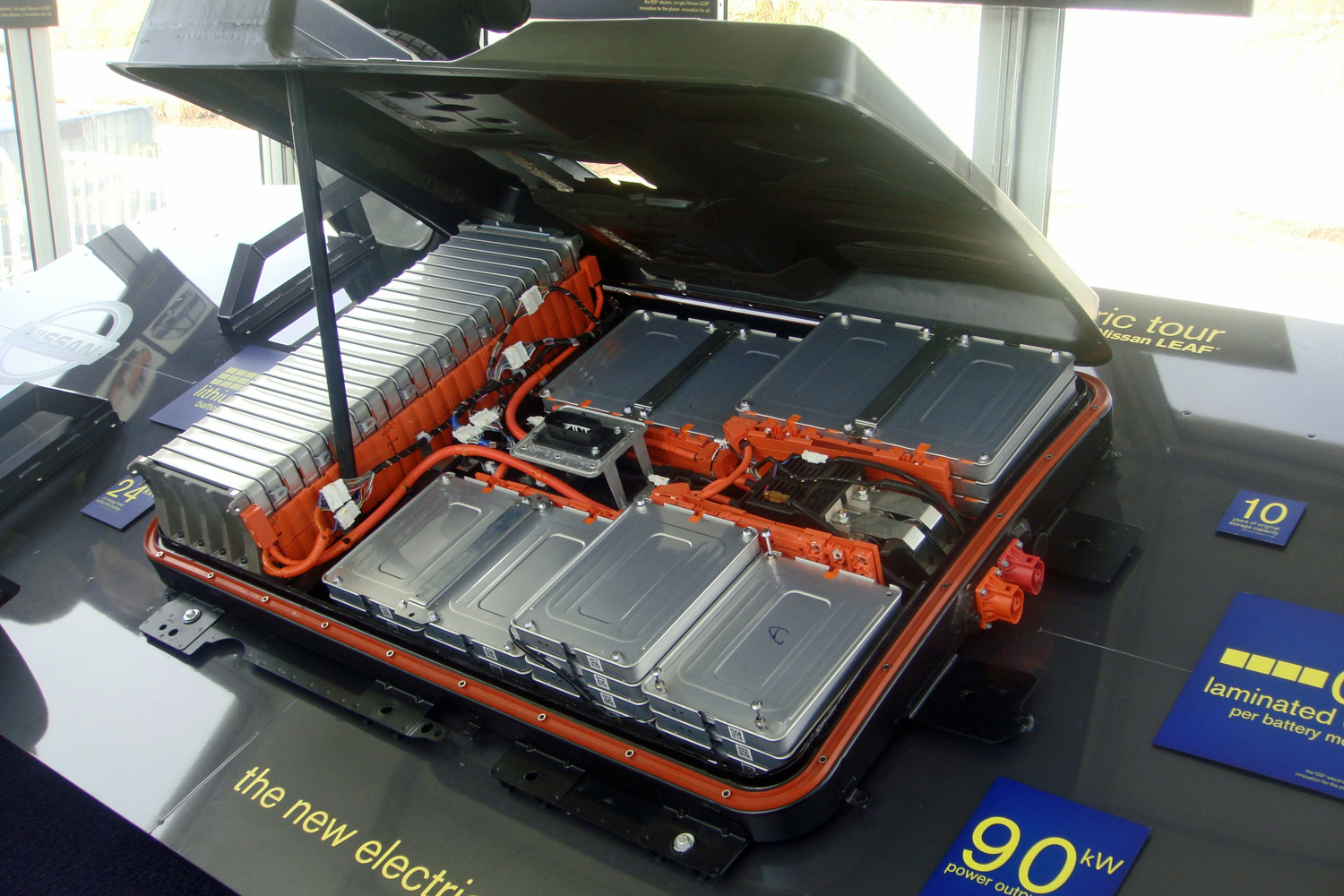


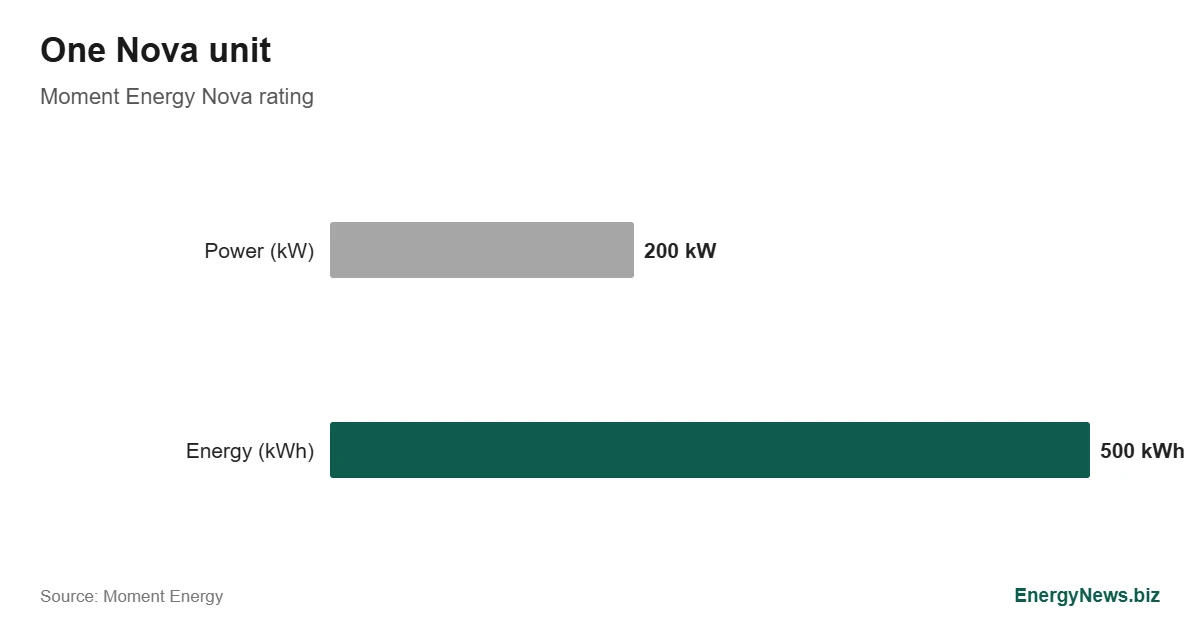
Moment Energy has launched Nova, a battery energy storage system built from second-life electric vehicle batteries, at the RE+ event on 17 November. Each Nova unit is rated at 200 kW and 500 kWh and can be combined with others in a modular installation. The system is UL certified and uses AI-based battery management to monitor and balance used cells.
Moment Energy, based in Canada, collects battery packs from electric vehicles that no longer meet the range needs of drivers, typically when they fall to around 70 to 80% of original capacity. Those packs still hold most of their energy and can serve for years in stationary storage, where weight and size matter less.
How Moment Energy builds Nova
The main technical challenge with second-life batteries is variation. Packs from different vehicles have different histories, chemistries and states of health. Moment Energy’s AI battery management tracks each pack, adjusts how hard it is used and flags those that degrade faster. That is meant to keep a mixed fleet of used batteries safe and predictable.
Each Nova unit has a 2.5-hour duration, calculated from its 500 kWh of energy and 200 kW of power. That suits commercial and industrial sites that want to cut peak demand charges, store on-site solar for later in the day or provide backup power. Several units can be linked for larger installations, from a single unit at a small factory to dozens at a large commercial site.
Why second-life storage matters
The number of retired EV batteries is set to grow rapidly over the next decade as early electric cars reach the end of their road life. Reusing them before recycling extracts more value from the materials and the energy used to make them. It can also lower the cost of storage for smaller customers who do not need the latest cells.
Certification is essential for that market. Building owners, insurers and fire authorities are cautious about batteries in buildings, especially used ones. UL certification gives a recognised safety benchmark, which helps second-life systems compete with new products for commercial sites.
Vehicles are becoming part of the grid in other ways too. Utilities are starting to use the batteries still inside cars, as in the vehicle-to-grid programme in California. Mobile and modular systems are also filling gaps, such as the 1,840 kWh mobile battery launched for off-grid sites.
The business case
Second-life storage has to compete with falling prices for new lithium iron phosphate batteries, which have dropped sharply in recent years. Its advantages are lower embedded emissions, a domestic source of cells outside new mining supply chains and potentially lower cost for duty cycles that do not need maximum performance. Its disadvantages are the cost of testing, sorting and repackaging used packs, and the uncertainty over how long they will last.
Moment Energy is among several companies testing whether that balance works at scale. Partnerships with carmakers, who own the retired packs, are central to the model, since a reliable supply of similar packs reduces the sorting cost. Product details are published by Moment Energy.
Regulation is also moving in its favour. Rules on battery passports and recycled content in Europe and extended producer responsibility schemes in North America push carmakers to track packs through their whole life. Those systems create data on a battery’s history that companies like Moment Energy can use to grade packs faster and price them more accurately.
The next test for Moment Energy is commercial uptake: how many Nova units are installed at customer sites, and how they perform over the first years of operation. Field data on degradation and uptime will matter most to buyers weighing second-life systems against new batteries.
Add EnergyNews.biz as a preferred source on Google


