


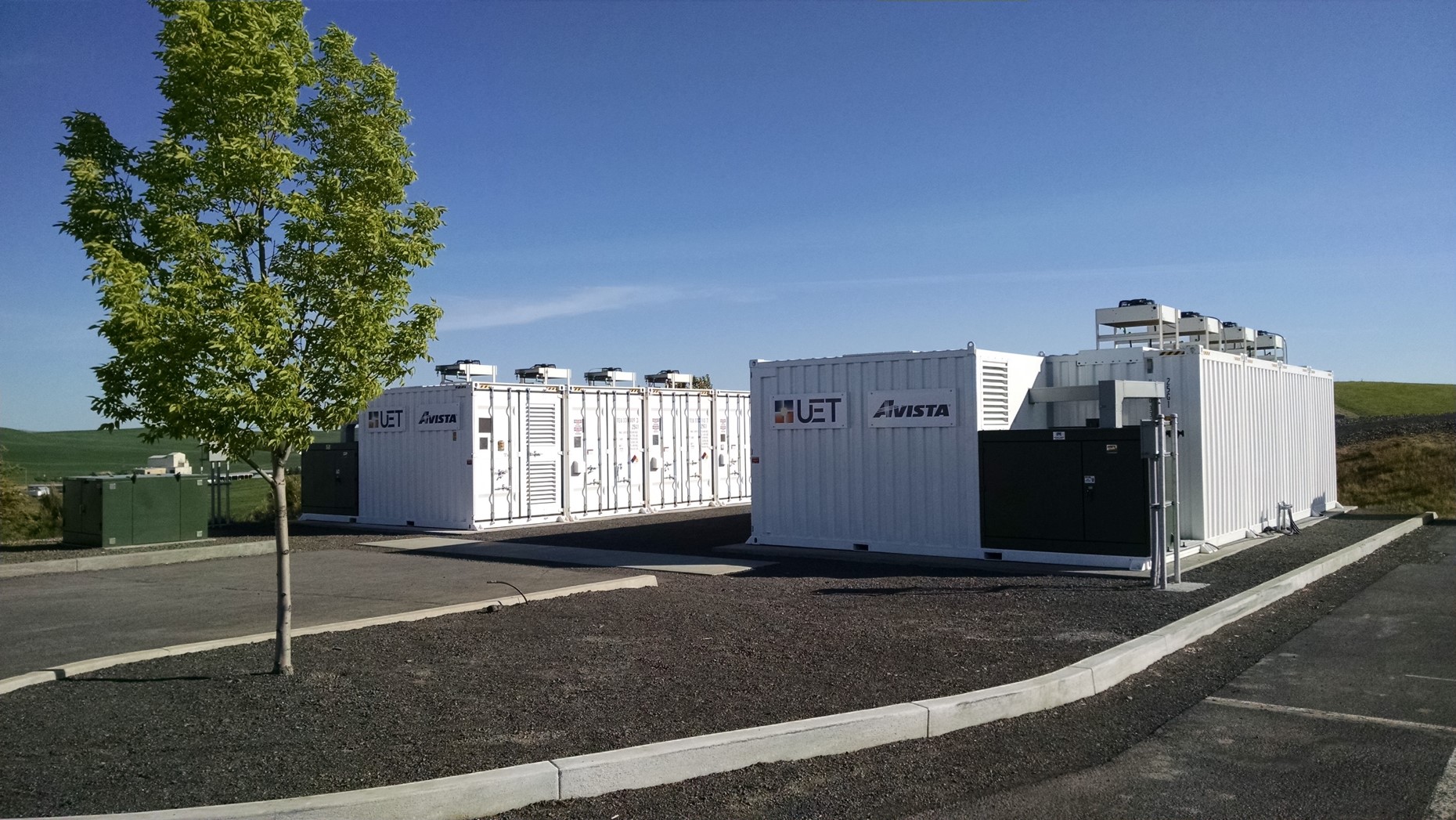


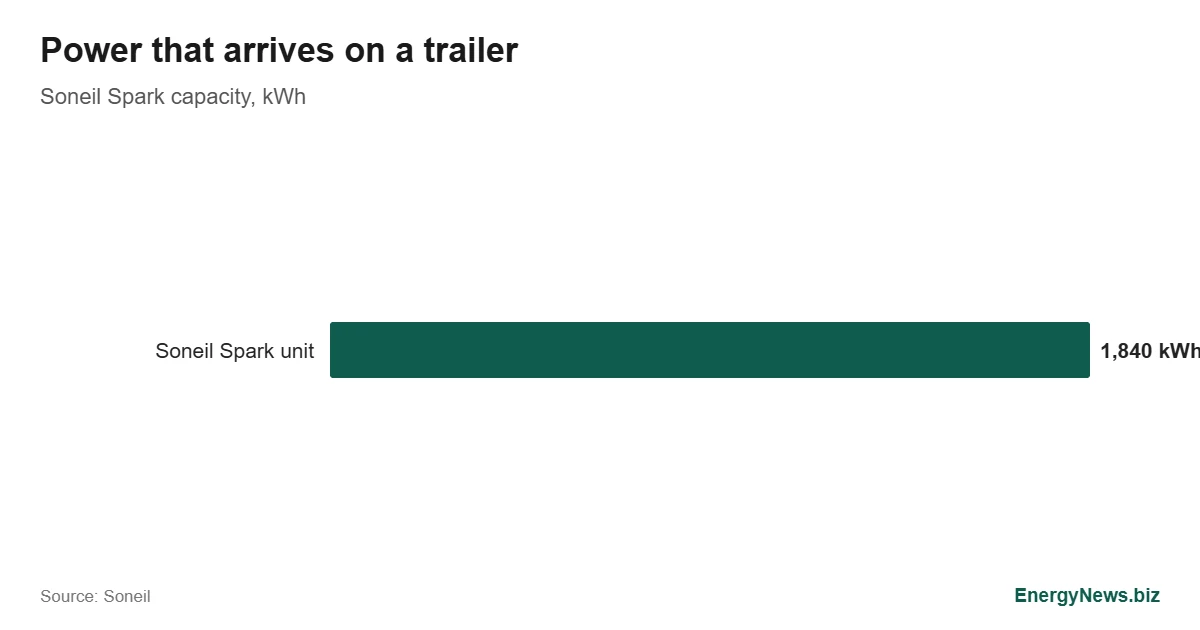
The Soneil Spark mobile battery is a new containerised storage system with 1,840 kWh of capacity, launched for sites that need power before fixed infrastructure arrives. The company opened orders with standard configurations shipping in about four weeks and showcased the system at RE+ 2026 in Las Vegas.
Mobile storage fills a specific gap. Construction sites, outdoor events, film production, disaster response and grid-edge locations often need substantial power for weeks or months without a permanent connection. A battery that arrives on a trailer, charged from the grid or paired with a generator or solar, can replace the diesel gensets that usually do that job, cutting noise, fumes and fuel cost at the point of use.
Why the Soneil Spark mobile battery matters
At 1,840 kWh, the unit is large for a mobile system, enough to run meaningful loads for hours or to shave the peaks that make temporary diesel supply expensive. Charged off-peak and discharged when needed, it can also shrink the generator a site must hire, letting a smaller engine run at its efficient point instead of idling through quiet periods and wasting fuel.
The product sits at the small end of a storage market now measured in gigawatt-hours, but it targets demand that fixed projects cannot serve, the same flexibility logic driving storage retrofits on existing solar plants. The case rests on how often each unit runs on stored clean energy rather than a paired diesel engine: used as a true replacement it cuts fuel and emissions, used only to smooth a genset it saves less.
What decides adoption
The economics favour the cleaner mode where grid or solar charging is available, which is increasingly common at the sites these units serve. As fleets of the Soneil Spark mobile battery and similar systems grow, the rental cost per day will decide whether temporary power stops meaning temporary diesel, because most sites hire temporary power rather than buy it.
The diesel market it is aimed at
Temporary power today mostly means diesel. Construction sites, festivals, film sets and emergency response have relied on diesel gensets for decades because they are cheap to hire and run anywhere, but they are loud, dirty and increasingly restricted. Several cities and event organisers now limit or ban diesel generators over air-quality and noise rules, and that regulatory pressure is the opening a large mobile battery is built to exploit.
A mobile battery is not a like-for-like diesel replacement in every case, because it has to be recharged, but at many sites grid or solar charging is available nearby and the battery simply shifts that power in time. Where it is used to replace a genset outright, it removes fuel deliveries, on-site emissions and noise; where it is paired with a smaller engine, it lets that engine run efficiently and briefly rather than idling for hours. The economics turn on charging access and rental rates, and as fleets grow and cells get cheaper, the balance tips further away from standby diesel.
Reliability is the other selling point. A battery has no engine to fail, starts instantly and needs little maintenance, which matters for disaster response and critical events where a diesel genset failing to start is a serious risk. As more of these units enter rental fleets, operators can also stack them for larger sites or spread them across many small ones, giving the flexibility that a fixed installation cannot. That versatility, more than headline capacity, is what will decide how widely the Soneil Spark mobile battery and its rivals are used.
That makes rental fleets, not one-off sales, the real driver of adoption. If the rental economics beat diesel on a cost-per-day basis, mobile storage spreads quickly; if not, it stays a niche for places where noise and emissions rules leave no other choice. Product details are published by Soneil Spark.
Add EnergyNews.biz as a preferred source on Google


