


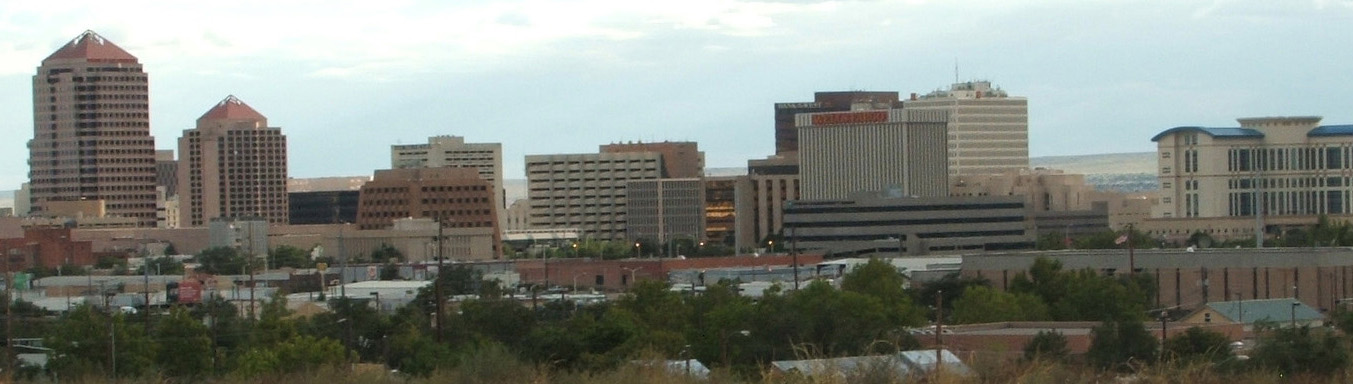


Pacific Fusion has received a radioactive materials licence from the New Mexico Environment Department (NMED) that allows it to possess and use tritium for fusion at its Research and Manufacturing Campus in Albuquerque. The company says it is the first such licence NMED has ever issued to a private fusion company.
Pacific Fusion said the small amounts of tritium used will be contained in a closed system, and that any waste will be disposed of at a licensed facility outside the state. It will keep working with NMED as construction progresses.
What Pacific Fusion is building
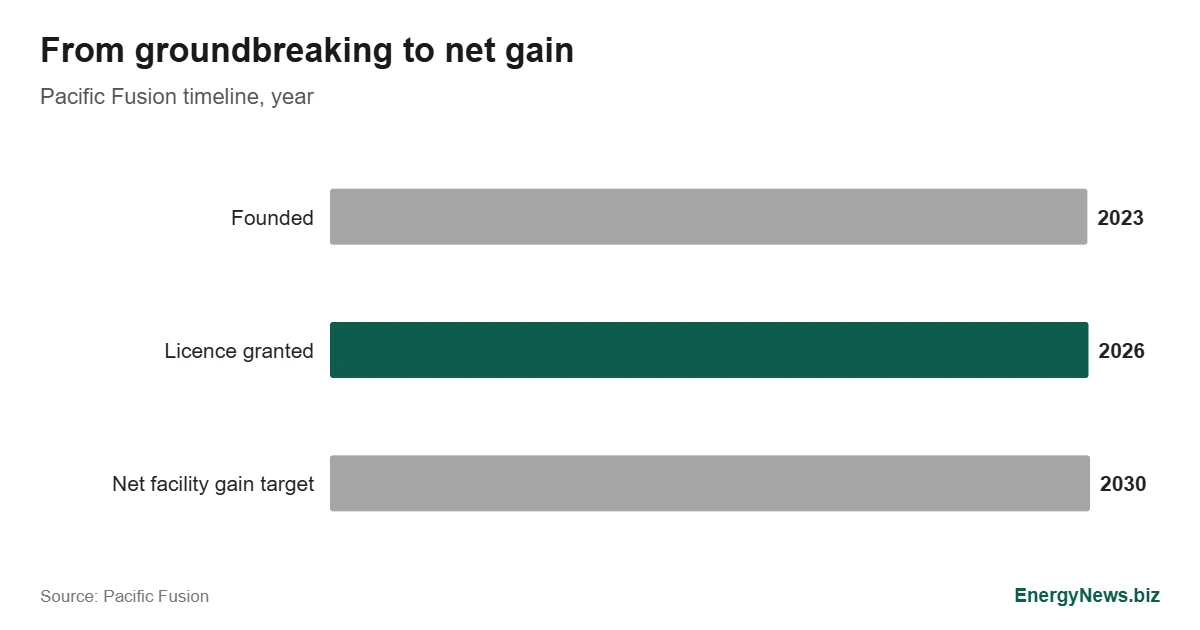
The California-based company broke ground in August on the $1 billion campus at Mesa del Sol in Albuquerque. The site will house its Demonstration System, designed to achieve net facility gain by 2030, meaning more energy produced from fusion than the total energy initially stored in the machine.
Founded in 2023, Pacific Fusion is developing a pulser-driven inertial fusion system built from modular components that can be mass-manufactured from readily available materials. The approach compresses fuel with intense electrical pulses rather than lasers.
Why a tritium licence matters
Tritium, a radioactive isotope of hydrogen, is one of the two fuels in the deuterium-tritium reaction that most fusion concepts rely on. Handling it requires a licence, monitoring and secure storage. Securing that permit before the demonstration machine is finished removes a regulatory risk from the schedule and shows that state regulators are building procedures for private fusion, an area where rules are still forming.
It is a practical milestone rather than a scientific one. The hardest step remains proving net facility gain, a threshold no fusion machine has yet reached at the scale of a full facility. The licence simply ensures that, when the system is ready to run with tritium, the paperwork will not be the bottleneck.
New Mexico as a fusion hub
New Mexico already hosts Sandia and Los Alamos national laboratories, with deep experience in pulsed power and high-energy physics, which helps explain why Pacific Fusion chose Albuquerque. Sandia’s Z machine is one of the world’s most powerful pulsed power facilities, and pulser-driven fusion builds on similar principles. Local suppliers, skilled staff and a regulator now familiar with fusion licensing make the state more attractive for others.
For the state, the $1 billion campus means construction and research jobs and a place in an industry that could become significant if the technology works. For Pacific Fusion, being first through the licensing process sets the template that later applicants will follow.
Tritium itself is scarce. Global civilian supply comes mainly from heavy water reactors in Canada, and a commercial fusion industry would need to breed its own tritium inside the machine. Demonstration systems use small quantities, which is why the closed-system design and waste plan matter more at this stage than supply. Later commercial plants will need a breeding blanket, one of the most demanding engineering challenges in fusion, and Pacific Fusion will have to show how its design addresses it.
Fusion and the power market
Fusion developers have attracted billions of dollars in private investment, much of it tied to future demand from data centres and industry that want firm, low-carbon power. Nuclear fission is the nearer-term option for that demand, from microreactors to large reactors, as the coverage of NuScale plant engineering for TVA shows. Fusion would join that mix only after demonstrations prove the physics and engineering.
Investors will also watch funding. A $1 billion campus is a large commitment for a company founded in 2023, and continued financing depends on hitting technical milestones on time.
The next Pacific Fusion milestone is completion of the Demonstration System building. Company updates are published by Pacific Fusion.
Add EnergyNews.biz as a preferred source on Google


