


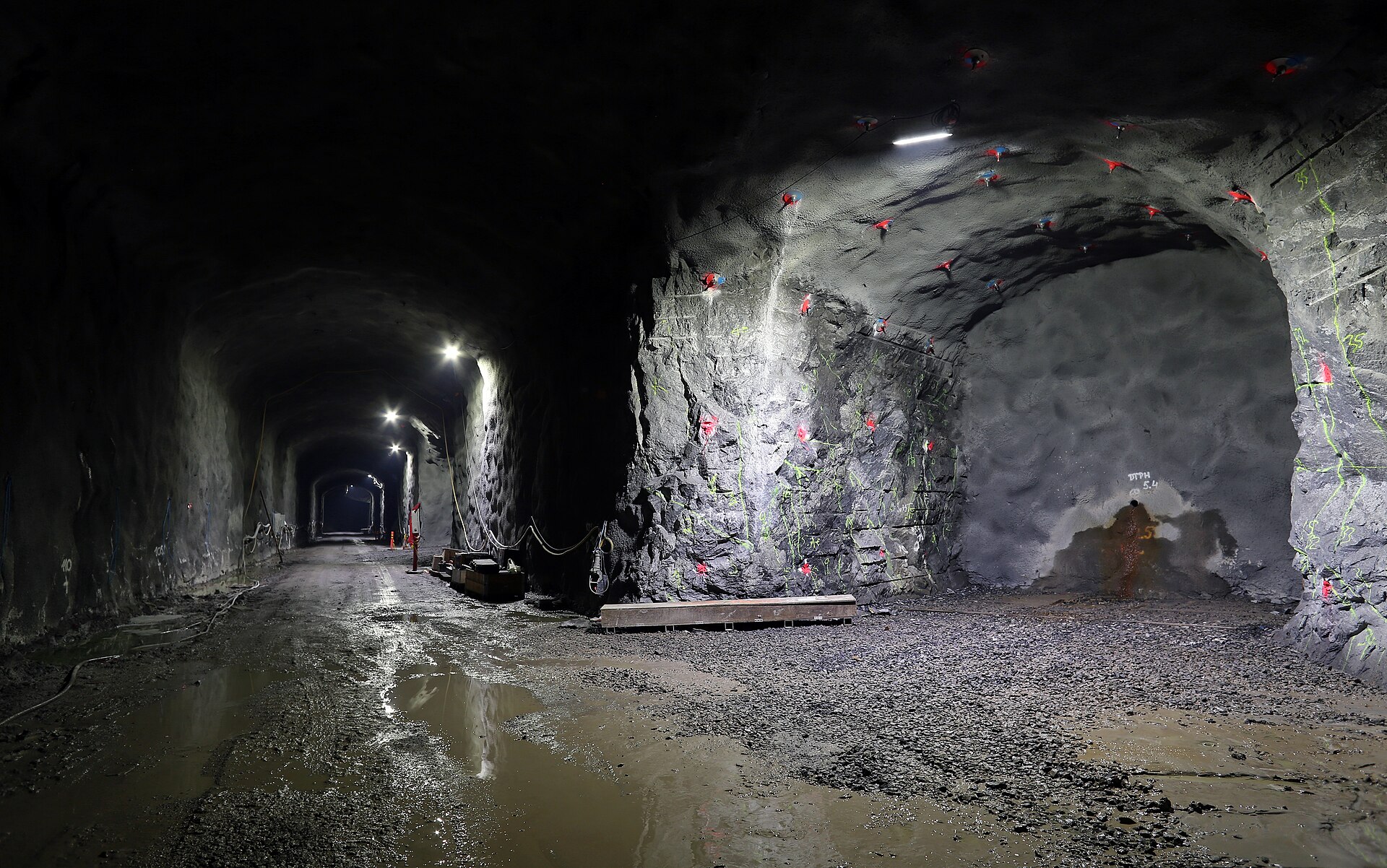


Finland’s Posiva has completed its first test transport of a used fuel transfer cask to the encapsulation plant at Olkiluoto, according to World Nuclear News. The cask carried no fuel. It travelled about three kilometres, the first time the route reached the encapsulation plant, docked with the handling cell and was loaded onto Posiva’s own transfer trolley. The company said everything went well and there were no surprises.
The test is a rehearsal, but it marks a change of phase. Posiva received its operating licence last month, after applying in December 2021, and is now running commissioning tests before the first real fuel is placed in the Onkalo repository.
Onkalo has been decades in the making. Finland chose Olkiluoto as the site in 2000, construction of the underground facility began in the following years, and the construction licence came in 2015. Posiva is owned by the two Finnish utilities that produce the waste, TVO and Fortum, which also pay for the project through a national nuclear waste fund.
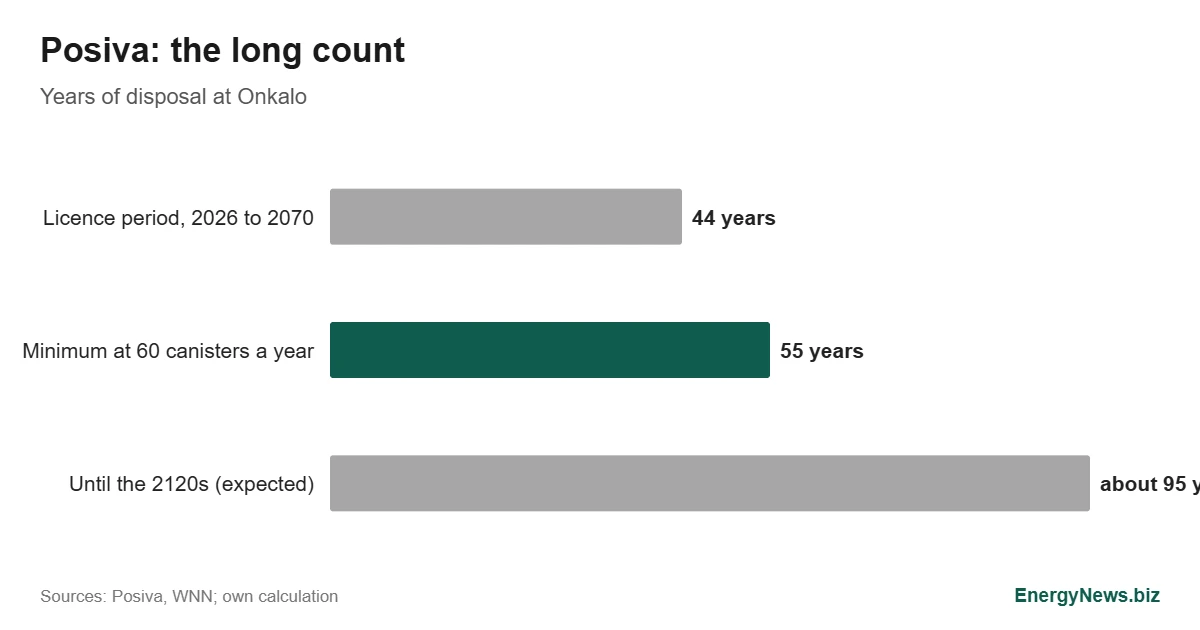
Posiva in numbers
Used fuel from TVO’s Olkiluoto reactors and Fortum’s Loviisa plant will be packed into canisters of copper and cast iron and placed in deposition holes 400 to 450 metres below ground, surrounded by bentonite clay. Posiva expects about 3,300 canisters in total. Once fully operating, the plant can handle up to 60 canisters a year.
Simple arithmetic gives the minimum timeline. At the maximum rate of 60 a year, placing 3,300 canisters takes 55 years. In practice the early years will run below capacity while the operation ramps up, so the real figure will be longer. That fits Posiva’s own expectation that disposal will continue until the 2120s before the tunnels are backfilled and closed.
The licence gap
Posiva asked for an operating licence covering the period to the end of 2070. Even if disposal began now and ran at full speed, that would allow about 44 years, enough for around 2,600 canisters. A renewal or extension will therefore be needed during the operating life of the repository. That is normal for long projects, but it means the licence is a first chapter rather than the full story.
There is also a cost angle. A repository that runs for a century needs staff, maintenance and safety oversight for the whole period, long after the reactors that produced the waste have closed. That is why Finland built a dedicated fund early, so that today’s power customers pay for disposal rather than future generations. Other countries planning repositories should note that the long tail of operating costs matters as much as the construction bill.
What the test proves for others
Many countries are watching Onkalo because it is the first deep repository for used fuel to reach this point. The value of the test transport is practical. It shows that the logistics between storage, encapsulation and disposal work at full distance with real equipment. Sweden is building a similar repository, and countries with new reactor plans, such as Slovakia, will need answers on long-term waste before they can win public support.
The next Posiva test will use a fuel transfer machine with the fuel positions of an actual transfer cask, and will require controlled-area procedures. No date has been set.
The number to watch
The number to watch is the date of the first canister with real used fuel placed in the repository. Once that happens, the yearly placement rate becomes the key figure. A rate close to 60 canisters a year within a few years would confirm the plan. A slower ramp would push the end of disposal later into the next century.
Add EnergyNews.biz as a preferred source on Google


