




Zambia nuclear power plans have passed a first international check. A team from the International Atomic Energy Agency carried out an Integrated Nuclear Infrastructure Review in the first week of November and found that the country has made good progress in preparing a nuclear programme, according to World Nuclear News.
The mission team included five experts from Egypt, Kenya, Morocco, Russia and South Africa, plus four IAEA staff, led by John Haddad of the agency’s nuclear infrastructure development section.
What the Zambia nuclear review found
The reviewers highlighted three good practices. Zambia is working with other African countries to turn its Radiation Protection Authority into a full nuclear regulator. It has started postgraduate university programmes early to build skills. And it has used its national census organisation to survey public opinion on nuclear power.
The team also made recommendations: strengthen coordination between agencies, finish the studies and report needed for a national strategy, improve the legal framework, and define funding and staffing needs for each phase. The findings will feed into a joint work plan with the IAEA.
The INIR mission is a standard IAEA tool. It assesses a country’s progress across 19 infrastructure issues, from legal framework and regulation to grid capacity, human resources and waste management. Countries usually host several such missions as they move through the three phases of the agency’s milestones approach: deciding whether to pursue nuclear power, preparing to contract and build a plant, and building and commissioning it. Zambia is in the first phase, which ends when a government is ready to make a knowledgeable commitment to a nuclear programme.
Zambia nuclear ambitions in numbers
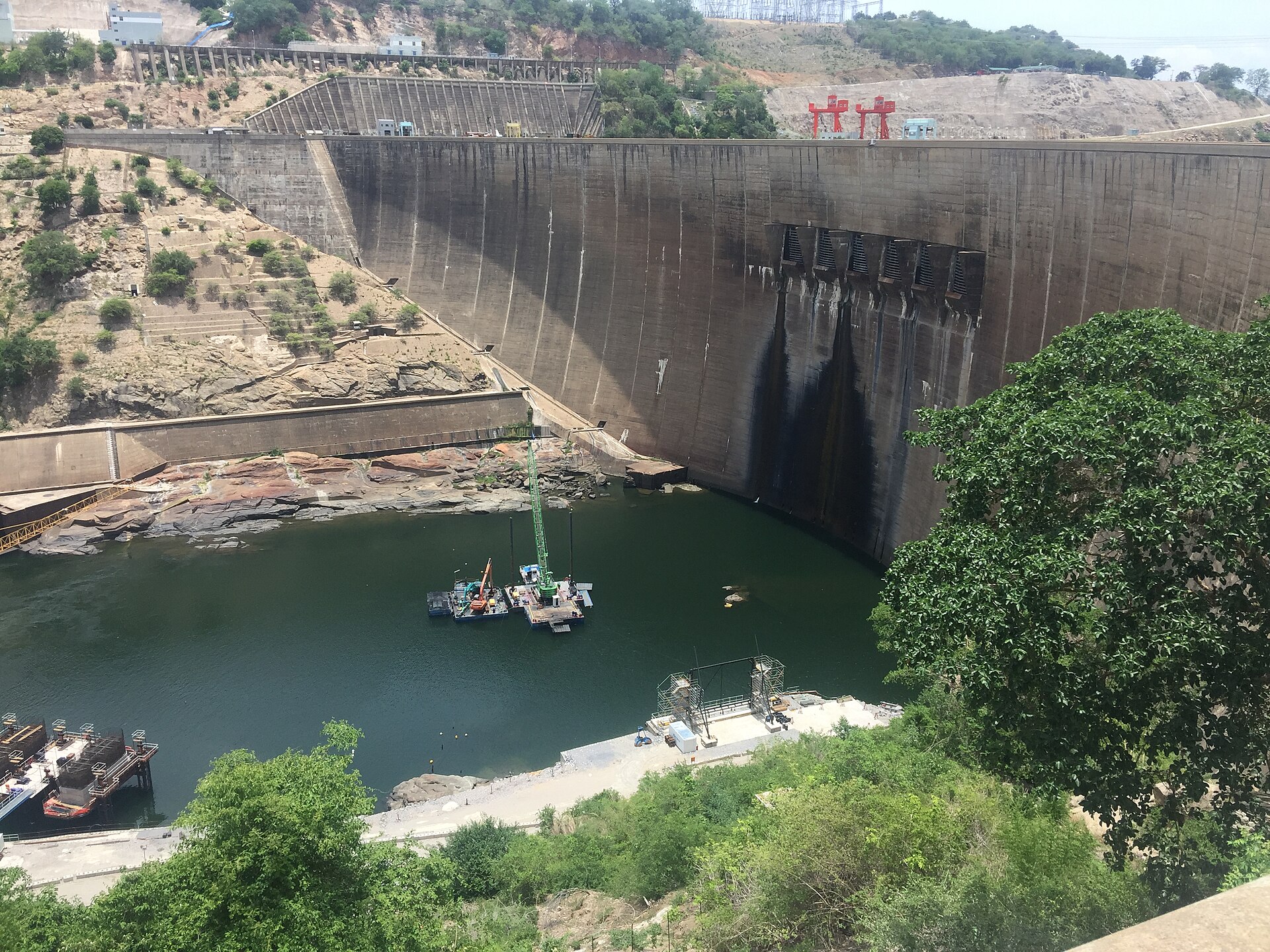
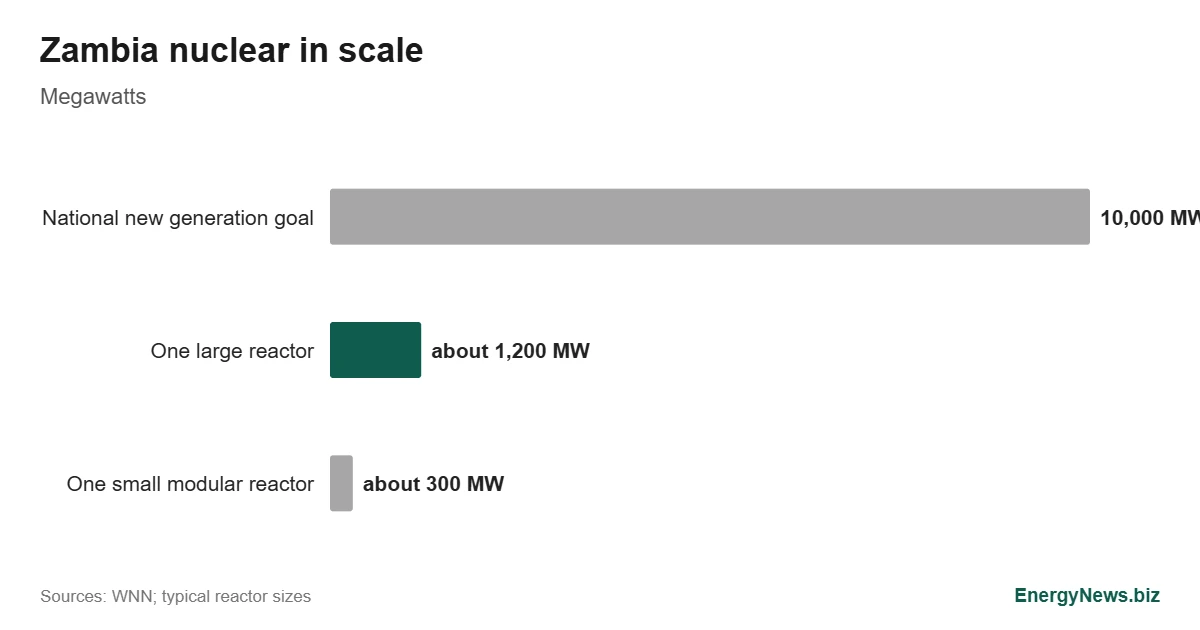
Zambia wants to add 10,000 MW of electricity generation. Minister of Electricity Peter Kapala described nuclear as a potential source of reliable, low-carbon baseload power. The government wants to reduce the country’s dependence on hydropower, which was hit hard by the 2024 drought that cut output at Kariba and led to long daily power cuts.
The drought exposed a structural risk. When most of a country’s power comes from one river system, a dry year hits supply, industry and household budgets all at once. Copper mining, the backbone of Zambia’s economy, needs large amounts of steady power, and mining companies have been looking for alternatives, including imports and their own solar plants.
To put the goal in scale: one large reactor of about 1,200 MW would cover about 12% of the 10,000 MW ambition. Small modular reactors of around 300 MW would need more than 30 units to cover it alone. In practice, any Zambia nuclear plant would sit alongside solar, such as the 50 MW Chilanga solar plant that reached financial close this month, and existing hydropower.
A long road ahead
Zambia’s Cabinet approved in principle the continuation of the nuclear programme in 2025 and told institutions to start preparations. The IAEA’s milestones approach usually takes ten to fifteen years from a decision to build to the first power from a reactor. Countries such as Egypt, which is building its first plant at El Dabaa, show that the path is possible but long.
Financing will be the hardest part. A large reactor costs many billions of dollars, more than most African utilities can raise alone. Vendor country export credit, development banks and regional power trade will all play a role in whether Zambia nuclear plans move from studies to construction.
What to watch
The next step is the national strategy report the IAEA asked Zambia to complete. Its choice between large reactors and small modular designs, and any agreement with a vendor country on financing, will show how serious the Zambia nuclear programme is about building rather than studying.
Add EnergyNews.biz as a preferred source on Google


