


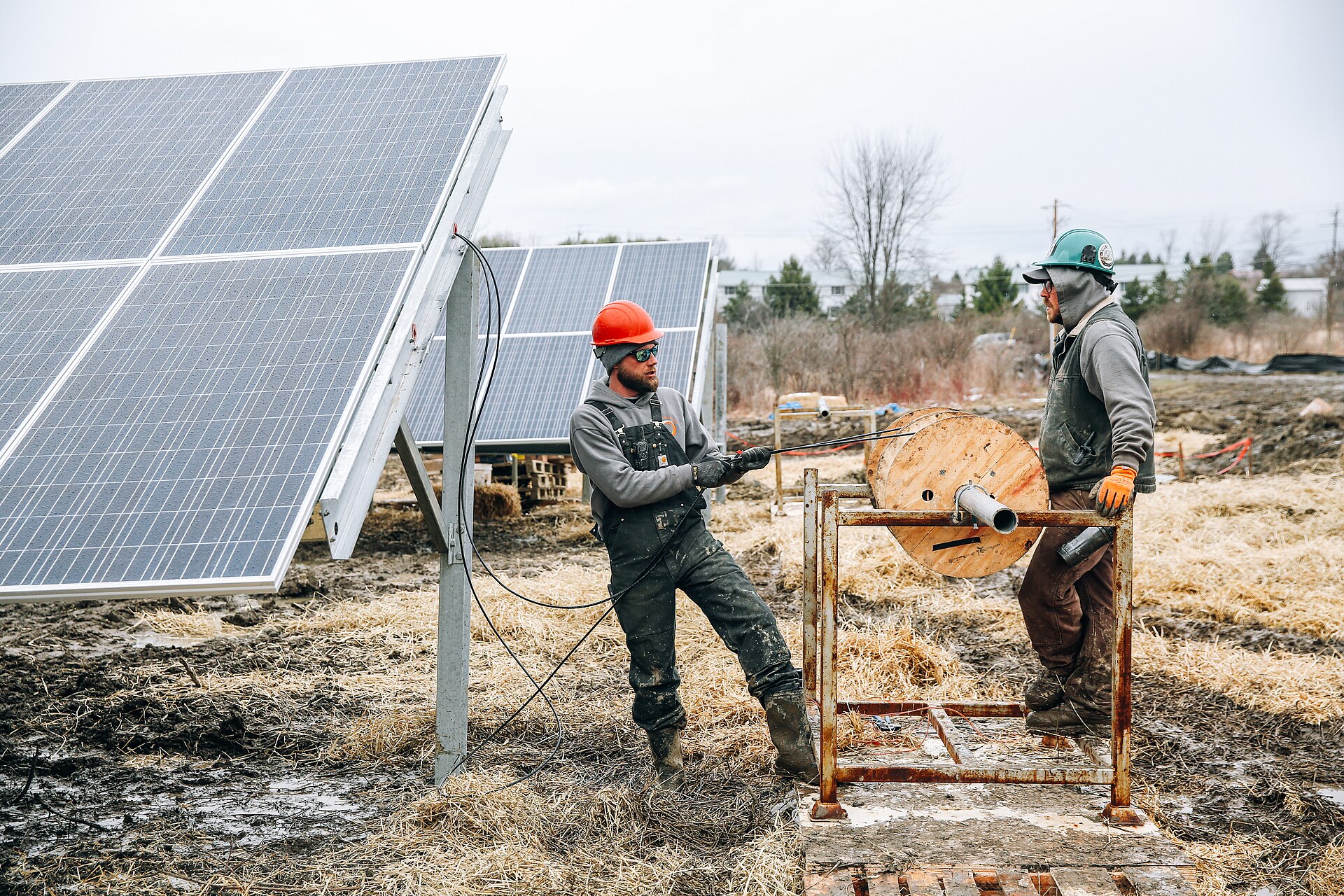


Indigenized Energy, a Native-led nonprofit, has launched a $2.5 billion fundraising campaign to bring solar-plus-storage to 50,000 more Indigenous households in the United States, according to pv magazine. The campaign comes about a year after the federal government ended the programme that was meant to fund much of this work.
Indigenized Energy was founded by Cody Two Bears of the Standing Rock Sioux Tribe and works with tribal nations on solar farms, home systems and training for local workers.
Indigenized Energy goal per home
Dividing $2.5 billion by 50,000 households gives $50,000 per home. Earlier Indigenized Energy projects installed about 8 kW of solar per home. At that size, 50,000 homes would add about 400 MW of capacity, which implies more than $6 per watt.
That is well above typical US residential solar prices. The difference reflects what these projects include: battery storage, electrical upgrades in older homes, work in remote locations and training programmes. Some homes on reservations have no grid connection at all, which makes storage essential rather than optional.
The $50,000 figure also has to cover operation and maintenance over many years in remote areas, where a single service visit can mean hours of driving. Training local workers to install and maintain the systems is part of the Indigenized Energy model, and that adds cost at the start but should lower it over time.
The gap left by Solar for All
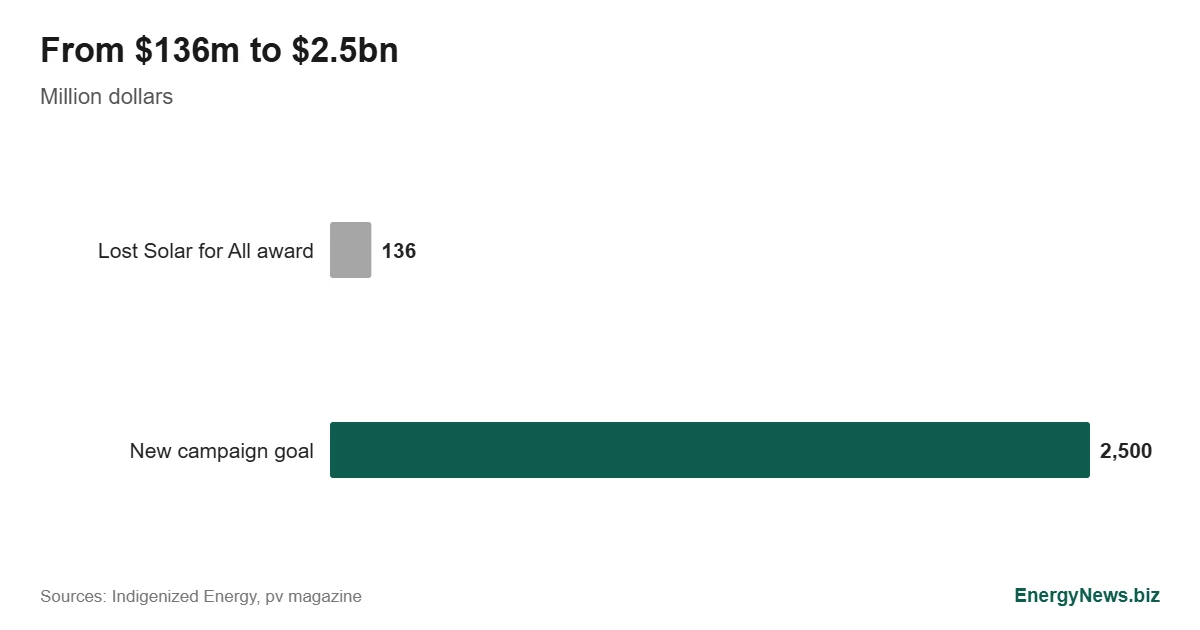
Indigenized Energy was part of the Tribal Renewable Energy Coalition, a group of 14 tribes that won about $136 million under the Environmental Protection Agency’s $7 billion Solar for All programme. The EPA terminated that programme in August 2025. The nonprofit said at the time that the decision forced significant staff cuts.
The new campaign goal is about 18 times the size of the lost federal award. Raising it from foundations, impact investors and corporate partners would be a large step for a nonprofit that has so far worked with much smaller budgets.
The scale of the need
A 2023 Department of Energy report found that about 17,000 tribal homes, housing at least 54,000 people, have no electricity. Tribal households also face higher energy costs relative to income than the national average, and more frequent outages. Solar with storage can cut bills and keep power on during grid failures, which matters in places with harsh winters.
Indigenized Energy completed some of the first Solar for All kickoff projects in Indian Country with the Chippewa Cree Tribe in Montana and the Oglala Sioux Tribe in South Dakota, using its own resources so that the tribes paid nothing. More than 100 people applied for about 30 trainee positions on those projects.
What it means for the solar industry
For installers and equipment makers, the campaign is a potential source of steady work in a US residential market under pressure from policy changes and the end of federal tax credits for home systems. Private funding at this scale would be one of the largest efforts in community solar outside government programmes. Recent tariff moves such as the Section 232 measures will also raise equipment costs for such projects.
Foundations have become more active in clean energy since federal support was cut, and several tribes are developing their own utilities. Both trends could help Indigenized Energy find partners willing to fund work over many years rather than one-off grants.
What to watch
The first number to watch is the size of the first commitments. A single anchor donor or investor pledging $100 million or more would make the Indigenized Energy target credible. Without large early pledges, the campaign is more likely to fund a few thousand homes than 50,000.
Add EnergyNews.biz as a preferred source on Google


