


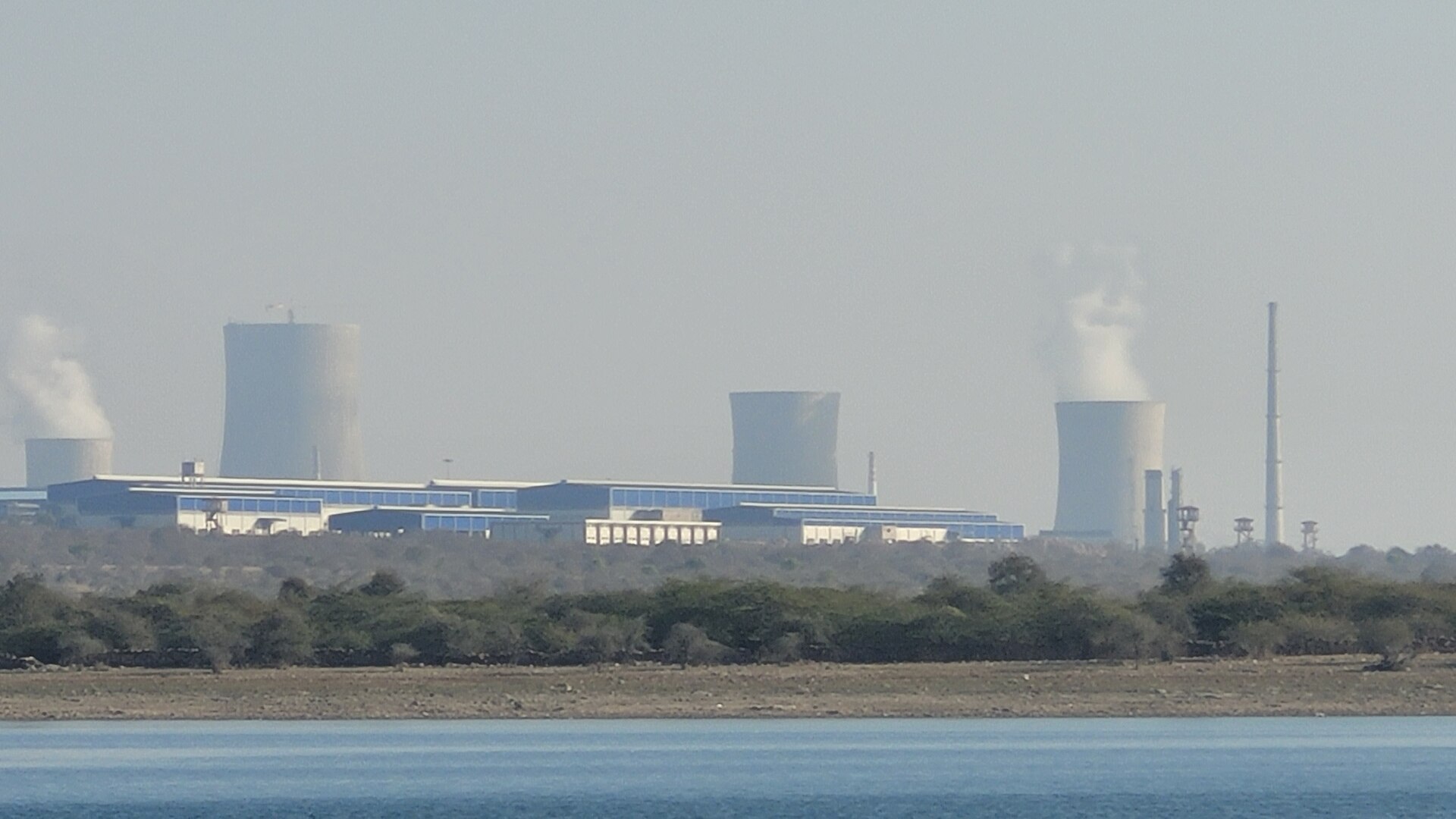


India’s Atomic Energy Regulatory Board has given permission for first approach to criticality at unit 8 of the Rajasthan Atomic Power Project, according to World Nuclear News. The permit came on 19 November after the required safety reviews. The Rajasthan nuclear unit is a 700 MWe pressurised heavy water reactor of Indian design.
In a separate milestone, unit 1 at the Kaiga plant in Karnataka reached criticality early on 22 November after a refurbishment that lasted about 600 days.
Rajasthan nuclear expansion in numbers
Unit 8 is the second of a pair at the site. Its twin, unit 7, reached first criticality in September 2024, connected to the grid in March 2025 and reached full power earlier this year. Together the two units add 1,400 MWe.
At a capacity factor of 85%, which Indian PHWRs regularly achieve, the pair would produce about 10.4 TWh a year. That is enough for millions of Indian households at average consumption levels, and it is firm power that runs day and night.
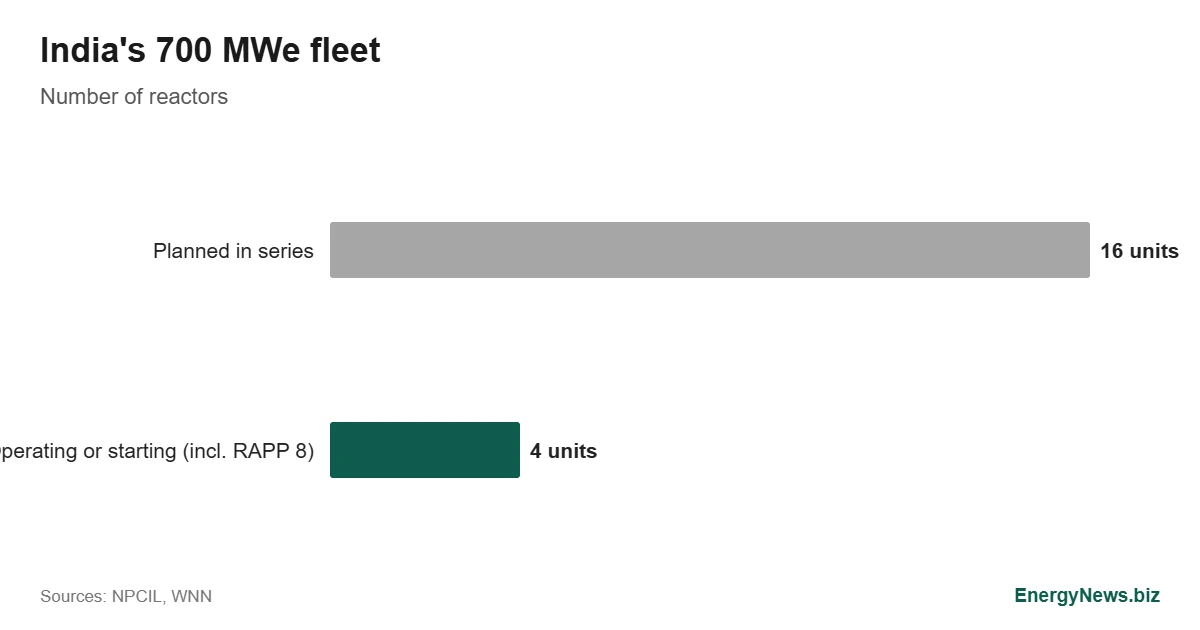
RAPP 8 is the fourth unit in a planned series of sixteen 700 MWe reactors, a fleet of about 11.2 GW. With the Rajasthan nuclear unit approaching start-up, roughly a quarter of the series is now operating or close to it. The remaining twelve units are at various stages of construction and planning across several states.
The 700 MWe design is India’s main domestic reactor platform. It was scaled up from the earlier 220 MWe and 540 MWe PHWRs and uses natural uranium fuel with heavy water as moderator and coolant. Because it does not need enriched fuel, it reduces India’s exposure to foreign fuel suppliers, an important factor in the country’s nuclear policy. The first two units of the series entered service at Kakrapar in Gujarat before the Rajasthan nuclear pair. Fleet mode construction, in which several identical units are ordered together, is meant to cut costs and build times as the series grows.
Kaiga 1 sets a refurbishment benchmark
Kaiga 1 is a smaller 200 MWe PHWR that first connected to the grid in 2000. It was shut down on 1 April 2025 to replace coolant channels and feeders, a major job that heavy water reactors need during their lives. NPCIL says it is the first of its reactors to return to criticality this soon after such an outage, which it calls a benchmark for the fleet.
Faster refurbishment matters because India has many older PHWRs that will need the same work. Each month saved means more power from existing assets.
Coolant channel replacement is a known challenge for this reactor type. Canada’s CANDU fleet, which shares the same basic design principles, has gone through long refurbishment programmes that took years per unit. A turnaround of about 600 days at Kaiga 1 suggests NPCIL has built up experience and tooling that it can apply across its fleet. That experience will matter as the first 220 MWe units built in the 1980s and 1990s come due for similar work.
Context: firm power for a fast-growing grid
India is adding solar at record speed and is now looking at storage rules for rooftop solar. Nuclear plants like the Rajasthan nuclear units provide steady output that complements that growth. The government has set a goal of 100 GW of nuclear capacity by 2047 and has opened the sector to more private participation.
What to watch
The next steps for RAPP 8 are first criticality, grid connection and the move to full power. If it follows unit 7’s timeline, grid connection could come within about six months, adding another 700 MWe of Rajasthan nuclear capacity to India’s grid in 2027.
Add EnergyNews.biz as a preferred source on Google


