


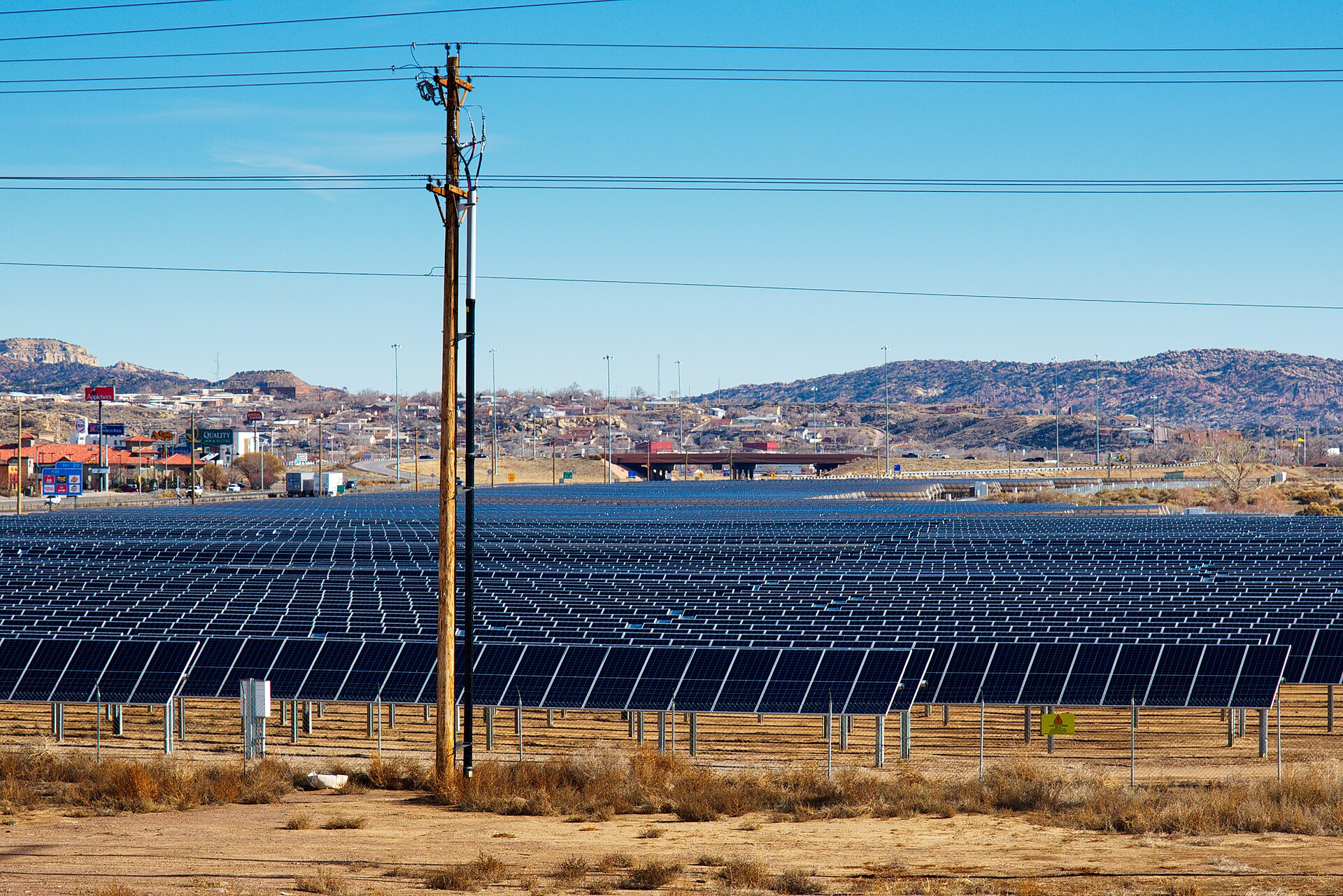


Greenvolt Power has broken ground on its largest solar and battery storage project in the United States so far, according to pv magazine. The project in New Mexico combines 100 MWac of solar with a 50 MW, 200 MWh battery storage system. Commissioning is expected in summer 2028.
Greenvolt is a European renewable energy developer with operations in several markets, and its US arm has been building a pipeline of solar and storage projects in states with strong demand growth.
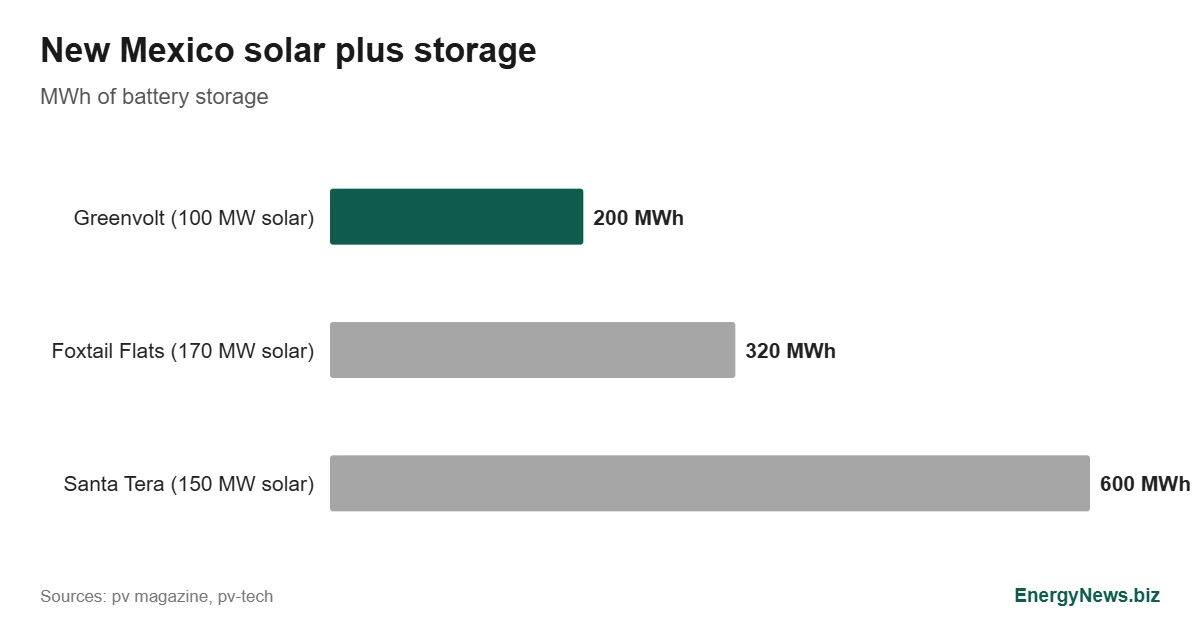
How the Greenvolt project is sized
The battery’s power rating is half the solar plant’s AC capacity, and it can discharge for four hours at full power. In practice, that lets the plant shift a large part of midday solar output into the evening, when demand in the Southwest peaks and power prices are highest.
Four-hour storage has become the standard choice for US solar projects. It matches the length of the evening peak in many markets and qualifies for resource adequacy programmes in states such as California. A smaller battery relative to solar, as in this project, keeps capital costs lower while still capturing much of the value of evening supply.
Batteries co-located with solar can also charge from the plant’s own output, which avoids grid charging costs and simplifies the interconnection. Sharing a single grid connection between solar and storage is one of the main reasons developers now combine the two at the same site.
New Mexico’s solar and storage boom
New Mexico has become one of the busiest markets for solar-plus-storage in the United States. The state has a clean electricity standard and has been retiring coal plants, including the San Juan Generating Station in the north-west of the state. Data centres and large industrial users are also driving new demand.
Several projects are under construction. DESRI’s Foxtail Flats pairs 170 MW of solar with an 80 MW, 320 MWh battery under a contract with Los Alamos County. Its Santa Tera project in Doña Ana County combines 150 MW of solar with 600 MWh of storage. Compared with those, the Greenvolt plant has a smaller battery for its solar size, which suggests a contract that values midday energy as well as evening capacity.
Storage deals around the world
The project adds to a strong year for battery construction. In Australia, EDF power solutions recently bought the 250 MW Holloway battery project, and BW ESS has announced plans for 500 MW of four-hour storage in France. Falling battery prices and higher peak power prices are making storage part of almost every new solar project in sunny markets.
Policy risk for US projects
US projects face rising equipment costs from tariffs and trade measures, including the Section 232 action on imported modules. Developers that secured equipment early, or that buy from US factories, are better placed. Tax credit rules on foreign content also affect which batteries and panels a project can use. Greenvolt has not said which suppliers it will use for this project.
What it means for buyers of power
For utilities and large customers in the region, solar-plus-storage plants like the Greenvolt project offer power at fixed prices for many years, plus evening supply that pure solar cannot provide. As more of these plants come online, evening prices in the Southwest are likely to come under pressure.
What to watch
The next detail to watch is the offtake contract. Greenvolt has not named a buyer for the power in the reports so far. A long-term contract with a utility or data centre operator would show how the project is financed and what price it achieved for combined solar and storage output.
Add EnergyNews.biz as a preferred source on Google


