


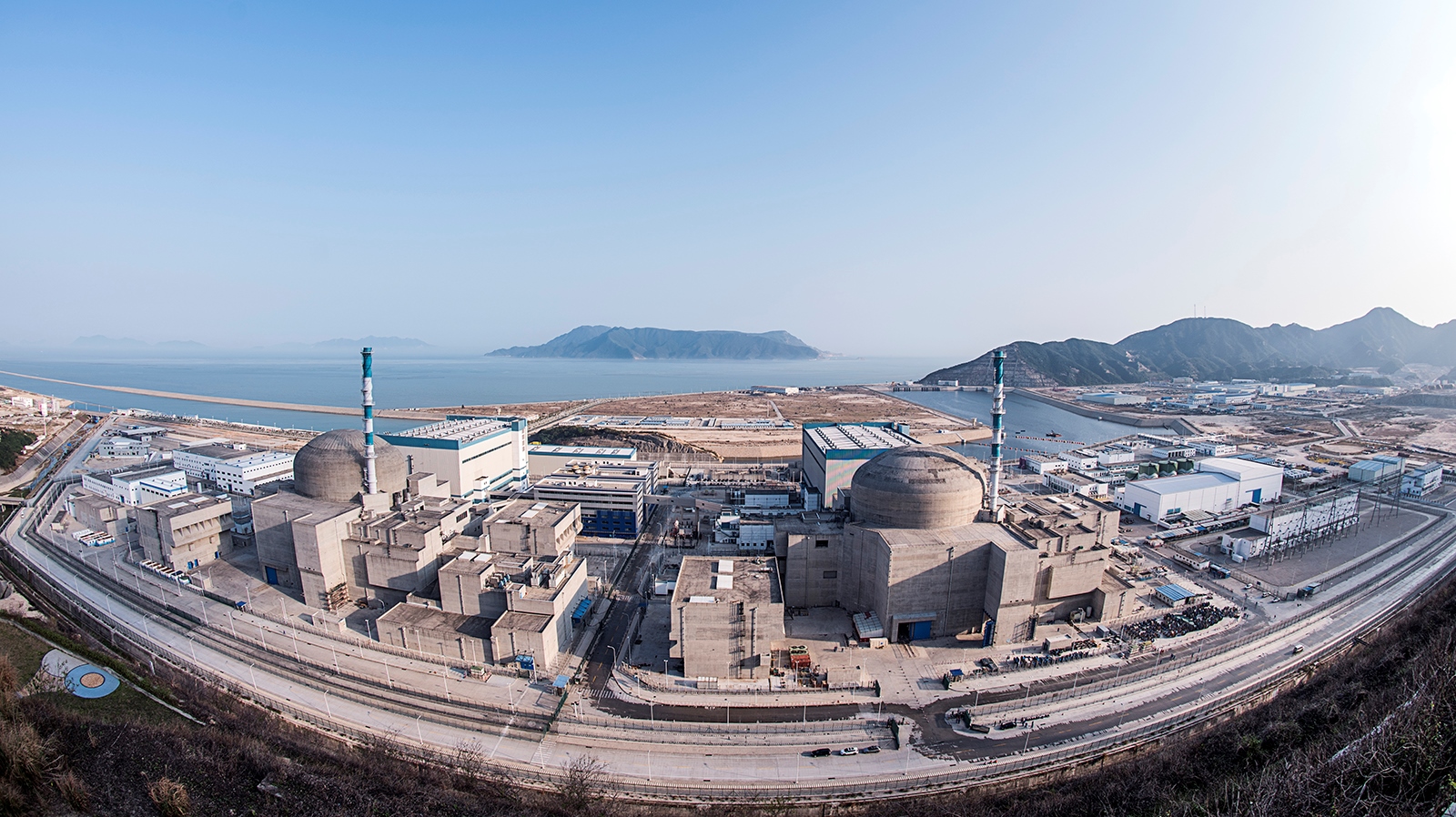


Construction has started on unit 3 of the Taishan nuclear power plant in Guangdong province, China. China General Nuclear (CGN) poured the first concrete for the nuclear island at 10:18 on Wednesday, 25 November, which marks the official start of building work, according to World Nuclear News.
Taishan 3 is one of two units in the plant’s second phase, both of the HPR1000 design, also known as Hualong One. The project was approved at a State Council meeting on 27 April 2025, chaired by Premier Li Qiang, as one of ten new reactors cleared that day.
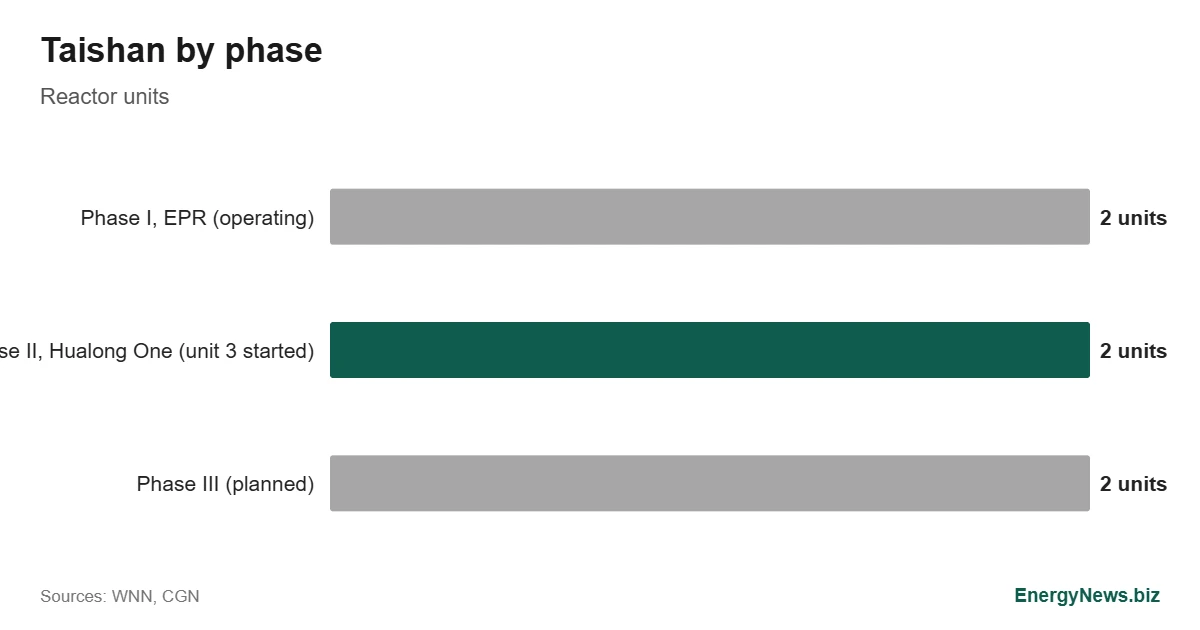
Taishan moves from EPR to Hualong One
Taishan is best known abroad for its first two units, which are EPR reactors of French design. They were the first EPRs in the world to operate, entering commercial service in December 2018 and September 2019, ahead of similar units in Finland, France and the United Kingdom.
Their early start made Taishan a reference site for the EPR design, and engineers from other EPR projects visited to learn from its commissioning. Phase I was built as a joint venture between CGN and EDF, which holds a minority stake in the plant.
The second phase switches to China’s own Hualong One technology. Units of this design are rated at roughly 1,100 to 1,200 MWe and have become the main reactor type for new Chinese projects, alongside CAP1000 units based on the AP1000. The plant is planned to have six units in three phases, so Taishan will eventually host two generations of large pressurised water reactors on one site.
A new cooling design
Phase II will use high-level water-collecting natural draft cooling towers. These towers remove waste heat to the atmosphere and recycle the cooling water, rather than taking large volumes of seawater for once-through cooling. The approach reduces the plant’s thermal impact on nearby waters and could become a template for coastal sites with environmental limits.
China’s construction pace
Taishan 3 is the fourth nuclear unit CGN has started building in 2026. China approves new reactors in batches, usually about ten a year in recent years, and then moves them into construction in a steady flow. Chinese builders typically complete a Hualong One in five to six years from first concrete, which is much faster than recent large projects in Europe and North America.
That pace matters for global markets. It keeps Chinese supply chains for heavy forgings, pumps and control systems busy and builds a workforce with experience on repeated designs. Western programmes, such as the plans for advanced nuclear in New York, are trying to rebuild that kind of repeat experience after decades with few new builds.
What it means for the Taishan site
With Phase II under way, the Taishan site will become one of the largest nuclear generation centres in southern China. The province of Guangdong has a large industrial base and high power demand, and nuclear is a major part of its plan to cut coal use while keeping supply stable for manufacturing.
The two EPR units have had a mixed record. One was shut for more than a year in 2021 and 2022 after fuel rod damage was found, before returning to service. The decision to build Phase II with a domestic design shows that CGN prefers to rely on its own technology for new capacity.
What to watch
The next milestone is first concrete for unit 4, the second Phase II reactor. If CGN keeps to its usual schedule, unit 4 could start within a year. Completion of Taishan 3 would follow around 2031 if it matches the build times of other Hualong One units.
Add EnergyNews.biz as a preferred source on Google


