






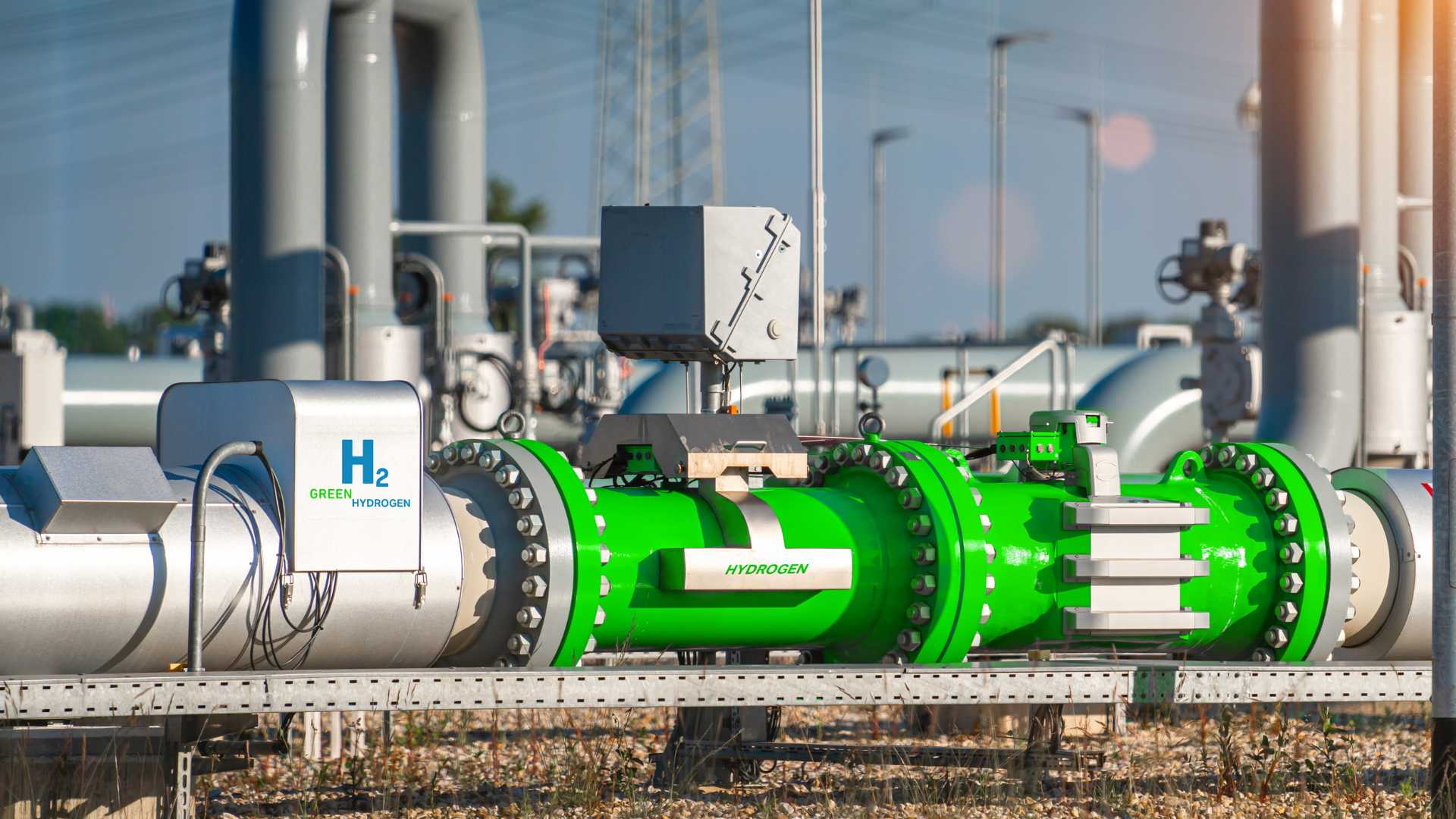
The Basque government has initiated a feasibility study to assess a potential secondary hydrogen pipeline from the Enagás trunk line to Irun, a move aimed at linking Euskadi’s growing green hydrogen production to France.
The project enlists Team Engineering and research group Tecnalia to evaluate technical and economic viability, aligning with the EU-backed H2Med corridor and reinforcing cross-border hydrogen infrastructure.
The Basque Country is already a hub for industrial hydrogen use, with steel, chemical, and refining operations relying on renewable hydrogen for decarbonization. Petronor’s on-site electrolyzer provides a stable supply for its processes while regional projects expand the green hydrogen footprint. By positioning Irun as a key export node, the study will explore whether a branch off the Muskiz-Arrigorriaga-Haro line can transport industrial-scale hydrogen volumes to France while maintaining domestic supply.
Technical assessments will focus on whether existing steel gas pipelines can be repurposed or new infrastructure is required. The study will consider compression requirements, safety standards, and the integration of compressor stations on both sides of the border. Analysts will map current and planned electrolysis facilities and project demand across industrial and transport sectors. Should the pipeline prove viable, Nortegas could operate the feeder lines, complementing Enagás’s national backbone strategy.
Strategically, the pipeline ties into Europe’s industrial decarbonization goals and net-zero commitments. The study will test scenarios ranging from conservative to ambitious regarding hydrogen production and uptake by factories, refineries, and fleet operators. Spain’s electrolyzer programs are expected to reach roughly 235 megawatts by 2026, producing approximately 34,000 tonnes of green hydrogen annually, providing a solid foundation for the pipeline concept. Enagás envisions a national transmission network of about 2,600 kilometers by 2030, linked to Marseille through the broader trans-European hydrogen corridor.
Stakeholders include the Gobierno Vasco and EVE, which are promoting Euskadi as a European hydrogen hub to attract investment and create employment. Team Engineering contributes pipeline design and salt-cavern storage expertise, while Tecnalia provides R&D on electrolysis efficiency and demand modeling. Petronor remains a reference producer, with industrial customers already secured.
Potential benefits include accelerated regional decarbonization, expanded market access in France, and job creation in engineering, construction, and operations. EU support via Projects of Common Interest and NextGenerationEU funds could reduce financial risk.