


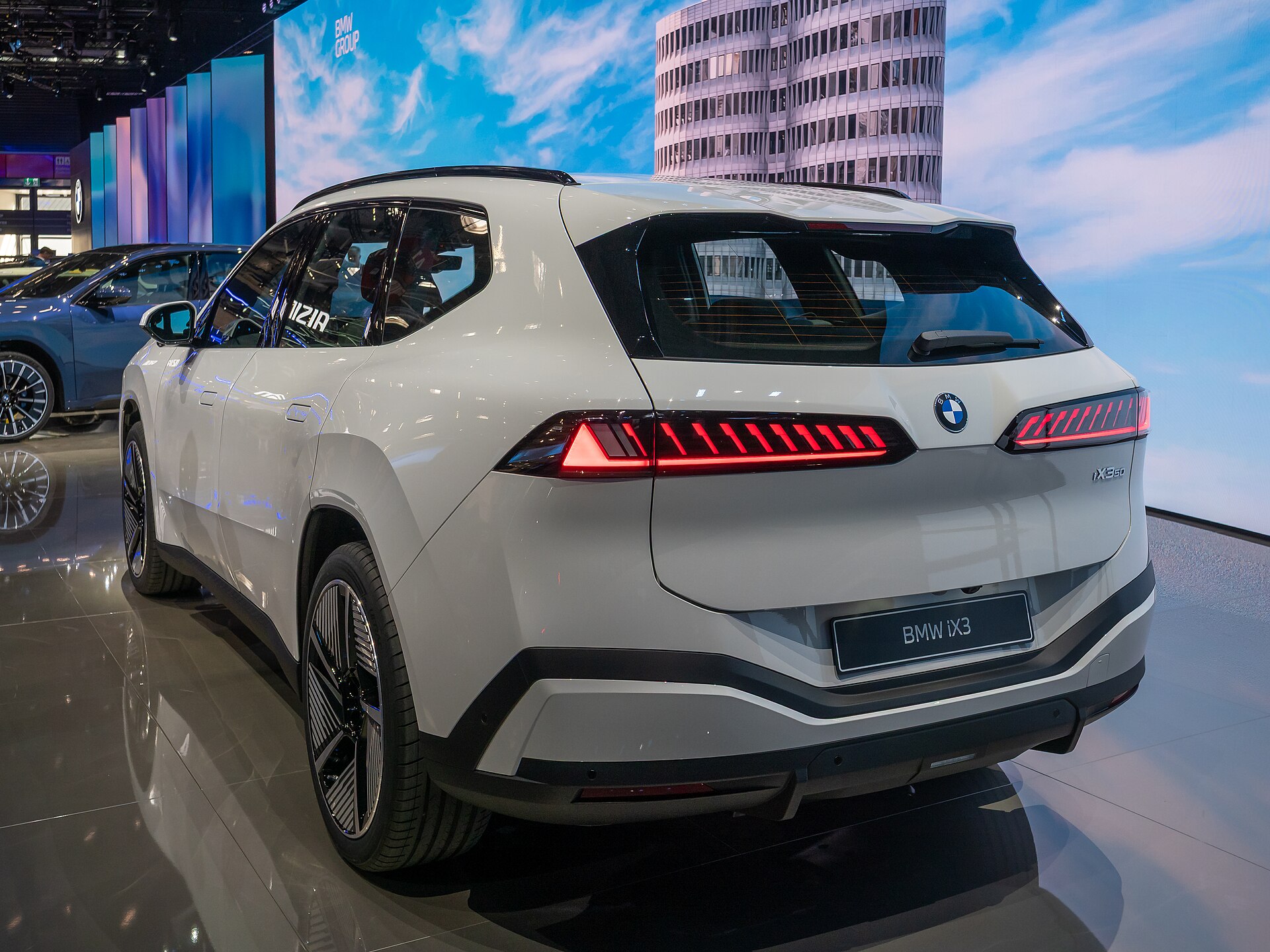


BMW has started series production of its Gen6 high voltage battery in Shenyang, making the northeastern Chinese site the third plant in its new battery network after Debrecen in Hungary and Irlbach-Straßkirchen in Germany. The batteries will power the Neue Klasse models that BMW builds in China for the local market, and two more plants, in Woodruff, South Carolina, and San Luis Potosí, Mexico, are due to begin series production in the coming months.
What the Gen6 battery changes
The Gen6 pack uses large round cells with a diameter of 4.6 cm, made in two heights, 9.5 cm and 12 cm. BMW says energy density rises by more than 20 percent compared with the previous cell generation, and that charging speed and range improve by up to 30 percent. Treating each cell as a cylinder, the two heights give envelopes of about 158 cubic centimetres and about 199 cubic centimetres.
| Item | Detail |
|---|---|
| Cell format | Round, 4.6 cm diameter, 9.5 cm or 12 cm high |
| Energy density | More than 20 percent higher than the previous generation |
| Charging speed and range | Improved by up to 30 percent |
| Pack design | Cell to pack, without an intermediate module level |
| Control unit | BMW designed Energy Master, combining power supply and battery management functions |
| Network | Debrecen, Irlbach-Straßkirchen, Shenyang; Woodruff and San Luis Potosí to follow |
Removing the module level means the cells sit directly in the housing, which saves material and weight and frees space that can hold additional cells. The Energy Master sits on top of the battery and monitors, among other things, the state of charge and the temperature of the cells.
How the pack is built in Shenyang
In Shenyang the cells are first inspected and then connected to coolers to form clusters. After laser cleaning, the clusters are welded to the cell contact system, which connects the cells electrically, and a foaming process secures the components mechanically. The housing is closed, sealed and riveted, the Energy Master is installed, and each finished battery passes an end of line inspection.
BMW stresses weld quality because a pack of round cells contains a very large number of individual cells and every weld must hold. It monitors the laser weld seams on the line in real time with inspection systems, and also uses digital twins and AI supported testing methods. Production Board Member Raymond Wittmann called the high voltage battery a key component of BMW’s all electric vehicles and said the approach is to manufacture locally, efficiently and close to its markets, to uniform global standards.
The site and the vehicle it supplies
The conversion of Shenyang for the Neue Klasse was formalised in a letter of intent with Liaoning Province in April 2024 and involved the equivalent of about €2.5 billion. With an annual capacity of 830,000 vehicles as of 2024, Shenyang is the BMW Group’s largest production site, spread across the Dadong, Lydia and Tiexi plants and operated by the joint venture BMW Brilliance Automotive. Divided by the site’s annual vehicle capacity, €2.5 billion is about €3,000 per vehicle of capacity, but that sum covers the whole conversion and not the battery plant alone.
The first Neue Klasse model for the Chinese market, the long wheelbase iX3, began pre-series production there shortly before Christmas 2025. BMW opened pre-sales at the Chengdu Auto Show in August at prices from 269,900 yuan, about €36,100, for the iX3 30L to 339,900 yuan, about €45,400, for the 50L xDrive. The top version costs 70,000 yuan more than the entry version, about 26 percent. One report puts the first deliveries in November, while another says larger volumes will not reach customers until 2027, and BMW sources attribute the wait to quality testing of new technologies.
Why local production matters
Price competition for electric vehicles is intense in China, and the battery is the most expensive component of an electric car, so producing it close to the vehicle plant saves transport routes and inventory costs. One of BMW’s Chinese partners is a battery manufacturer. The dated checks are the first deliveries in November, the start of series production in Woodruff and San Luis Potosí in the coming months, and the 2027 volume ramp. For another company building a hydrogen link to a plant on a slipping schedule, see BMW’s Leipzig hydrogen pipe. Sources: BMW Group announcement of series production of Gen6 batteries in Shenyang, 15 October 2026, as reported, and reports of the pre-sale pricing and delivery timing.
Add EnergyNews.biz as a preferred source on Google


