


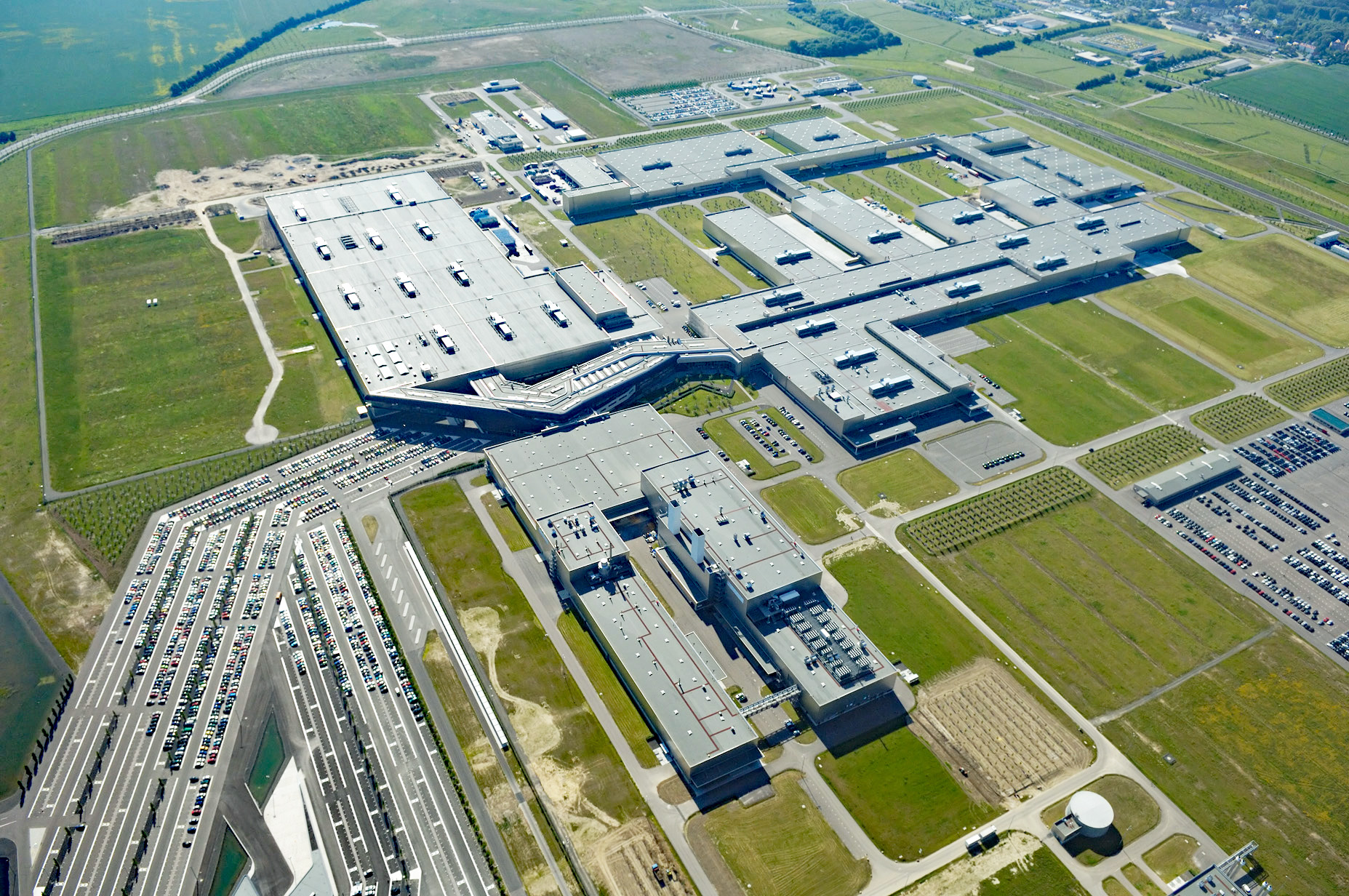


BMW Group began construction of a roughly two kilometre hydrogen pipeline to its Leipzig plant on 30 September 2026, with completion and commissioning scheduled for the first half of 2028. In 2025 the company said the link was expected to start delivering hydrogen to the plant in mid 2027, which puts the BMW Leipzig hydrogen pipeline between six and twelve months behind its first stated timetable.
What the 30 September release says
The company calls the plant the first vehicle plant worldwide with a direct connection to a hydrogen grid. Saxony’s Prime Minister Michael Kretschmer and Christian Hirte, Parliamentary State Secretary to the Federal Minister for Transport, attended the start of construction. The project is co-financed by the European Regional Development Fund and the Free State of Saxony.
BMW has signed a capacity reservation contract with ONTRAS Gastransport, the company responsible for developing the region’s core hydrogen grid. MITNETZ GAS will build the link and the associated gas pressure regulation and metering station. The release gives no cost for the link, no hydrogen volume, no supplier and no price.
| Item | BMW release in 2025 | BMW release of 30 September 2026 |
|---|---|---|
| Stage | Contracts signed with MITNETZ GAS and ONTRAS | Construction started; capacity reservation contract with ONTRAS |
| Length | About 2 km | Roughly 2 km |
| Timing stated | Link expected to start delivering hydrogen to the plant in mid 2027 | Link completed and commissioned in the first half of 2028 |
Six to twelve months, and a change of wording
Mid 2027 against the first half of 2028 means a gap of about six months if the link is commissioned at the start of 2028 and about twelve if it is commissioned at the end of June. The two releases also describe different events. The 2025 text speaks of the link starting to deliver hydrogen, while the 2026 text speaks of the link being completed and commissioned. Commissioning a pipe does not mean molecules flow, and the 2026 release gives no date for first hydrogen delivery.
The network upstream
The link joins a core network that Germany’s Bundesnetzagentur approved on 22 October 2024: 9,040 km of pipeline, to go into operation successively until 2032, with about 60 percent converted from gas pipelines and 40 percent newly built. Investment is estimated at €18.9 billion. In the target year 2032 the regulator gives a feed in capacity of 101 GW and a take out capacity of 87 GW. Two kilometres is the shortest and simplest part of that system, and the plant’s hydrogen depends on upstream sections that the BMW release does not date.
What the plant uses today
Leipzig has used hydrogen in intralogistics since 2013 and operates what BMW calls Europe’s largest hydrogen fuel cell intralogistics fleet, with more than 230 forklifts and tug trains. Since 2022 the paint shop has used hydrogen, and it now runs eleven dual fuel paint furnaces that switch between natural gas and hydrogen. BMW says that once connected, the plant can run high temperature processes such as paint drying purely on hydrogen instead of natural gas, and that the dual fuel burners already give technical and commercial insight into commissioning a core network.
Other hydrogen links are moving on the same kind of dates: see the SoutH2 corridor targeting early 2030s operation and Lhyfe and Perpetual Next’s Delfzijl MOU, which is still subject to technical and commercial evaluation.
The 2025 release explained the practical gain: once the pipeline is in place, Leipzig no longer needs hydrogen delivered by truck in cylinders. BMW said then that hydrogen supplied by pipe would allow new uses, especially in the most energy intensive processes such as the curing ovens in the paint shop, and recalled that the plant took a fuel flexible burner into operation in its paint shop in October 2022. The core network that would supply it was described in that release as a nationwide project of about 9,000 km of hydrogen pipe. The 2026 release adds the political framing: BMW argues that industry can move to hydrogen only if the core grid and distribution infrastructure are built quickly, grid charges are competitive, low cost climate friendly fuels are accessible, and planning certainty and Europe wide certification exist.
Next dated checks
- First half of 2028: completion and commissioning of the link, per BMW.
- Upstream core network sections serving Leipzig: no date given in the release.
- First hydrogen delivery to the plant: no date given in the release.
Sources: BMW Group press releases of 30 September 2026 and 2025; Bundesnetzagentur press release on the hydrogen core network, 22 October 2024.
Add EnergyNews.biz as a preferred source on Google


