


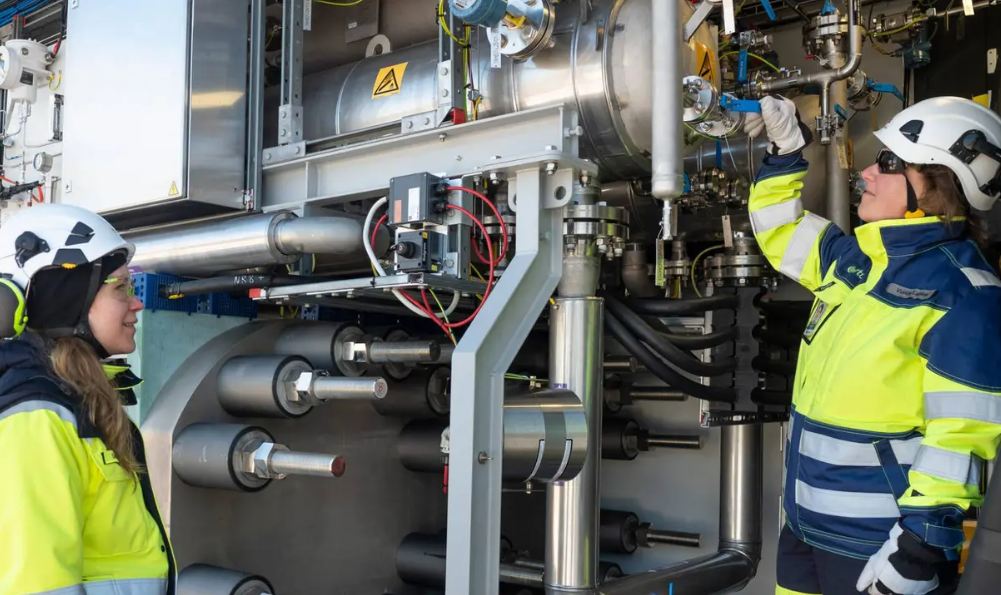


Fortum has inaugurated the €20 million Kalla Test Center in Loviisa, Finland, marking the launch of a 2 MW pilot hydrogen facility designed to generate long term operational data and real world testing experience as the hydrogen sector shifts focus from project announcements toward commercial and technical validation.
The facility began site preparation in late 2024, entered construction in 2025, and produced its first hydrogen during commissioning in December 2025. Full operational status is expected during summer 2026, with testing activities continuing through 2028.
The timing is significant. Across Europe, hydrogen strategies are moving from aggressive capacity targets toward questions of utilization rates, electricity sourcing, electrolyzer durability, and commercial viability. Rising power prices, weak industrial demand signals, and delayed final investment decisions have forced many developers to reassess deployment timelines. In that context, Fortum’s incremental approach stands apart from earlier market narratives centered on rapid scale expansion.
At the core of the Kalla project is the side by side operation of two electrolyzer technologies within the same facility. Fortum stated that the site will test systems supplied by Hystar and Stargate Hydrogen under identical operating conditions. While pilot projects often focus on proving basic technical functionality, comparative testing under real operational loads addresses a more commercially relevant issue: performance consistency across variable electricity conditions.
This distinction matters in the Nordic market, where renewable generation profiles can fluctuate sharply due to hydropower availability, wind variability, and regional transmission constraints. Electrolyzer efficiency metrics measured under controlled laboratory conditions frequently diverge from operational realities once systems are exposed to intermittent load cycling and market driven dispatch patterns.
Fortum’s emphasis on “structured testing and long term learning,” as described by Satu Sipola, reflects growing recognition that hydrogen economics depend heavily on operational optimization rather than headline electrolyzer capacity alone. Degradation rates, maintenance intervals, stack lifetime, and responsiveness to fluctuating electricity prices increasingly determine whether projects can achieve commercially viable hydrogen production costs.
The Nordic region presents both advantages and structural limitations for hydrogen deployment. Finland benefits from relatively low carbon intensity electricity and expanding renewable generation, particularly wind power. However, industrial hydrogen demand remains concentrated in a limited number of sectors, including refining, steel, chemicals, and synthetic fuels. Without stronger downstream demand certainty, large scale electrolyzer deployment risks underutilization.
This is where facilities like Kalla could become strategically relevant beyond their modest size. Operational datasets generated over multi year testing cycles may provide insight into how electrolyzers perform under Nordic climatic conditions and volatile power markets. That information could influence future procurement strategies, technology selection, and integration models for larger projects across the region.
Fortum’s framing of hydrogen as an enabler of electrification also aligns with a broader shift in European energy policy. Hydrogen is increasingly viewed not as a universal decarbonization solution but as a targeted tool for sectors where direct electrification remains difficult. That includes high temperature industrial processes, maritime fuels, aviation fuel synthesis, and seasonal energy balancing.
Still, the economics remain challenging. Green hydrogen production costs in Europe continue to depend heavily on electricity pricing, electrolyzer capital expenditures, and capacity utilization. Even in relatively favorable Nordic electricity markets, sustained low cost renewable power is not guaranteed, particularly as electrification demand accelerates across industrial sectors.
The decision to prioritize operational learning before pursuing broader deployment may therefore reflect a more cautious investment logic emerging across the hydrogen industry. Several European developers have slowed expansion plans amid weaker than expected demand growth and uncertain policy support mechanisms. In that environment, pilot facilities capable of generating bankable operational data may offer more immediate strategic value than large scale announcements lacking clear commercial pathways.
Add EnergyNews.biz as a preferred source on Google


