


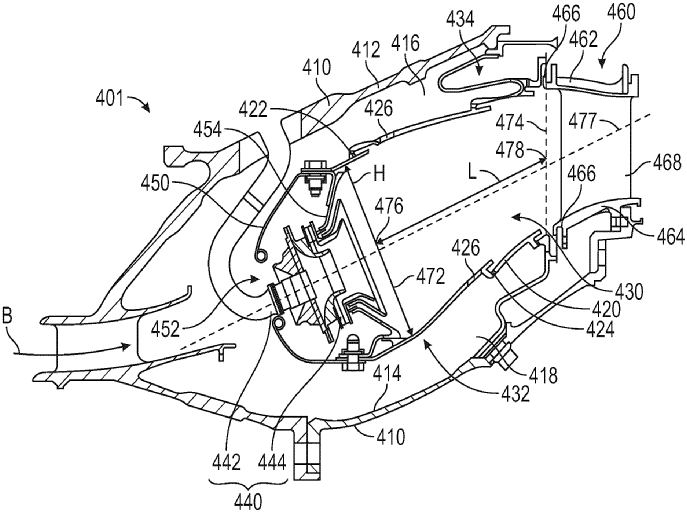


A new patent has been filed by the General Electric Company, focusing on a gas turbine engine that incorporates a hydrogen fuel delivery assembly. This advanced design aims to optimize the combustion process and improve overall efficiency.
A significant component of this innovative gas turbine engine is the hydrogen fuel delivery assembly. It is configured to deliver a controlled hydrogen fuel flow into the combustion chamber. Hydrogen, being a cleaner alternative to traditional fossil fuels, ensures that the combustion process is more environmentally friendly by producing water vapor instead of carbon dioxide.
The compressor section is another essential part of the gas turbine engine. This section is designed to compress the air that flows through it, thereby providing a compressed air flow. The compressed air is then mixed with the hydrogen fuel flow in the combustion chamber, creating an optimal environment for efficient combustion.
The combustion chamber is a crucial area where the actual combustion of hydrogen fuel and compressed air occurs. This chamber features a specific burner length and burner dome height, optimized for efficient fuel combustion. The combustion chamber is characterized by a combustor size rating between one inch and seven inches. This size rating ensures that the chamber can handle varying core air flow parameters, specifically between two and one-half kN and sixty kN. This adaptability in size and flow parameters is crucial for the engine’s performance and efficiency.
The core air flow parameter is a vital metric in this gas turbine engine design. It refers to the volume of air that flows through the core of the turbine engine. By maintaining the combustor size rating as a function of this core air flow parameter, the engine can achieve optimal combustion efficiency across different operating conditions. This adaptability ensures that the engine performs efficiently whether it is operating at lower or higher power settings.
The shift to using hydrogen as a fuel source in gas turbine engines marks a significant step in reducing carbon emissions. Hydrogen combustion primarily results in water vapor, making it a much cleaner alternative compared to traditional hydrocarbon fuels, which produce carbon dioxide and other harmful emissions. By adopting hydrogen fuel, this gas turbine engine significantly mitigates its environmental impact.
Add EnergyNews.biz as a preferred source on Google


