




Oriana Power Limited has established a wholly owned subsidiary, Evercore Projects Private Limited, to consolidate its presence across power generation, engineering, procurement and construction, and emerging clean fuel technologies including green hydrogen and compressed biogas.
The timing of the incorporation, finalized in April 2026, coincides with a period of accelerated project execution across India’s clean energy sector, where developers are increasingly structuring dedicated entities to manage distinct segments of the value chain. While Evercore Projects begins with a nominal authorized capital of Rs. 100,000, its strategic scope extends far beyond early-stage structuring, covering hydrogen electrolysers, fuel cells, green ammonia, e-methanol, and other synthetic fuels that are central to India’s long-term decarbonization roadmap.
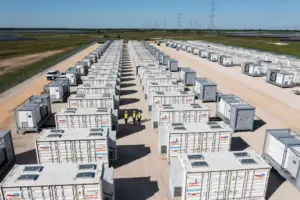
The subsidiary’s mandate reflects a shift from standalone renewable projects toward system-level integration. Alongside power generation and EPC activities, it is authorized to develop transmission infrastructure, distribution networks, and large-scale energy assets such as battery energy storage systems. This diversification aligns with the increasing complexity of renewable integration in a grid that is rapidly absorbing variable solar and wind capacity.
The expansion into green hydrogen and derivatives places the subsidiary within India’s broader policy framework under the National Green Hydrogen Mission, which aims to position the country as a global producer of low-carbon fuels. In this context, Oriana Power Limited has already secured a Rs. 3,135 crore green ammonia offtake agreement with the Solar Energy Corporation of India, signaling early alignment with emerging demand signals for hydrogen-based fuels in industrial and export markets.
The company has also won an EPC contract worth Rs. 1,180 crore for a 234 megawatt floating solar project, underscoring its growing presence in complex renewable infrastructure segments that require higher engineering and execution capabilities compared to conventional ground-mounted solar installations. These projects indicate a transition toward higher-value segments of the renewable sector, where integration of generation, storage, and downstream fuel production is increasingly important for project economics.
Evercore Projects’ inclusion of compressed bio gas, hydrogen electrolysers, and synthetic fuels such as green ammonia and methanol reflects a broader convergence of renewable electricity and chemical value chains. This integration is becoming more prominent in markets where renewable power is no longer viewed solely as an end product but as a feedstock for industrial decarbonization. However, scaling these technologies remains dependent on cost reductions in electrolysis, availability of green power, and the development of stable offtake agreements.
The company’s disclosure also highlights its intention to operate across both domestic and international markets, suggesting an export-oriented strategy for green hydrogen derivatives. This introduces exposure to evolving global certification frameworks, pricing volatility in hydrogen-linked commodities, and competition from established and emerging producers in the Middle East, Europe, and Australia.
From a structural perspective, the creation of a dedicated subsidiary allows for more targeted capital allocation and risk separation between core EPC operations and higher-risk, capital-intensive hydrogen and synthetic fuel ventures. This approach is increasingly used by renewable developers to manage balance sheet exposure while maintaining optionality in emerging markets.
The integration of battery energy storage systems into the subsidiary’s mandate is particularly relevant as India’s grid continues to experience rising renewable penetration. Storage is becoming a critical enabler for managing intermittency, reducing curtailment, and improving load balancing, especially in states with high solar capacity. However, the economic viability of large-scale storage deployment remains sensitive to tariff structures and ancillary service markets, which are still evolving in the Indian context.
While the expansion signals strategic ambition, execution risks remain significant. Hydrogen and advanced fuel technologies are still in early commercialization stages, with limited global price convergence and uncertain demand trajectories. Similarly, EPC-heavy portfolios expose developers to project delays, input cost volatility, and regulatory variability across jurisdictions.