




The UK green hydrogen sector is moving from policy development toward commercial execution, but the transition remains dependent on securing investment, reducing technology risk, and establishing reliable demand. A new partnership between Protium Green Solutions Ltd and ITM Power highlights the industry’s current focus: combining project development expertise with electrolyzer manufacturing capabilities to advance industrial scale hydrogen production.
The two companies have formalized a strategic collaboration to develop, invest in, and operate green hydrogen production facilities across the UK, beginning with the Cromarty Hydrogen Project in Scotland. The agreement creates a framework for cooperation across multiple future developments, particularly projects supported through the UK government’s Hydrogen Allocation Round (HAR) program.
The partnership reflects a broader shift within the hydrogen market. Early hydrogen strategies focused heavily on technology demonstrations and long term ambitions, but developers are now prioritizing projects that can secure customers, financing, infrastructure access, and operational certainty. The challenge facing many hydrogen projects is no longer only technological feasibility, but whether projects can achieve competitive economics and move successfully through investment decisions.
The Cromarty project provides a direct example of this transition. Located in the Scottish Highlands, the development was recently acquired by Protium and received government backed support through the first Hydrogen Allocation Round. The project is designed around a 15 MW electrolyzer installation capable of producing approximately 7 tonnes of green hydrogen per day at peak output.
The facility is intended to supply hydrogen to regional customers requiring alternatives to fossil fuel based energy sources. Target sectors include heavy industrial heat and power users, particularly businesses located outside the national gas grid where electrification may be technically or economically challenging.
This regional focus reflects one of the key applications where green hydrogen is expected to play a role. While renewable electricity can directly replace fossil fuels in many applications, some industrial processes require high temperature heat or energy dense fuels that remain difficult to electrify. Hydrogen projects targeting these markets are increasingly designed around specific demand clusters rather than broad commodity production models.
Under the partnership structure, Protium will lead project development activities including power procurement, permitting, downstream infrastructure, and hydrogen distribution. A final investment decision for Cromarty is currently targeted for December 2026, placing the project within the critical period when many UK hydrogen developments must demonstrate commercial readiness.
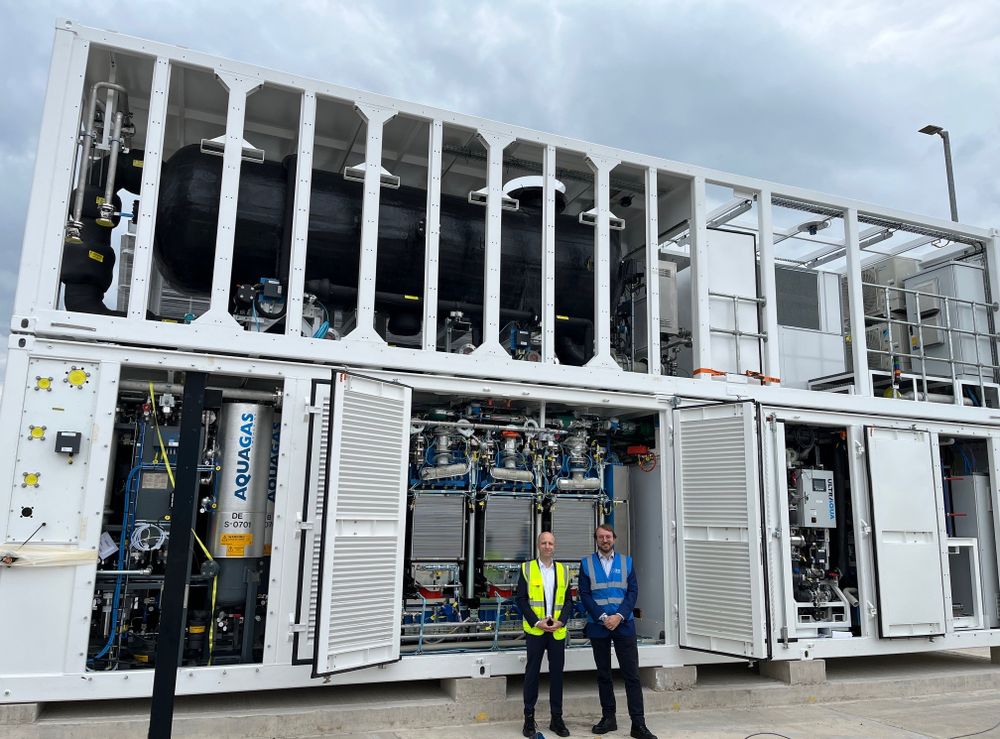
For ITM Power, the agreement expands its role beyond electrolyzer supply. The company is exploring multiple collaboration models, including potential involvement through Hydropulse, its build own operate subsidiary focused on containerized green hydrogen plants, as well as direct equipment supply arrangements.
This approach reflects changing dynamics in the electrolyzer market. Manufacturers have increasingly recognized that equipment sales alone may not capture the full value chain opportunity as hydrogen projects become more complex. Developers, meanwhile, are seeking partners capable of supporting technology selection, deployment, operations, and financing structures.
The collaboration also demonstrates the importance of balancing technical performance with commercial flexibility. Electrolyzer deployment remains one of the major cost factors in green hydrogen projects, and developers must consider efficiency, durability, maintenance requirements, and integration with variable renewable electricity supplies.
A 15 MW facility such as Cromarty is modest compared with proposed gigawatt scale hydrogen hubs across Europe, but smaller industrial projects can serve as important market validation points. They allow developers to test customer demand, operational models, and supply chain arrangements before committing to larger developments.
The UK’s hydrogen sector continues to face several structural challenges. Electricity costs remain a major factor in green hydrogen economics, particularly as electrolyzers require significant volumes of renewable power. Infrastructure availability, including storage and distribution networks, also influences project viability. Without sufficient demand certainty, even technically successful projects can struggle to secure final investment approval.
Government support mechanisms such as the Hydrogen Allocation Round are designed to address these barriers by providing revenue certainty and helping early projects reach commercial operation. However, the long term competitiveness of the sector will depend on whether projects can eventually operate with reduced reliance on subsidies.
The Cromarty development also carries regional economic implications. Protium estimates that the first phase could create around 30 skilled jobs and apprenticeships, supporting local workforce development while contributing to Scotland’s broader energy transition plans.
Add EnergyNews.biz as a preferred source on Google


