


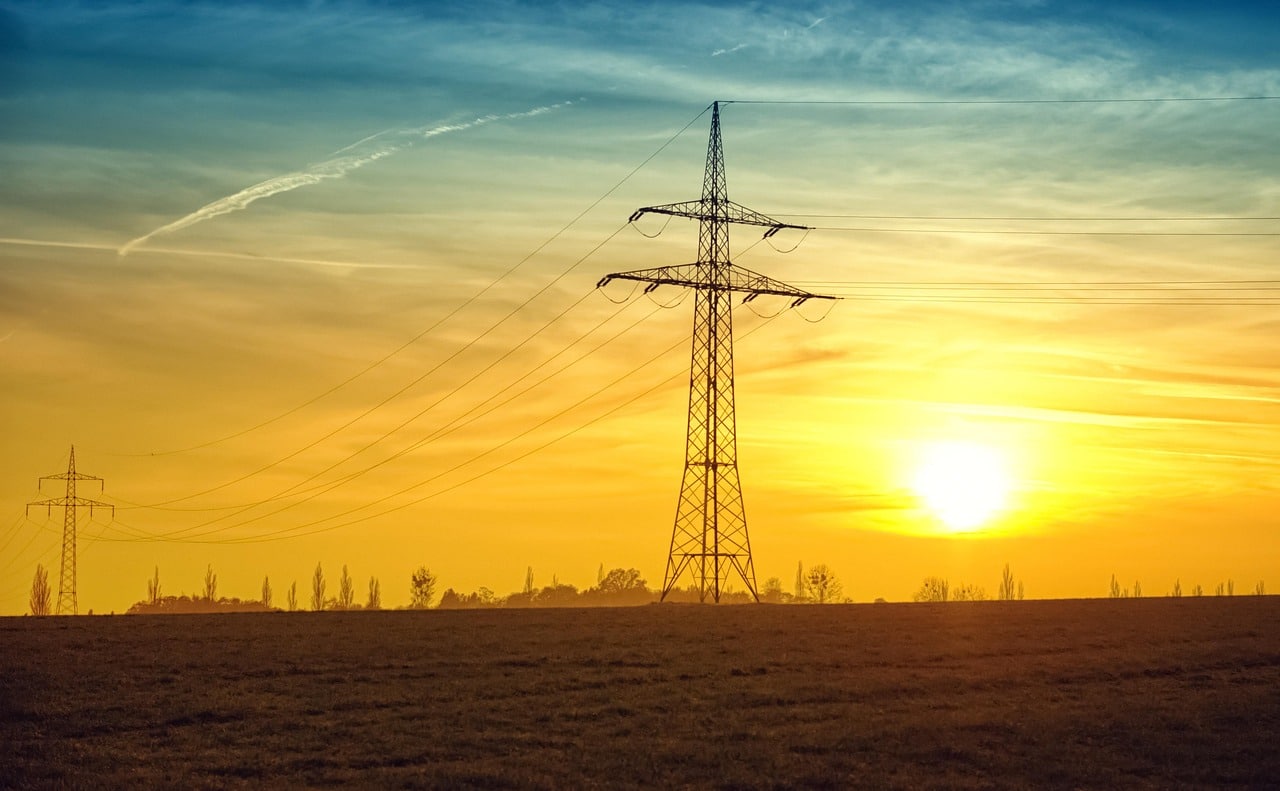


China accounts for 80% of global lithium-ion battery supply chain production capacity and 85% of solar production capacity, according to the International Energy Agency. The executive order President Trump signed on August 26 restricting foreign-made bulk-power grid equipment does not name China, but the equipment categories it covers, batteries, transformers, inverters and generators, are precisely the ones where that concentration is highest, and the order arrives at a moment when the United States is already short of the equipment it is proposing to restrict.
President Trump’s order, issued under the International Emergency Economic Powers Act and the National Emergencies Act, declares that the foreign supply of bulk-power system electric equipment constitutes an unusual and extraordinary threat to national security and directs Energy Secretary Chris Wright to determine, case by case, whether specific equipment poses a risk of sabotage, unauthorized remote access or supply disruption significant enough to bar its purchase or installation. The covered equipment list is broad: substations, transformers, batteries used for energy storage, generators, turbines and the software and digital control systems that run them. The order formally applies to transactions tied to any of 24 countries, though apart from China, none of those countries are significant suppliers to the US power industry, a structural detail that makes the order’s actual target considerably narrower than its stated scope. Transactions are barred only once DOE determines specific equipment poses an unacceptable risk, and the department has 120 days from signing, until December 24, to publish the rules that will define how those determinations get made. A separate, slower track requires DOE to recommend revisions to the Federal Acquisition Regulation within 180 days to prioritize American-made infrastructure in federal procurement, with the FAR Council then given a further 90 days to consider proposing those changes for public comment, pushing any binding change to how the federal government itself buys equipment well into 2027.
This is not the first time Washington has tried this specific policy. Trump’s first term produced Executive Order 13920 in May 2020, which authorized the Energy Department to restrict bulk-power equipment tied to foreign adversaries, followed by a December 2020 prohibition order covering a narrower set of utilities serving critical defense facilities. President Biden suspended that order within hours of taking office on January 20, 2021, and the Energy Department formally revoked the prohibition order three months later, replacing it with a request for information that produced no comparable restriction for the rest of his term. The 2020 version never meaningfully reshaped the broader equipment market it targeted before it was shelved. A company or utility now being asked to redirect long-term purchasing decisions toward non-Chinese suppliers based on this order is doing so against the recent precedent that an essentially identical policy was reversed within a single day by the next administration and stayed reversed for more than five years, a consideration that matters for equipment categories like transformers where manufacturing capacity decisions and supply contracts typically span years rather than election cycles.
The order’s timing sits awkwardly against a grid equipment shortage that has been building for several years and has recently required its own emergency responses from the same administration. Lead times for large power transformers, the category most central to expanding grid capacity for new data centers and industrial load, have stretched to as long as three years in the United States, up from what was historically a matter of weeks, prompting the President’s National Infrastructure Advisory Council to recommend a strategic transformer reserve. PJM, the country’s largest grid operator, has seen its projected capacity shortfall widen from roughly 209 megawatts in the 2026/2027 planning year to more than 6.5 gigawatts for 2027/2028, and the Department of Energy has already invoked wartime emergency authority three separate times in 2026 to force data centers within PJM’s territory onto diesel backup generation during grid stress events, a power the department had used only about 26 times combined across the entire country since 2000 before this year. Several major equipment manufacturers, including Hitachi Energy and Eaton, have committed more than a billion dollars combined to new US transformer manufacturing specifically to relieve that shortage, investments that remain years from full production. Restricting the purchase of foreign-made batteries, inverters and related equipment, in categories where China holds 80% to 85% of global manufacturing capacity by the IEA’s own accounting, removes a major potential source of relief for that shortage at the same time the order is being framed as a response to a security emergency, two problems that are each individually well documented but that pull policy in opposite directions on cost and availability in the near term.
The security rationale behind the order has specific, verifiable grounding rather than being purely precautionary. Reuters reported in 2025 that US personnel inspecting Chinese-made solar power inverters had found rogue communication devices not listed in the equipment’s product documentation, the kind of undocumented remote-access hardware the new order’s language about cybersecurity and digital capabilities is designed to address. The order also follows reported Iran-linked cyberattacks on US water utilities disclosed in early August, and the European Commission separately moved earlier in 2026 to bar Chinese-made inverters from publicly funded European energy projects, a decision SMA Solar and other European manufacturers have said is intended to support domestic suppliers as much as to address security risk. That parallel is worth noting because it suggests part of the policy logic in both Washington and Brussels is industrial as well as security-driven, a reading reinforced by the Trump order’s own directive to prioritize American-manufactured infrastructure in federal procurement rather than only restricting foreign equipment.
What the order does not yet resolve is how DOE’s forthcoming risk-determination rules will handle the practical reality that large portions of the non-Chinese equipment supply chain still depend on Chinese-made components, battery cells or subassemblies somewhere upstream, even when final assembly happens elsewhere. Whether the department’s implementing rules focus narrowly on direct Chinese ownership and assembly, as the 2020 prohibition order did for a limited set of defense-critical utilities, or reach further into component-level sourcing across the full equipment list named in this order, will determine whether the policy mainly formalizes restrictions the market has already been drifting toward on its own or meaningfully constrains the supply available to utilities and developers racing to meet a data center and industrial demand surge that the administration’s own emergency actions this year describe as already outpacing the grid’s capacity to keep up.
Add EnergyNews.biz as a preferred source on Google


