




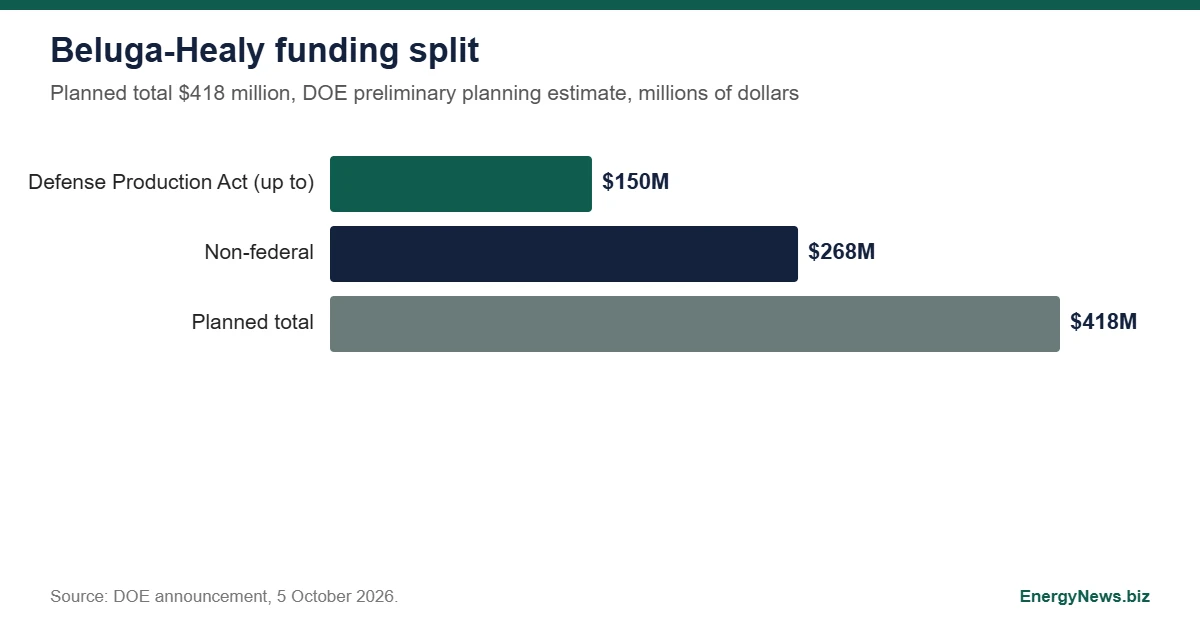
Up to $150 million of Defense Production Act money, and $268 million from everyone else. That is the funding structure DOE announced on 5 October 2026 for the Alaska Energy Authority’s Beluga-Healy Transmission Project, a planned $418 million second high-voltage connection between Southcentral and Interior Alaska.
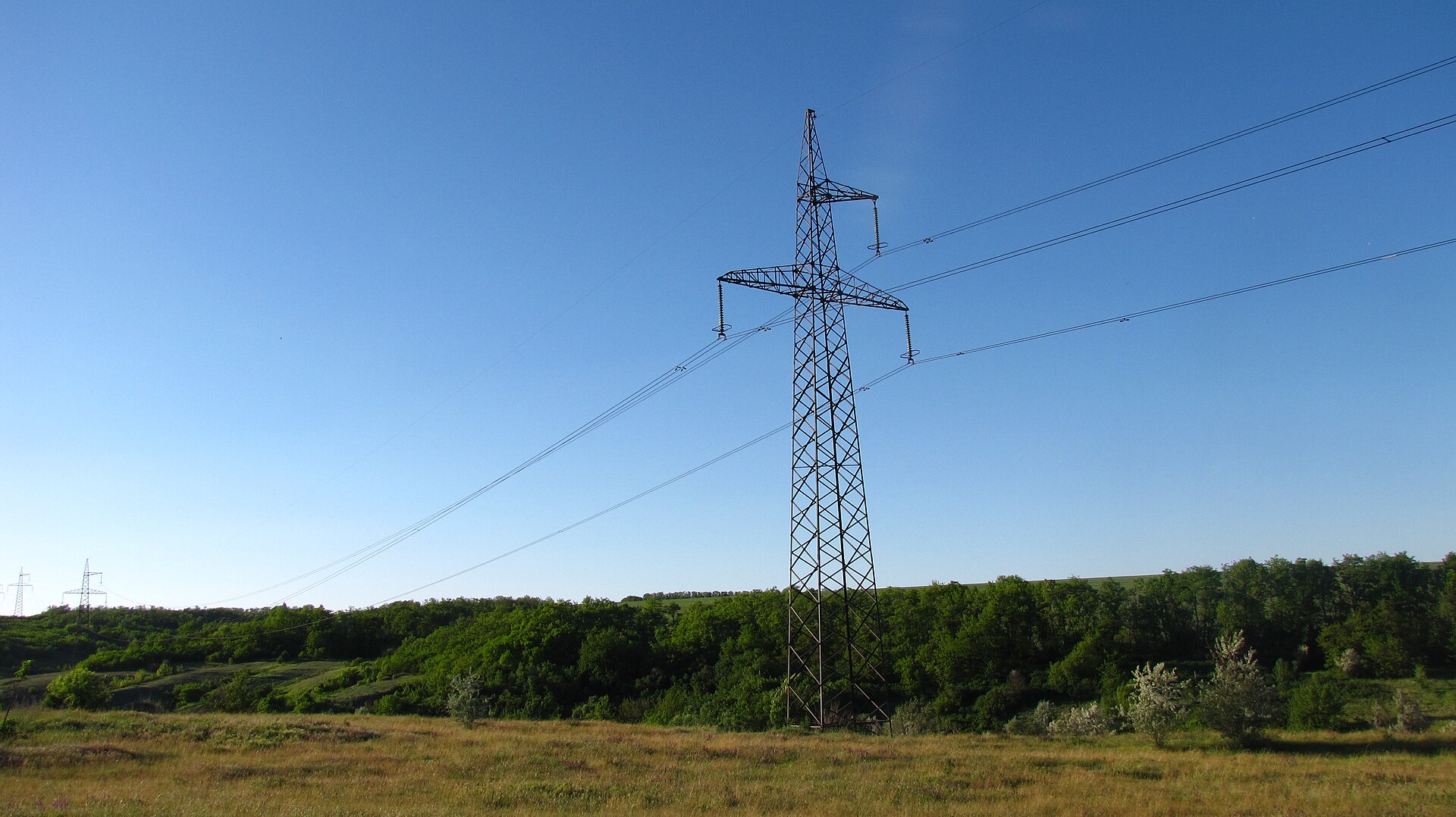
223 miles between Beluga and Healy
The project would build approximately 223 miles of new line connecting Beluga and Healy. DOE says it gives grid operators an additional pathway to move power between Alaska’s most densely populated communities and its major military installations, and that it serves about 75 percent of the state’s population.
The department’s case is reliability and defense. The release quotes Secretary Chris Wright tying the project to the military expansion underway in Alaska and to mining and other resource development, and quotes Office of Electricity Assistant Secretary Katie Jereza saying the grid needs a second route when weather disrupts the first.
A $1 billion appropriation and a presidential determination
The funding comes from a $1 billion federal appropriation for energy related projects deemed critical to national security. DOE cites Presidential Determination No. 2026-10, which identifies transmission lines and conductors, substations, and power control and protection equipment as essential to national defense. That determination is what makes grid hardware eligible for Defense Production Act funding at all.
What $418 million buys per mile
Dividing the planned total by the line length gives about $1.87 million per mile ($418 million over 223 miles), and the federal ceiling covers about 36 percent of the total (ENB calculation, using DOE’s figures). Both numbers rest on a planning estimate: DOE describes $418 million as a preliminary planning estimate, not a bid or a contract price.
Two words in the release carry the weight. DOE announced its intent to deploy the funding, and the figure is up to $150 million. Neither is an obligation yet. The release states no schedule, no in service date and no voltage class beyond calling it high voltage. It does not say how the $268 million non-federal share is made up.
A defense framing for grid money
Federal grid support has also gone through other channels, such as the reconductoring awards in DOE’s SPARK reconductoring round. Using Defense Production Act authority for a state project is a different route, and the release leaves open how many other transmission projects will draw on the same $1 billion.
The next dated fact is missing, and that is the point to watch: DOE has announced intent, and a funding agreement with the Alaska Energy Authority, with a stated in service date, would be the first document that turns the $150 million ceiling into an obligation. Source: DOE announcement, 5 October 2026.
Add EnergyNews.biz as a preferred source on Google


