


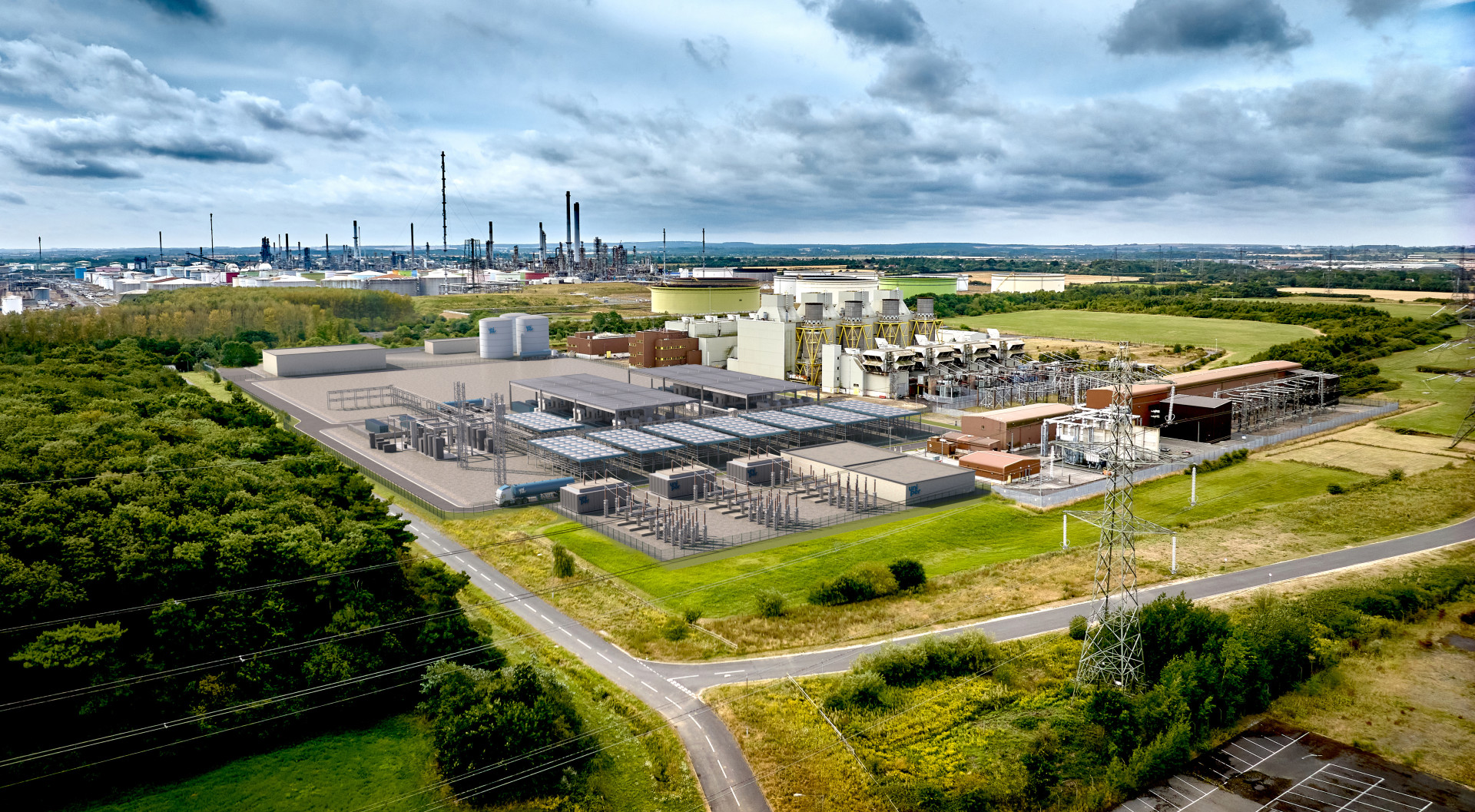

The UK’s low-carbon hydrogen pipeline has added another permitted project, with Uniper receiving planning approval for its Humber H2ub Green facility, a 120MW electrolytic hydrogen plant intended to supply industrial demand from the end of the decade.
The decision, issued by North Lincolnshire Council on March 20, marks incremental progress in a market where project timelines remain closely tied to policy support and offtake certainty.
The facility will be located at Uniper’s existing Killingholme power station site, positioning the project within the Humber industrial cluster, one of the UK’s most carbon-intensive regions. Once operational, the plant will produce hydrogen via electrolysis, aligning with the government’s Low Carbon Hydrogen Standard, which sets emissions thresholds for qualifying projects. Initial installed capacity is set at 120MW, with plans for potential expansion exceeding 200MW, reflecting a phased development model commonly adopted to manage capital exposure and demand uncertainty.
A key component underpinning the project’s viability is its intended offtake agreement with Phillips 66 Limited, which plans to use the hydrogen at its Humber Refinery starting in 2029. The refinery’s transition toward low-carbon hydrogen is part of broader efforts to reduce Scope 1 emissions, a segment that remains particularly challenging to decarbonize due to reliance on process heat and hydrogen derived from fossil fuels. In this context, industrial demand from refining continues to anchor early hydrogen deployment, offering predictable consumption profiles compared to more nascent sectors such as heavy transport.
The project’s inclusion in the UK government’s Hydrogen Allocation Round 2 program further highlights its strategic positioning. HAR2 is designed to provide revenue support mechanisms that bridge the cost gap between low-carbon hydrogen and conventional alternatives, which remains one of the primary barriers to large-scale adoption. While final funding decisions are still pending, shortlisting signals alignment with national priorities to scale domestic hydrogen production capacity.
Despite the planning approval, structural challenges persist. Electrolytic hydrogen projects remain highly sensitive to electricity costs, which directly influence production economics. The UK’s renewable power pricing, grid constraints, and connection timelines continue to shape project feasibility, particularly for large-scale facilities exceeding 100MW. Additionally, while the Humber cluster offers proximity to industrial demand, the absence of fully developed hydrogen transport and storage infrastructure introduces further complexity for long-term scalability.
The phased expansion strategy outlined for the Humber H2ub Green project reflects these constraints. By starting at 120MW and allowing for incremental capacity additions, Uniper can align investment with market signals, including policy clarity, electricity pricing trends, and confirmed offtake agreements. This approach mirrors broader European hydrogen development patterns, where projects are increasingly structured to mitigate early-stage financial risk while maintaining optionality for future growth.


