


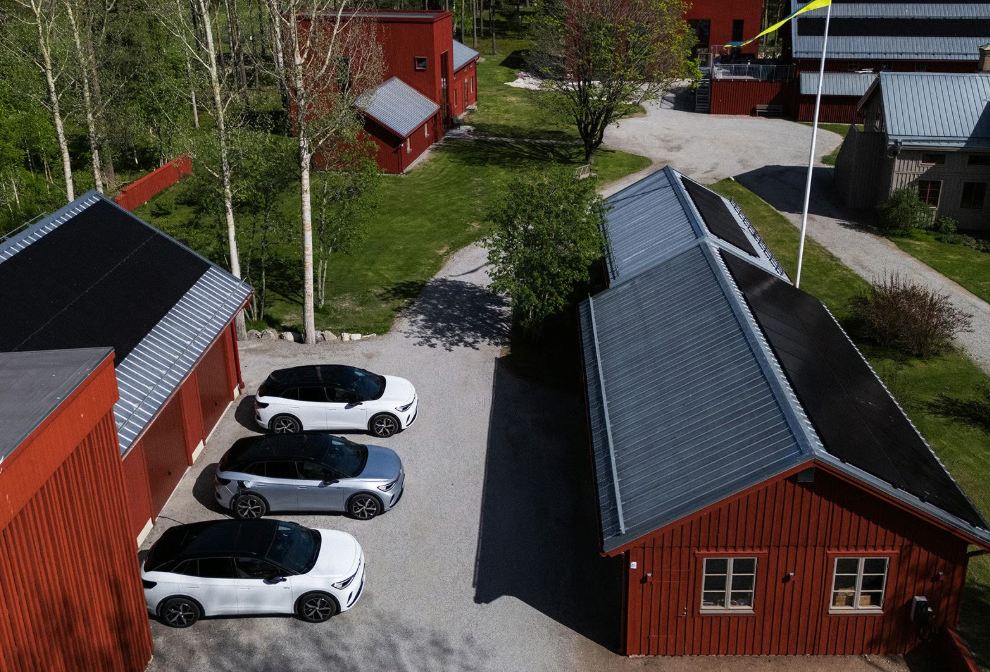


Electricity systems with rising shares of weather-dependent generation face growing real-time flexibility demands as grid operators manage supply-consumption imbalances amid accelerating electrification, a challenge now tested in Sweden through Vattenfall, Energy Bank, and Volkswagen’s large-scale vehicle-to-grid deployment featuring approximately 200 bidirectional chargers across central and southern regions.
The initiative focuses on scaling bidirectional charging, or vehicle-to-grid functionality, which enables electric vehicles to both draw electricity from and feed power back into the grid. While the concept has been demonstrated in pilot environments, its commercial viability depends on whether aggregated EV batteries can deliver consistent, dispatchable flexibility at scale without compromising user convenience or battery performance.
The Swedish pilot builds on a one-year demonstration project in Hudiksvall, where initial validation suggested that EV-based flexibility could contribute to grid balancing. The current phase extends this concept into broader, real-world operating conditions across electricity price areas SE3 and SE4, regions that experience varying levels of renewable generation and grid congestion.
At the system level, the project integrates hardware deployment with software-driven optimization. Energy Bank’s platform will aggregate distributed EV batteries into a virtual resource capable of participating in multiple energy and flexibility markets. Vattenfall, acting as the energy partner, will manage market access, allowing this aggregated capacity to respond to price signals and system needs.
This approach reflects a broader industry shift toward distributed flexibility, where small-scale assets such as EV batteries are coordinated to perform functions traditionally handled by centralized generation or dedicated storage systems. However, the effectiveness of such models depends heavily on aggregation efficiency, communication latency, and the ability to forecast both user behavior and grid conditions with sufficient accuracy.
From an economic perspective, the project introduces a dual-value proposition for EV owners. Participants, including households and fleet operators, retain control over their vehicles while receiving compensation linked to the flexibility services provided. The underlying assumption is that monetizing idle battery capacity can improve total cost of ownership for electric vehicles, though the scale of revenue generation remains uncertain and highly dependent on market design and price volatility in ancillary services.
Technical constraints also remain a factor. Battery degradation associated with additional charge-discharge cycles continues to be a point of analysis in V2G deployments, particularly in high-utilization scenarios. While advances in battery management systems can mitigate some of these effects, long-term data from projects of this scale will be critical in determining whether the economic benefits outweigh potential lifecycle impacts.
The Swedish rollout is scheduled to run until 2028, providing a multi-year dataset that spans seasonal demand variations, renewable generation fluctuations, and evolving market conditions. This extended timeline reflects the complexity of integrating distributed energy resources into existing grid frameworks, where regulatory alignment, interoperability standards, and consumer participation all influence outcomes.
Add EnergyNews.biz as a preferred source on Google


