





The Trina Elementa Hybrid Genset is a new product aimed squarely at data centers. Trina Storage launched it at RE+ 2026 in Las Vegas on 18 November, pairing utility-scale battery storage with on-site generation in a package meant to deliver power before the grid can connect a site. It sits alongside the company’s new high-efficiency solar modules shown at the same event.
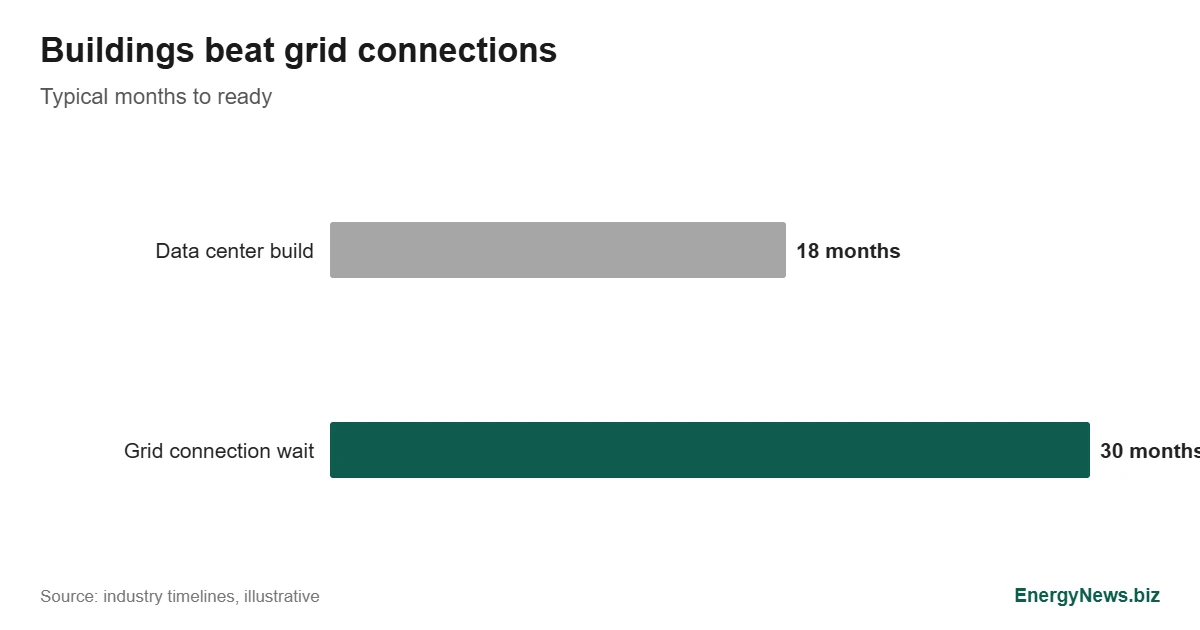
The problem the Trina Elementa Hybrid Genset targets is time, not energy. Data-center buildings now go up faster than grid operators can connect them, a gap of a year or more in congested markets. A hybrid that combines storage with on-site generation lets a data center start operating on its own power and lean on the grid later, turning time-to-power from a blocker into a schedule the developer controls.
Why time-to-power drives the Trina Elementa Hybrid Genset
On-site generation plus storage is becoming a standard data-center pattern, the same need behind grid-reform efforts such as PJM’s fast-track connection rules. The storage handles short gaps and smooths the generation, while the generation covers longer periods the battery alone cannot. Packaged as predesigned blocks, the two shorten design and deployment, which is what operators racing to host AI workloads are paying for.
The trade-off is what the on-site generation burns. A hybrid that leans on gas gains speed but carries emissions and fuel cost, while one built around clean generation and a larger battery is cleaner but needs more space and capital. Which way buyers lean will decide whether time-to-power products speed the clean build-out or entrench on-site fossil generation at the data-center edge for a decade.
What to watch
The number that matters for the Trina Elementa Hybrid Genset is how much of its output comes from the battery rather than the engine over a year. A product that is mostly battery, topped up by a small generator, is a very different climate proposition from one that is mostly engine with a battery for smoothing, and that split will not appear in a launch brochure.
The power gap the product sells into
The scale of the data-center power problem is what makes products like this one commercial. New AI clusters can demand hundreds of megawatts at a single site, and utilities in the busiest markets quote connection waits measured in years, not months. A developer that has leased the land and ordered the servers cannot wait, so on-site power becomes the bridge, and anything that shortens the path to a running facility has a clear buyer.
Predesigned blocks are the mechanism. Instead of engineering each site from scratch, the vendor ships standardised, factory-tested modules of generation, storage, cooling and distribution that bolt together with validated interfaces. That cuts design time and commissioning risk, which is why the large infrastructure vendors are all racing to offer integrated power-and-cooling packages to the same set of hyperscale customers. The Trina Elementa Hybrid Genset enters a crowded field, and differentiation will come from cost, delivery speed and how clean the generation side can be made.
There is also a grid-services angle once a site is connected. A data center that has invested in on-site storage and generation can, in principle, support the local grid at peak times rather than only drawing from it, turning a cost centre into a flexible resource. Whether operators use the Trina Elementa Hybrid Genset and rivals that way, or purely for self-supply, will shape how data centers are seen by the utilities now straining to serve them.
For now the Trina Elementa Hybrid Genset is one of several integrated power-and-storage packages competing to shorten data-center time-to-power. The market will reward whichever delivers firm power fastest without locking buyers into high running costs, and the operating data a year from now, not the launch, will show which products actually did it. Product details are published by Trinasolar.
Add EnergyNews.biz as a preferred source on Google


