


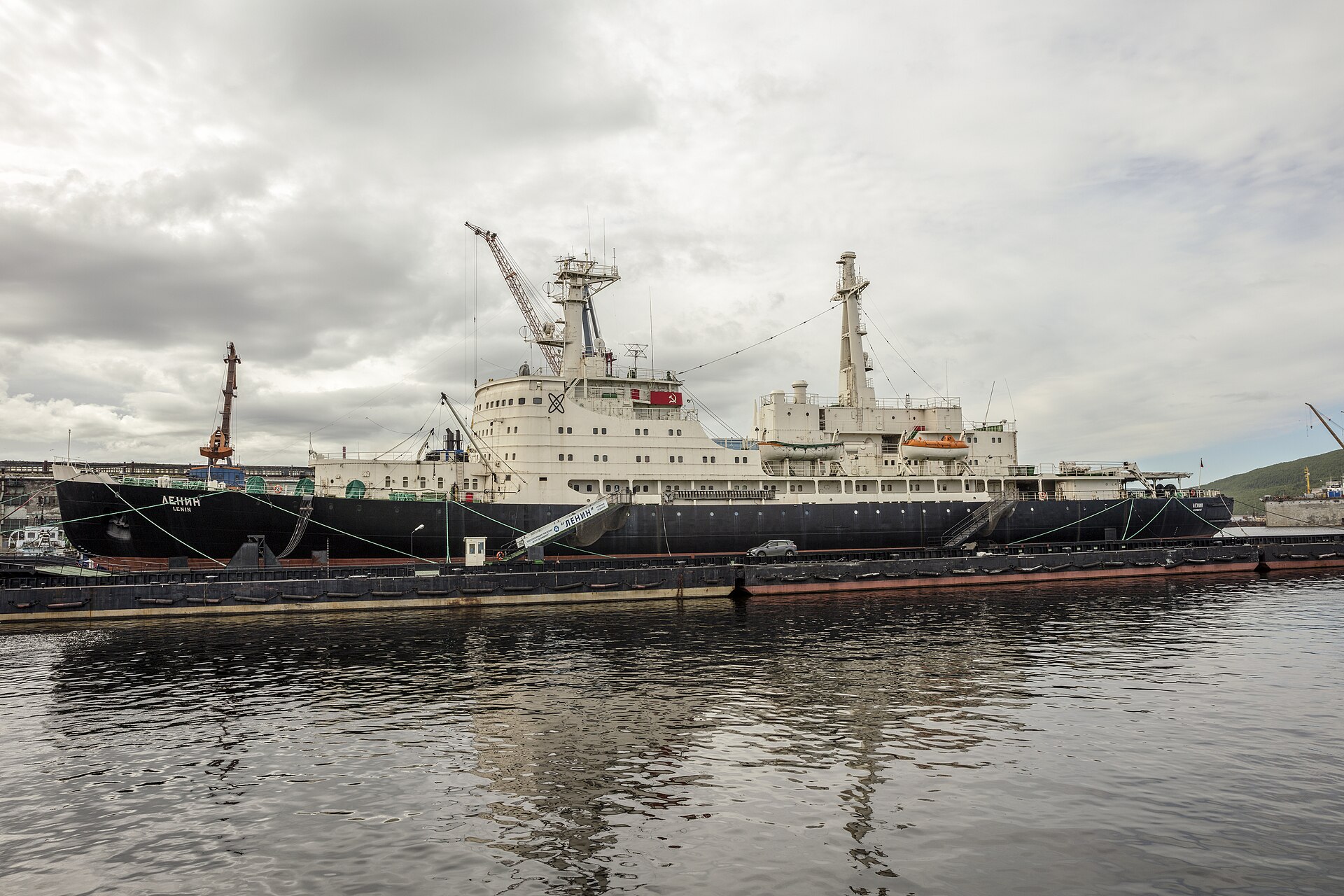


Nuclear maritime rules have taken a step forward. Classification society Lloyd’s Register has approved new rules for using nuclear power in ships and offshore units. It says they are believed to be the first rules developed by a class society that are suitable for all types of ship and offshore unit.
The rules were approved by Lloyd’s Register’s Ships and Offshore Technical Committees and will evolve as nuclear maritime technologies mature. They will form part of a wider set of classification and advisory tools for nuclear maritime projects, to be announced separately.
Why nuclear maritime rules matter
In shipping, classification rules decide whether a vessel can be insured, financed and registered. A shipowner cannot easily order a nuclear-powered ship, or a bank finance it, without a recognised framework for assessing its design and safety. That makes class rules a gate for the whole idea, not a technical detail.
Lloyd’s Register said interest in nuclear power for maritime use is gathering momentum, with governments, regulators, shipowners and technology developers working together on practical barriers to deployment.
Naval and commercial uses
David Lloyd, Vice President Naval and Government Business at Lloyd’s Register, said navies have decades of experience with nuclear propulsion, but newer reactor technologies could open different possibilities. He said the rules provide a common classification framework for assessing integration without prescribing a particular reactor design, and can support early discussions between navies, ship designers and technology developers.
Mark Tipping, Global Offshore Power-to-X Director, said the opportunity extends beyond ship power, to floating power units and low-carbon energy for ports and neighbouring industries. Floating nuclear plants could supply ports, offshore platforms or remote coastal sites, and could also produce hydrogen or ammonia for shipping fuel.
How nuclear maritime rules fit with regulators
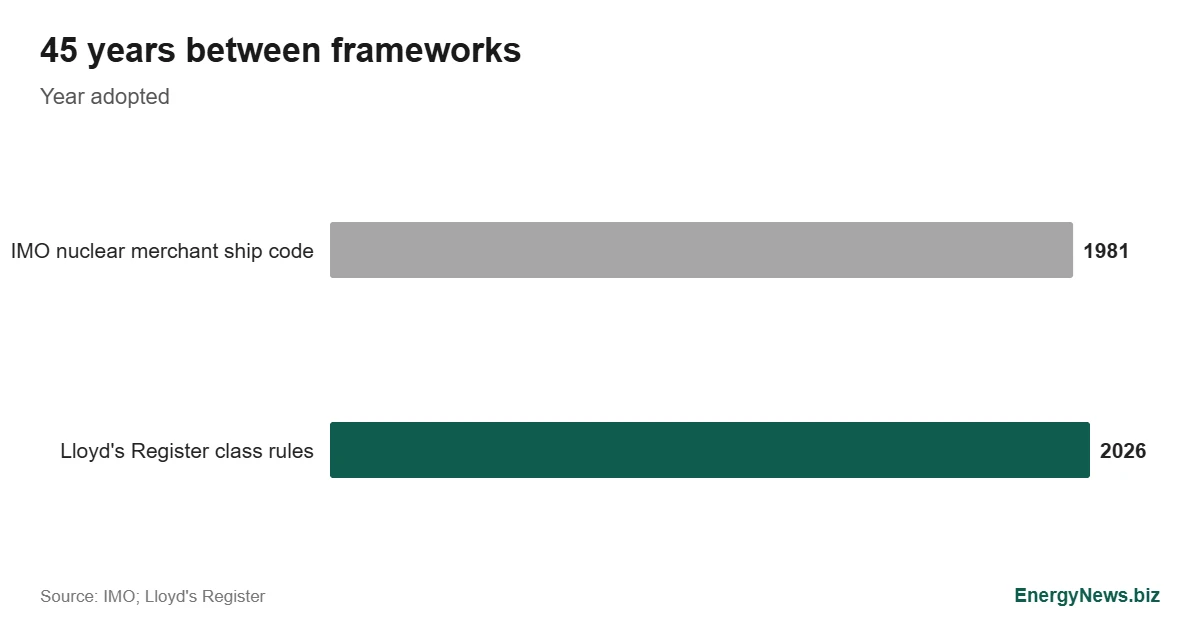
Class rules are only one layer. Flag states, which register ships, and port states, which decide whether a ship can enter, will need their own nuclear maritime rules and agreements. The International Maritime Organization has a code for nuclear merchant ships dating from 1981, written for older reactor types, and many experts expect it to be updated as interest grows. National nuclear regulators will also need to license reactors that move between jurisdictions.
Lloyd’s Register’s approach, setting a common framework without prescribing a reactor design, is meant to let shipowners and developers start design work now while those wider rules catch up. For early projects, floating power units moored at a single site are likely to come first, because they avoid many of the cross-border issues of ships that sail between ports.
Insurers and financiers will read the nuclear maritime rules closely. Marine insurance markets have little recent experience with nuclear risk, and lenders will want to know how a vessel would be maintained, refuelled and eventually decommissioned. Clear nuclear maritime rules from a major class society give them a reference point for those discussions, even before the first commercial order is placed.
What comes next
The rules are design-neutral, so they apply to the small modular and microreactor designs now in development, such as those covered in the analysis of global nuclear construction and the wider review of the small modular reactor wave. Shipping’s decarbonisation targets add pressure: alternative fuels remain expensive and scarce, and nuclear propulsion offers long range without refuelling.
Practical hurdles remain, including port access, crew training, insurance and public acceptance. Shipyards with experience in naval nuclear vessels, mainly in the United States, the United Kingdom, France, Russia and China, will also be central to any early commercial projects, because they already hold the skills and security clearances this work demands. The rules are published by Lloyd’s Register.
Add EnergyNews.biz as a preferred source on Google


