


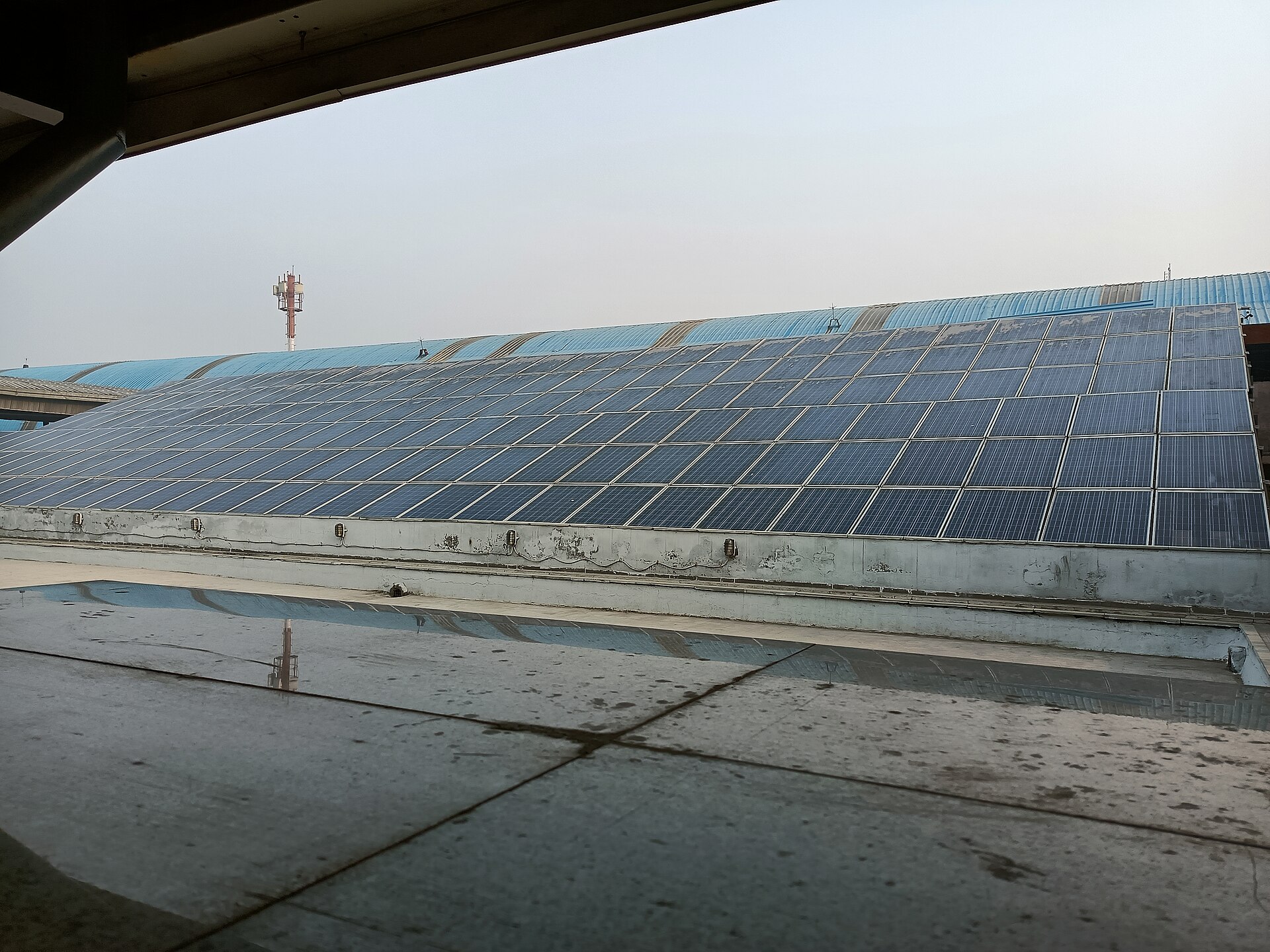


India’s Ministry of Power has issued a revised draft of the Electricity (Rights of Consumers) Amendment Rules, 2026, and one provision could reshape the rooftop solar market. From 1 April 2028, state regulators could require rooftop solar storage equal to at least 20% of a system’s daily renewable generation for installations above a capacity threshold. The default threshold in the draft is 10 kW, although each state commission may set a different level and a different share.
The draft was issued on 23 November, comments are due by 23 December, and the amended rules are proposed to take effect from 1 April 2027.
What the rooftop solar storage rule means in kWh
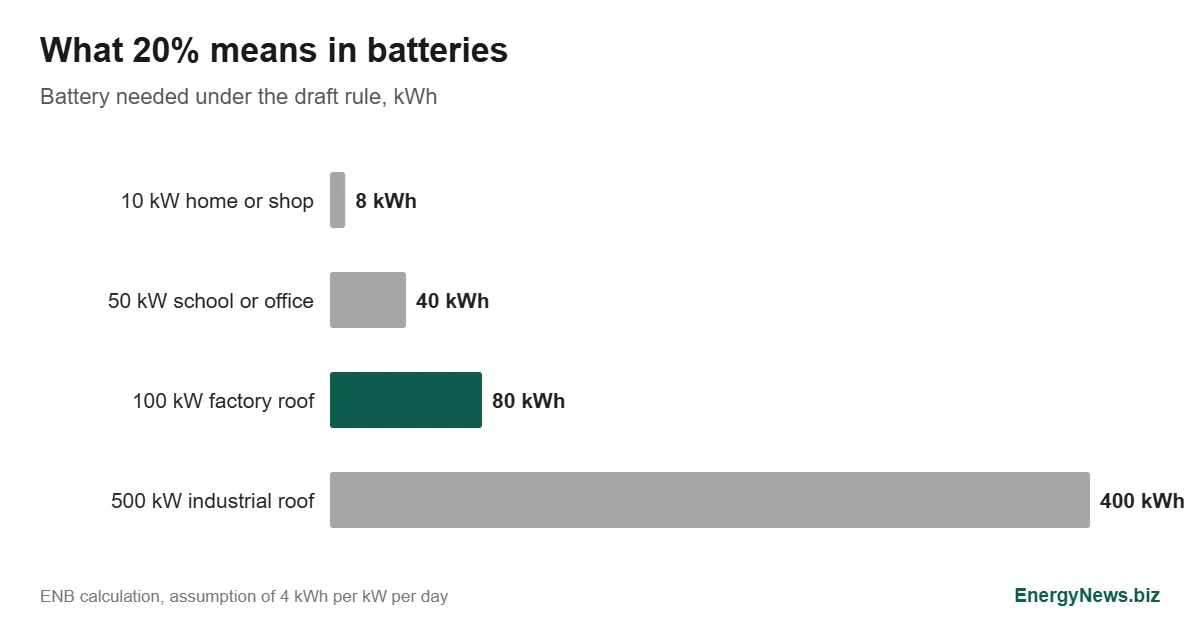
Percentages are hard to price, so ENB converted the rule into battery sizes. Indian rooftops typically produce around 4 kWh of electricity per kW of solar capacity on an average day; the exact figure varies by region and season. On that assumption, a 10 kW system on a home or shop produces about 40 kWh a day, and 20% of that is 8 kWh of storage. A 100 kW system on a factory roof would need about 80 kWh, and a 500 kW industrial installation about 400 kWh.
For rooftop solar storage buyers, the cost question is the next step. For small consumers just above the threshold, 8 kWh is roughly the size of one home battery unit. For commercial buyers, the rule would add a battery to almost every new project of meaningful size. An earlier version of the draft, published in March, proposed storage only for prosumers above 500 kW, so the revised threshold of 10 kW is a major widening.
Why the Ministry wants rooftop solar storage
Rooftop solar in India is growing fast, and distribution companies are struggling with midday surpluses on local networks. A battery that absorbs part of the midday output and releases it in the evening reduces reverse power flows, eases transformer loading and shifts solar into the hours when demand peaks. The ministry also plans grants for distribution companies to install systems that manage distributed resources, which complements the storage rule.
The same draft introduces time of day tariffs for sanctioned loads above 10 kW from 1 April 2028 and for other non-agricultural consumers from 1 April 2029. Higher evening prices would give consumers a direct reason to use stored solar at night, which improves the payback of the mandated battery.
Other changes in the draft
The revised rules also set connection deadlines: three days in metropolitan areas and municipal corporations, seven days in other municipal areas, 15 days in rural areas and 30 days in hilly rural areas, with up to 90 days where a new substation or network expansion is needed. Rooftop systems could be installed beyond the roof and could exceed sanctioned load, subject to state conditions, but any injection above sanctioned load would not be paid.
Bills would be reviewed automatically if recorded consumption is more than five times, or less than one fifth of, the average of the previous six billing cycles. Distribution companies would have 30 days to resolve such cases. Grievances would normally be settled within 30 days, with a maximum of 45.
Who should respond to the draft
Installers, battery suppliers and commercial consumers have one month to comment on the rooftop solar storage provisions. The key points for submissions are the 10 kW threshold, the 20% share and how state regulators will verify compliance. Battery makers in India, such as those building new pack lines, could see a large domestic market open if the rule survives. Similar self-consumption rules elsewhere, such as Saudi Arabia’s new framework, show how quickly such details can change uptake.
The number to watch is the threshold in the final rules. If it stays at 10 kW, rooftop solar storage would become standard on most Indian commercial roofs from 2028. The draft is available from the Ministry of Power.
Add EnergyNews.biz as a preferred source on Google


