


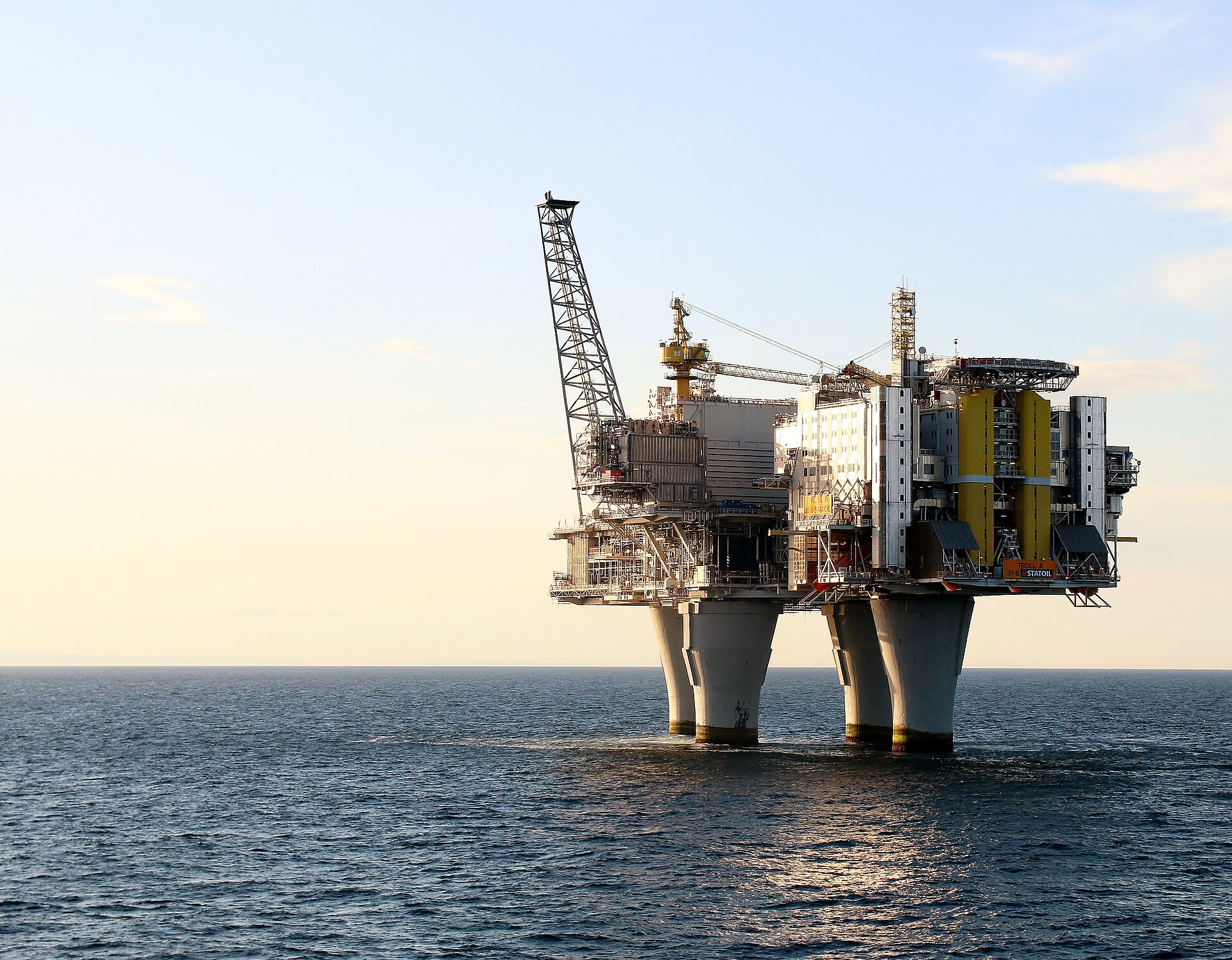


The Equinor VNG gas deal is an 18-year agreement under which Equinor will deliver up to 15.3 TWh of natural gas a year, about 1.4 bcm, to the Leipzig-based gas wholesaler. Deliveries start on 1 January 2027 and run to the end of 2044, at Trading Hub Europe, Germany’s gas market area, according to Enerdata, citing an Equinor release of 24 November.
The Equinor VNG contract is the longest of a series of German deals Equinor has signed since the loss of Russian pipeline gas. Prices at the delivery point are expected to reflect market conditions.
Equinor VNG in context: about 8% of German demand
Taken alone, 15.3 TWh is about 1.8% of the 864 TWh of gas Germany consumed in 2025, according to the Bundesnetzagentur. Over 18 years the Equinor VNG deal adds up to about 275 TWh.
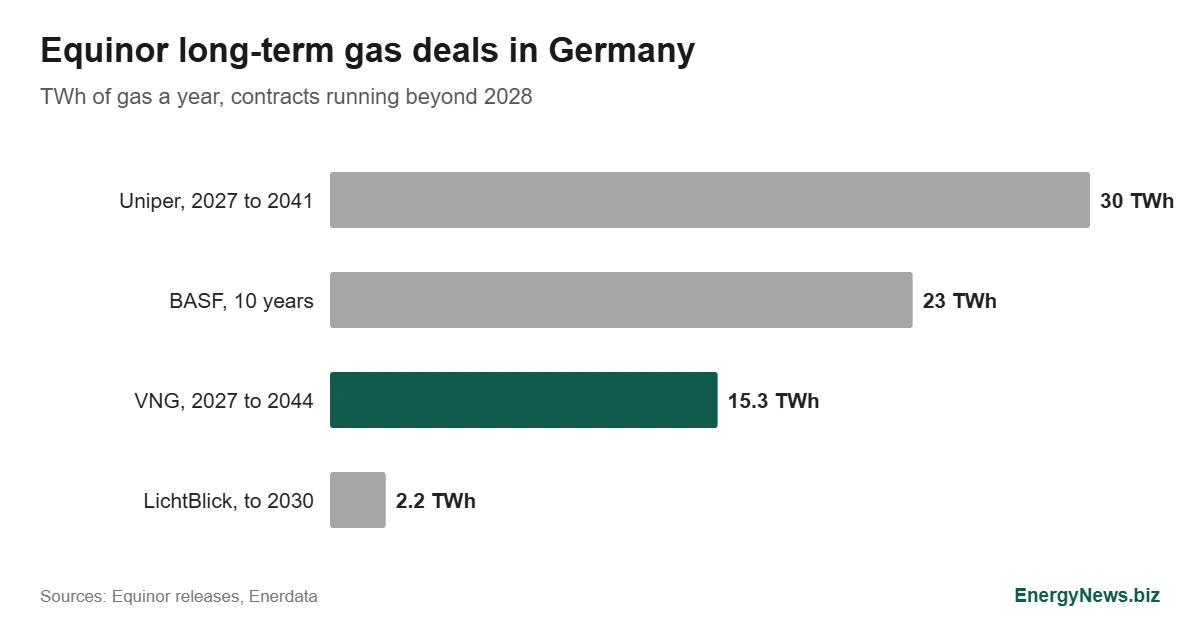
The bigger picture comes from adding the other contracts Equinor has announced with German buyers:
- Uniper: more than 30 TWh a year from 2027 to 2041, signed in August 2026.
- BASF: up to 23 TWh a year over ten years, signed in July 2025.
- VNG: up to 15.3 TWh a year from 2027 to 2044.
- LichtBlick, a German subsidiary of Eneco: about 2.2 TWh a year to the end of 2030.
- RWE (10 to 15 TWh a year) and OMV (12 TWh a year, delivered in Germany): both run to 2028.
The contracts running beyond 2028 total about 70.5 TWh a year, roughly 8% of German consumption in 2025. Including RWE and OMV, the total is close to 95 TWh a year until 2028. These are maximum volumes; actual deliveries can be lower.
Why buyers sign for 18 years now
Norway supplied 44% of German gas imports in 2025, according to the Bundesnetzagentur, ahead of the Netherlands and Belgium. LNG terminals in Wilhelmshaven, Brunsbüttel, Lubmin and Mukran brought in 106 TWh, about 10% of imports.
For a buyer like VNG, which supplies municipal utilities and industry in eastern Germany, a long pipeline contract with a market-linked price offers volume security without locking in a fixed price. It also has a lower carbon footprint than LNG, which matters to customers reporting supply chain emissions.
For Equinor, the logic is the reverse. Long contracts secure outlets for Norwegian gas well into the 2040s, at a time when European policy targets falling gas demand. Each new agreement is a bet that German demand, especially from industry and gas-fired power plants, stays higher than climate scenarios suggest. RWE’s commitment to new hydrogen-ready gas plants points in the same direction.
What the Equinor VNG deal does not say
The announcement gives no price formula, no take-or-pay level and no detail on whether volumes can switch to hydrogen or low-carbon gas later. Earlier Equinor deals with Eneco included the transfer of verified environmental attributes. Whether the Equinor VNG contract has a similar clause has not been disclosed.
The end date also stands out. Germany aims for climate neutrality in 2045, and VNG has said it wants to shift its business towards green gases. A contract to 2044 implies either that the gas will be used with carbon capture, that volumes will fall well below the cap in later years, or that the 2045 goal will be harder to reach than planned.
What it means for other buyers
For other German buyers, the Equinor VNG contract sets a reference for tenor. Industrial users that held back from long commitments during the price spike of 2022 now face suppliers willing to sign for 15 to 18 years at market-linked prices. Shorter deals of three to five years remain available, as the Eneco agreements show, but the largest Norwegian volumes are being allocated to buyers who commit for longer.
What to watch
Watch for further long-term deals from German municipal utilities and industrial buyers in 2027. If Equinor’s named German contracts beyond 2028 pass 100 TWh a year, more than 11% of current consumption, Norwegian pipeline gas will have locked in a larger share of the German market than before the energy crisis.
Add EnergyNews.biz as a preferred source on Google


