


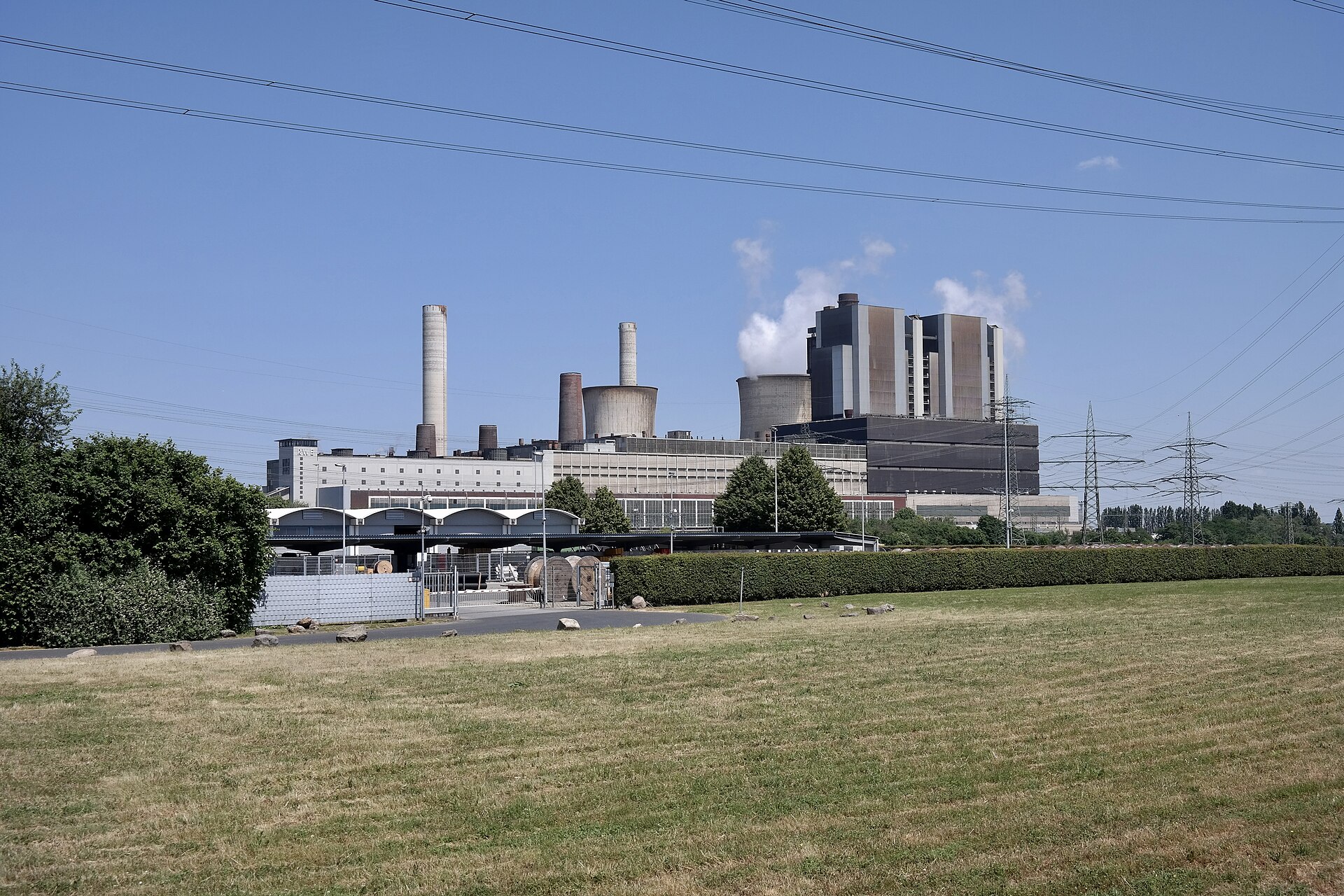


RWE has moved three hydrogen-ready power plants in Germany into execution. The German government awarded the projects to RWE on 3 November through its new tender for controllable capacity, and the company has now taken final investment decisions. Spanish engineering group Técnicas Reunidas said its contracts for the three plants add more than €1.5 billion to its order intake, and it has received notice to proceed on the first one, according to gasworld.
The plants are combined cycle gas turbines of about 800 to 850 MW each, at Weisweiler, Gersteinwerk in Werne and Voerde. Técnicas Reunidas will build the first two with Ansaldo Energia and the third with GE Vernova.
The decision closes a process that started in 2023, when RWE first picked engineering partners for these sites. The three hydrogen-ready power plants are meant to replace coal capacity in North Rhine-Westphalia and to provide backup when solar and wind output is low. They are among the first large German gas plants to move into construction under the new state framework, which makes them a reference for every utility planning similar projects.
What hydrogen-ready power plants really burn
RWE said in earlier announcements that the plants would be able to run on 50% hydrogen by volume when commissioned, planned for around 2030, and on pure hydrogen later. The volume figure sounds bigger than it is. Hydrogen carries about 10.8 MJ per cubic metre, while natural gas carries about 36 MJ. In a 50:50 mix by volume, hydrogen supplies only about 23% of the energy. Most of the fuel in these hydrogen-ready power plants will still be natural gas.
The hydrogen calculation
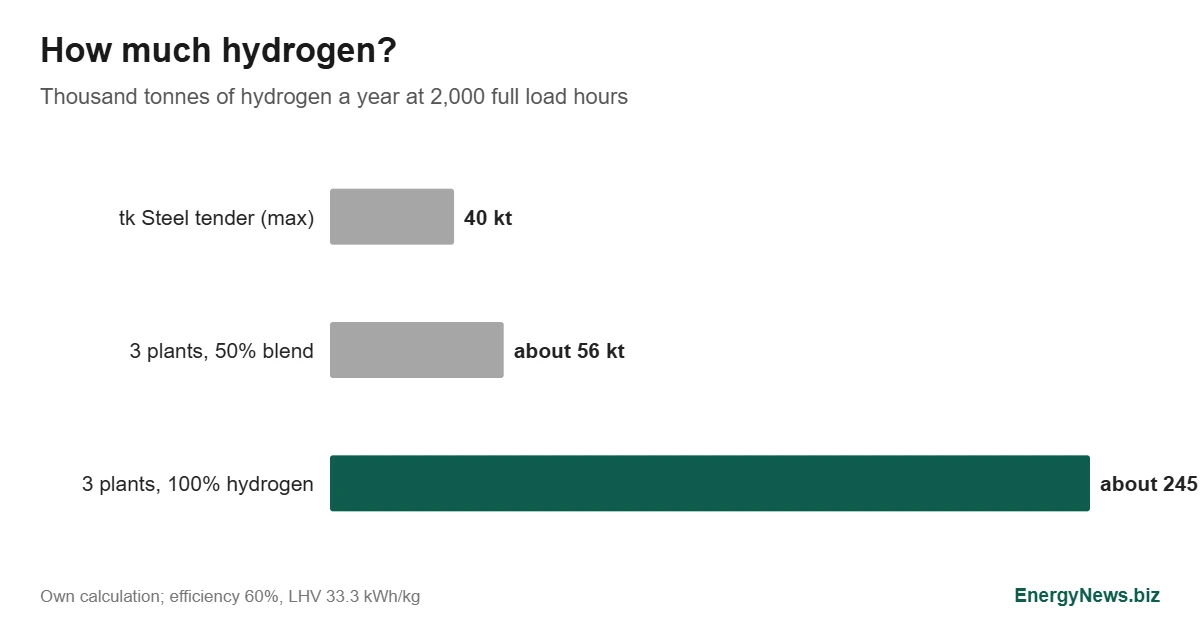
Assume a combined capacity of about 2.45 GW, an efficiency of 60% and 2,000 full load hours a year, which fits a backup role in a system dominated by solar and wind. On pure hydrogen, the three plants would burn about 245,000 tonnes of hydrogen a year. With a 50% blend by volume, the figure drops to about 56,000 tonnes.
For scale, thyssenkrupp Steel’s hydrogen tender for its Duisburg plant seeks up to 40,000 tonnes a year. Just these three plants running on pure hydrogen would need six times that amount. Germany’s entire installed electrolyser fleet today could not supply them.
About €600 per kW for the contractor
Técnicas Reunidas put its contracts at more than €1.5 billion. Spread over roughly 2.45 GW, that is about €610 per kW for the contractor’s scope alone. Total project cost will be higher once owner’s costs, grid connection and the turbine partners’ share are counted. Even so, the figure gives buyers of other hydrogen-ready power plants a useful benchmark for what large gas plants cost in Europe in 2026.
The cost is also why the government’s tender matters. Germany’s first capacity auction went entirely to gas plants at much higher prices than battery bids in neighbouring Belgium. RWE now has a state-backed revenue stream for capacity that will mostly run on natural gas for years.
What it means for hydrogen suppliers
For producers and pipeline operators, these hydrogen-ready power plants are a long-term demand signal, not a near-term one. The plants sit close to the planned German hydrogen core network, but the switch to pure hydrogen depends on supply and prices that do not exist yet. Contracts for blending volumes are the realistic first step after 2030.
The number to watch
The number to watch is the date on which RWE commits to run any of these hydrogen-ready power plants on hydrogen, and at what share. A firm offtake contract for tens of thousands of tonnes would turn a policy label into real demand. Without it, the plants remain efficient gas plants with an option attached.
Add EnergyNews.biz as a preferred source on Google


