


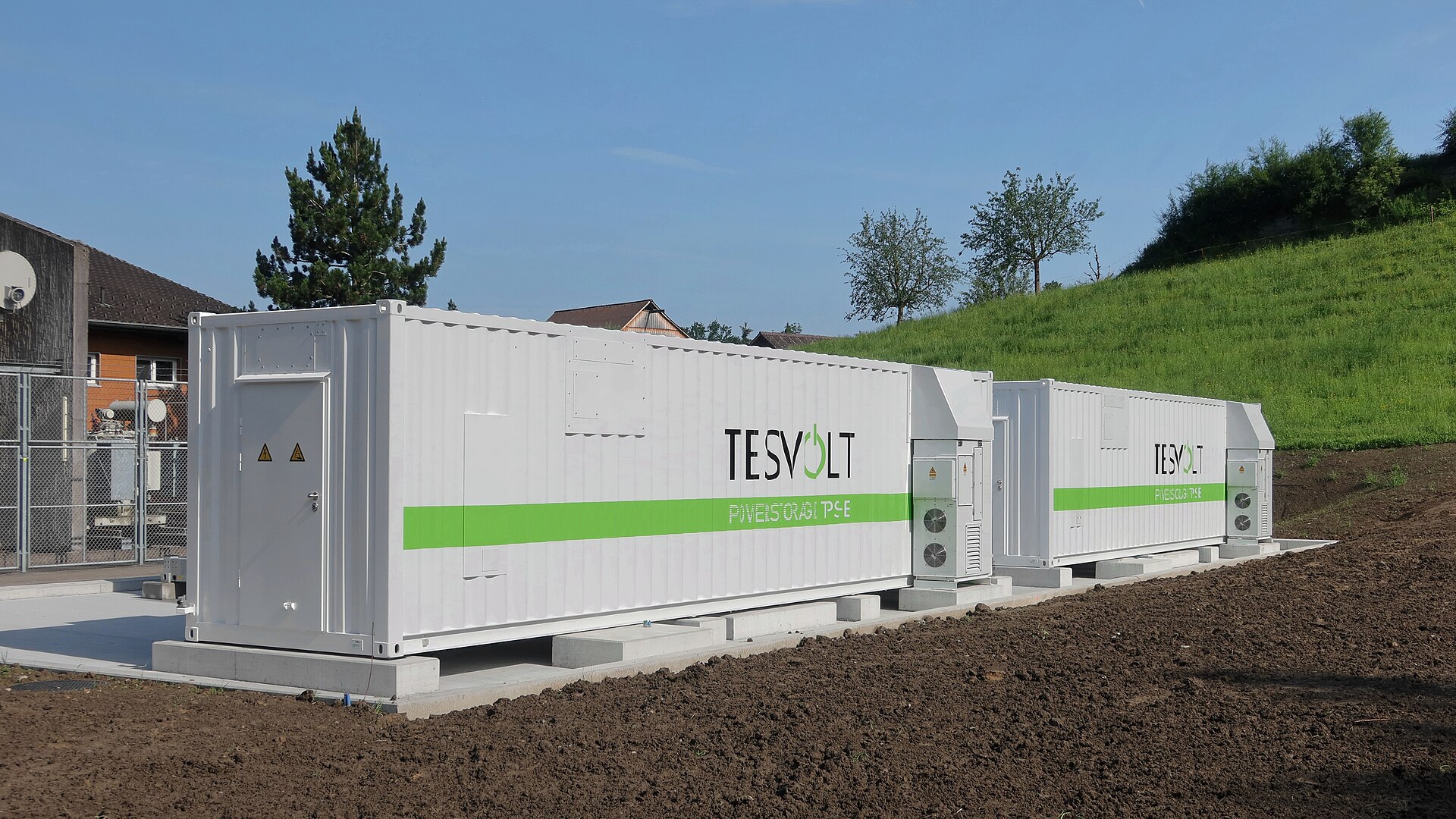


A new benchmark for Romania battery storage costs has been set. MetaWealth signed a €10 million contract with Chinese supplier StarCharge on 25 November to supply 100 MWh of batteries for its Sânpaul energy storage project in Mureș county, Romania Insider reported. The 48 MW project is the second in the investment platform’s Romanian battery programme and has a total cost of €20 million.
MetaWealth said it has received financing offers for Sânpaul and expects to reach financial close in the first quarter of 2027. Commercial operation is scheduled for the third quarter of 2027.
What the Romania battery storage numbers imply
The figures allow a simple cost split:
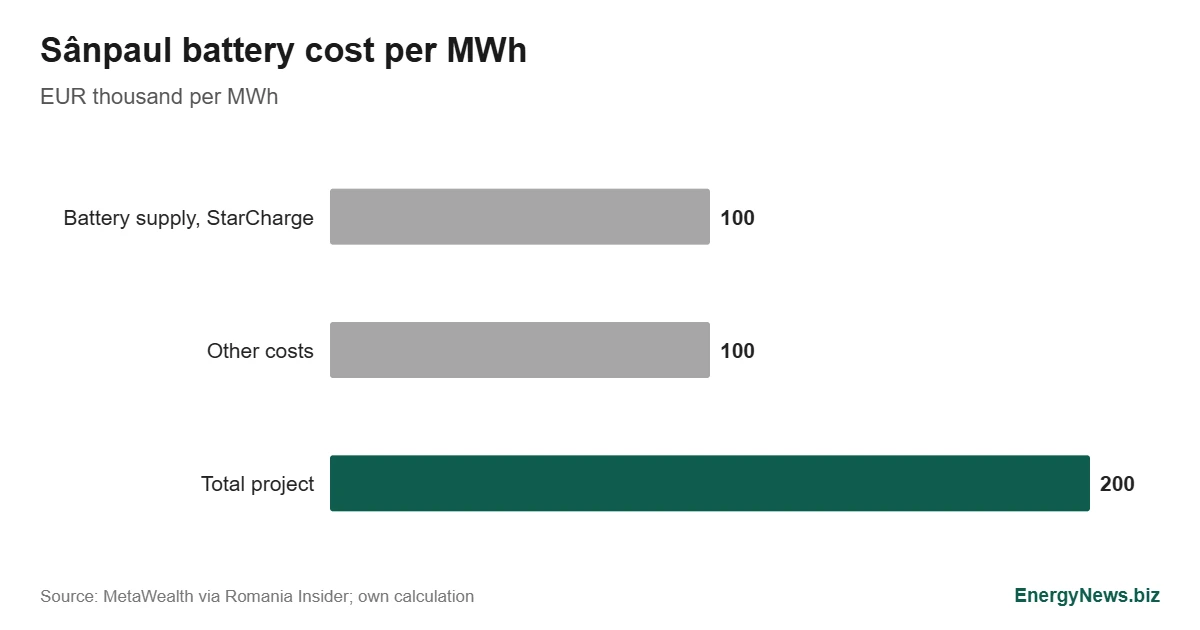
- Battery supply: €10 million for 100 MWh, or €100 per kWh (€100,000 per MWh).
- Whole project: €20 million for 100 MWh, or €200 per kWh, and about €417,000 per MW.
- Everything except the battery supply, including grid connection, power conversion if not in the supply scope, civil works, development and financing costs, adds another €100 per kWh.
The duration is about two hours (100 MWh divided by 48 MW). Shorter batteries carry more fixed cost per MWh, because the grid connection and power equipment are sized for megawatts, not megawatt-hours.
How it compares with Italy
In Italy, the second MACSE auction cleared at €11,382 per MWh a year for 15 years. At an 8.8% cost of capital, that premium alone supports about €93,000 per MWh of all-in cost, as calculated in this MACSE analysis. Sânpaul’s €200,000 per MWh is about twice that, but the projects differ: Italian MACSE batteries are mostly long duration, which spreads fixed costs, and they hand their trading income to the system.
A Romanian battery keeps its own trading and balancing income, and the Romanian balancing market has offered high prices as solar capacity has grown. That is the case investors are making: a merchant or partly contracted battery with a shorter payback, rather than a fixed premium.
The Romania battery storage market
Romania has become one of the busiest battery markets in South East Europe, driven by fast solar growth, the closure of coal units and balancing needs. Several developers have announced projects of tens to hundreds of MWh, and suppliers from China dominate the battery orders. Chinese supply raises a policy question for projects that seek EU funding: the EU now restricts power conversion systems from high-risk countries in EU-funded storage. Whether that affects Sânpaul depends on its financing and on the scope of the StarCharge supply, which the reports do not detail.
Why €100 per kWh matters for Romania battery storage
A supply price of €100 per kWh for a project of this size is in line with recent European tenders for containerised lithium iron phosphate systems from Chinese makers. It shows that small and mid-sized buyers can now get prices once reserved for gigawatt-hour orders. For Romania battery storage developers, the battery is no longer most of the budget: grid connection, permits and financing take the other half. Cutting those costs, through faster connection rules and standard contracts, would do more for the next wave of projects than another fall in cell prices.
The supply deal also shows how fast the market has moved. Two years ago, many Romanian projects were planned with battery prices well above €150 per kWh. A project that locks in €100 per kWh today can tolerate lower trading income and still repay its debt.
What to watch
- Financial close in the first quarter of 2027, and the lenders involved.
- Whether Sânpaul sells capacity under a toll, a balancing contract or fully merchant.
- MetaWealth’s next Romanian projects, which would show whether €200 per kWh is repeatable.
Add EnergyNews.biz as a preferred source on Google


